
What’s Changed: The SpicyChat lorebook filter is contextual, so the same family word passes in one entry and gets flagged in another. Clean adult framing, exact ages, and tight grammar move borderline entries through, while vague phrasing sinks even harmless ones. The fix is rewriting the frame, and this guide shows the exact patterns.
The SpicyChat lorebook filter has turned backstory writing into a puzzle nobody asked for. Creators report entries bouncing because they mention a father who owns a restaurant, a childhood home, or a minor injury from an old war wound.
The complaints all share a shape. A word that feels completely harmless trips the flag, while another creator uses the same word daily without a single block.
Both experiences are real, and the difference between them is the most useful thing to understand about the system. The filter scores context, and the words around your family terms decide whether those terms survive.
This guide covers how lorebook entries reach the model, what the moderation layer weighs, and the rewrite patterns that get a legitimate backstory through without a thesaurus hunt.

Why Is the SpicyChat Lorebook Filter Blocking Your Entries
The SpicyChat lorebook filter blocks entries based on combined risk signals, not a word blacklist: family terms, age-adjacent words, and vague or suggestive framing each add weight, and entries get flagged when the total crosses the line.
What is a lorebook: A keyword-triggered memory bank on SpicyChat that injects stored world details into the chat only when their trigger words appear in conversation.
The words creators report tripping the flag most are the ordinary ones: father, mother, childhood, and minor. The word minor is the classic false positive, because a character with a minor injury reads, to a risk model, uncomfortably close to a different meaning entirely.
Context decides the outcome. A line like “Her father owns a restaurant in Chicago” passes for most creators, while the same word inside vague, suggestive, or grammar-broken phrasing gets weighed as a risk signal and blocked.
The policy underneath is strict for a business reason. Platforms in this niche answer to payment networks, the same pressure documented in TechCrunch’s coverage of Mastercard’s platform standards, and SpicyChat’s guidelines prohibit family-framed scenarios in restricted contexts broadly enough that step-relations and in-laws count. The way I see it, once you know the rule exists to satisfy a payment processor rather than to police the word father, the rewrite strategy gets much less mysterious.
A human review layer sits behind the automated one. Flagged characters and entries can be checked by moderators who reportedly do distinguish between a nickname used between adults and a literal family scenario, which is why clear adult framing changes outcomes.
How Do SpicyChat Lorebook Entries Reach the Model
Lorebook entries fire only when a trigger keyword appears in the last four messages, stay in context for about two turns, and all lore combined is capped at 20 percent of your plan’s context memory.
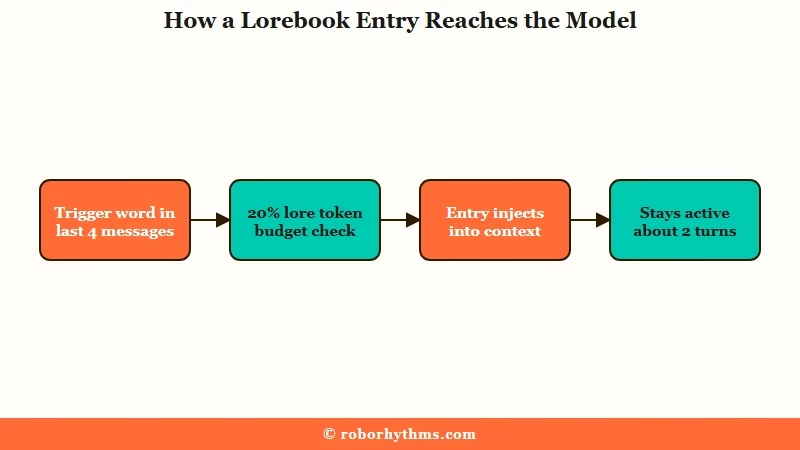
Plenty of “blocked” entries were never blocked at all. They just never fired, and knowing the delivery mechanics separates a moderation problem from a configuration one.
Each entry holds up to 1,000 characters, a lorebook holds up to 5,000 entries, and lorebooks currently attach to private characters only. Multi-word keywords need an exact phrase match, wildcards like home* cover word variations, and entries cannot trigger other entries.
The budget is the detail I’d check first. Lore is capped at roughly 20 percent of total context memory, which works out to a hard ceiling by plan:
| Plan | Lore token budget | What fits in practice |
|---|---|---|
| Free | About 740 tokens | 2 to 3 active entries before older lore gets squeezed out |
| True Supporter | About 1,600 tokens | A handful of detailed entries firing together |
| I’m All In | About 3,080 tokens | Full world lore with room to spare |
Those mechanics produce the second failure mode. An entry that never shows up in chat usually has a keyword that never appeared in the last four messages, a phrase set to exact match that nobody types exactly, or a free-tier budget already eaten by other entries. None of that is the filter’s doing.
What to Do About Flagged Lorebook Entries
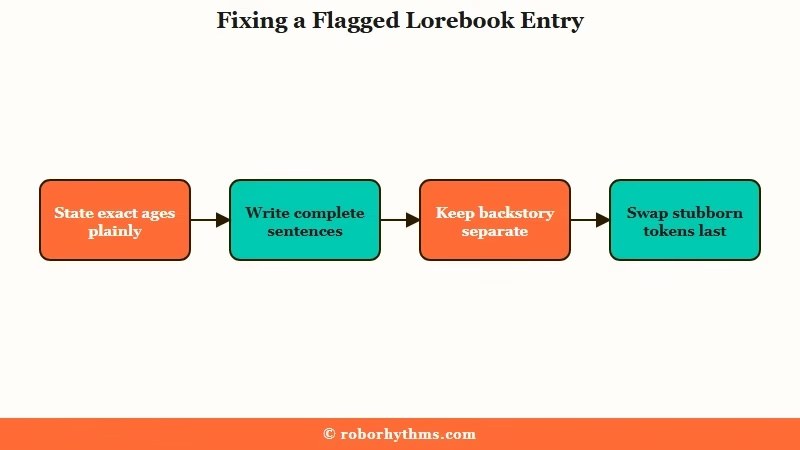
The fix is reframing, in this order: state ages plainly, write complete grammatical sentences, keep family terms away from suggestive phrasing, and swap the few hard-trigger words that refuse to pass.
| Symptom | Likely cause | Fix |
|---|---|---|
| Entry rejected on save | Family or age-adjacent words in vague framing | Rewrite with plain adult framing and full sentences |
| The word father or mother flags | Term sits next to suggestive or ambiguous text | Separate backstory facts from scene content entirely |
| Childhood or minor flags constantly | High-risk tokens for the classifier | Use “grew up”, “early years”, “small injury” instead |
| Profile update keeps erroring | A soft filter hit somewhere in the changed text | Re-add changes in chunks to isolate the flagged line |
| Entry passes but never fires | Trigger word not in the last 4 messages | Pick keywords that naturally appear in conversation |
My rule of thumb for any flagged entry: fix the framing before reaching for the thesaurus, because framing fixes survive future filter updates and word swaps may not.
- State ages explicitly and plainly. Phrasing like “25y/o male” in a description sails through where vague youth-coded wording sinks. One line of unambiguous adult framing changes how every other word in the entry gets scored.
- Write complete, grammatical sentences. Broken shorthand reads as a risk signal to the classifier. The same facts in clean prose score lower.
- Keep backstory and scene content in separate entries. A father who owns a restaurant belongs in a family entry; flirtatious dialogue belongs nowhere near it. Mixing the two is the single most common reason ordinary words get flagged.
- Add a standing adult statement to pinned memories. A pinned line that all characters are adults and consenting has settled the issue for many creators, and pinned entries stay in play, with the top 8 pinned memories being what the system reliably holds.
- Swap the stubborn tokens last. When a specific word refuses to pass regardless of framing, “progeny of” has a track record as a stand-in for parental terms, and “early years” replaces the childhood flag.
Before: “innocent girl, lives w/ daddy, loves attention” as a lorebook entry, which stacks vague age framing, a family term, and suggestive shorthand into one high-risk line.
After: “Mara, 26, manages the family restaurant her father owns in Chicago. She moved back two years ago after culinary school and resents how small the town feels.” Same relationship, zero flags, and the model gets more usable detail.
The same framing discipline applies one level up, because character profiles run through the same moderation. If a bot keeps bouncing at submission rather than at the lorebook layer, the SpicyChat moderation fix guide covers that path, and SpicyChat persona tips shows the clean-framing style working at the persona level.
How Do You Keep Lore Working Once It Passes
Passing the filter is half the job: entries still need conversational trigger words, tight content under 1,000 characters, and a token budget that is not already spent.
Pick trigger keywords people type naturally mid-roleplay. A trigger like “restaurant” fires constantly; a trigger like “Mara’s complicated family history” never will, since multi-word keywords need an exact match.
Keep each entry to one or two facts. Entries inject for about two turns when triggered, so a 1,000-character wall of lore mostly wastes budget that tighter entries would spend better. The same discipline that fixes a silent Janitor AI lorebook applies here, the platforms just hide the dials in different menus.
What surprised me in creator reports is how often the 20 percent lore cap explains “random” memory loss. Free-tier lore budgets fill fast, and once they do, the oldest triggered entries quietly stop arriving while the creator blames the filter.
When the Content Guidelines Are the Dealbreaker
If the guidelines themselves are the blocker for your stories, the practical alternatives are Crushon AI for more flexible character writing and Candy AI for a managed companion experience.
A filter tuned to payment-network rules is never going to be fully transparent, and SpicyChat has been clear that the family-scenario rules are not loosening. Writing inside the system works for most backstories, and the patterns above get you there.
For creators whose stories keep colliding with the line anyway, Crushon AI runs noticeably more flexible content guidelines for character creation, which is exactly the trait filter-fatigued lorebook writers shop for. How the two platforms stack up overall sits in the SpicyChat review.
If the deeper issue is wanting the platform to manage character consistency for you, Candy AI handles companion memory and personality server-side, no lorebook maintenance involved. Either way, the clean-framing habit transfers; every platform’s moderation reads context the same direction.
Frequently Asked Questions
Why does SpicyChat flag the word father in my lorebook?
The filter scores context around the word, and family terms near vague or suggestive phrasing cross the risk line. The same word in a plain factual sentence, like a father who owns a restaurant, passes for most creators.
What words trigger the SpicyChat lorebook filter most?
Creators most often report father, mother, childhood, and minor, with minor injury as the classic false positive. Swaps that work: “progeny of” for parental terms, “early years” for childhood, “small injury” for minor injury.
Why is my private bot filtered when nobody else sees it?
Content rules apply to private characters too, because the obligations behind them, payment-network standards and platform liability, do not depend on visibility. Lorebooks attach only to private characters and still pass through the same moderation.
How do I write a family backstory that passes the filter?
State ages plainly, write complete sentences, and keep family facts in their own entry away from scene content. Adding a pinned memory stating all characters are adults has settled repeated flags for many creators.
Why does my lorebook entry pass but never fire in chat?
Firing is mechanical: the trigger keyword must appear in the last four messages, multi-word triggers need an exact phrase match, and lore is capped at about 20 percent of context memory. Most silent entries have unrealistic triggers or a spent token budget.
Quick Takeaways
- The SpicyChat lorebook filter weighs context, so clean adult framing moves the same family words from blocked to fine.
- The high-risk tokens are father, mother, childhood, and minor; fix the framing first and swap words only as a last resort.
- A pinned memory stating all characters are adults, plus explicit ages like 25y/o, settles most repeat flags.
- Entries fire only when triggers appear in the last 4 messages, and lore caps at about 740 tokens on free plans, so silent entries are usually mechanics rather than moderation.
- If the guidelines themselves are the dealbreaker, Crushon AI offers more flexible character writing and Candy AI removes lorebook upkeep entirely.
