
Bottom Line: Speechify is worth it if you consume a lot of written content every day, especially if you have ADHD or dyslexia. The voice quality is better than most competitors, the multi-device sync actually works, and the AI Summaries save real time. The $29/month price for a casual reader is hard to justify. This review covers everything from pricing to where it falls short.
I have used a lot of text-to-speech tools over the years. Most of them are fine for five minutes and then you turn them off because the voice sounds like a GPS with a cold.
Speechify is different in one specific way: the voices are natural enough that you can finish a 4,000-word article from start to finish while doing something else. That is a low bar and it still took the industry a long time to clear it.
Whether that’s worth $139 a year depends entirely on how much content you consume and in what format. This review will tell you directly.
For people who are already deep in AI productivity tooling, the best Claude Code skills roundup covers the agent-assisted angle of the same productivity problem. Speechify is a different solution, for a different kind of reader.
What Speechify Does and How It Works
Speechify is a text-to-speech app that converts any written content into audio you can listen to at variable speed, synced across all your devices. It handles PDFs, web articles, email threads, Google Docs, and physical text scanned with your phone camera.
The core feature is the speed control. The free plan caps at 1.5x. Premium unlocks up to 5x.
The way it works in practice: you add a document, set your speed, and listen while you walk, commute, or clean the kitchen. Highlighted text follows along on screen as the audio plays. The AI Summaries feature condenses a long document into the key points before you listen to the full thing.
What separates Speechify from a basic TTS tool is the voice quality in the premium tier. The 1000+ natural voices include celebrities and well-known voices (with licensing). The voices are not perfect, but they are good enough to listen to for an hour without wanting to stop.
Speechify Pricing and Plans Compared
Speechify has a free plan that works for basic use and a premium tier at $29 per month or about $139 per year. The annual plan saves 60% compared to monthly billing.
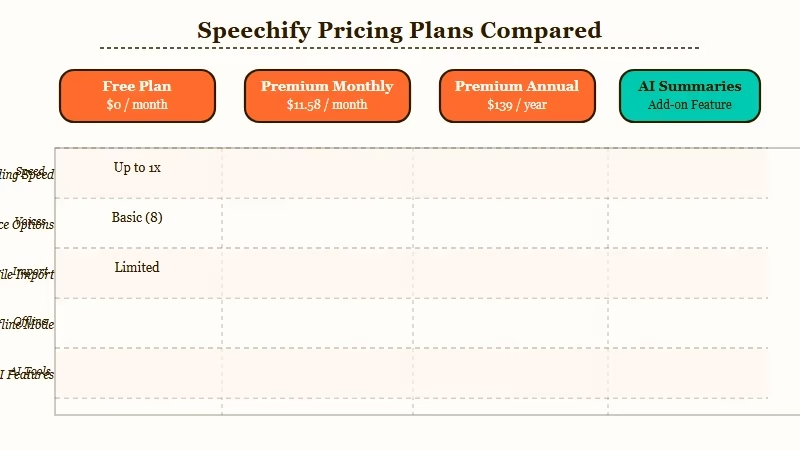
Here is the full breakdown:
| Plan | Monthly cost | What you get |
|---|---|---|
| Free | $0 | 10 basic voices, 1.5x max speed, limited formats |
| Premium Monthly | $29/month | 1000+ voices, 5x speed, AI Summaries, cloud sync, 60+ languages |
| Premium Annual | ~$11.58/month (billed $139/year) | Same as Premium Monthly, 60% savings |
The free tier is more limited than competitors. Microsoft Edge’s built-in read aloud, Apple’s built-in accessibility reader, and Google’s Read Aloud extension all do basic TTS for free with decent enough quality.
If you are evaluating Speechify, the question is not “is free TTS available?” The question is whether the voice quality gap and the multi-device sync justify $139 a year for your specific use case.
From what I have seen, the answer is yes for heavy readers who consume 5 or more long-form documents per week, and no for anyone who is just curious or reads occasionally.
What Speechify Does Well
Speechify’s strongest features are the voice quality on premium, multi-device sync that does not require restarting content, and the ADHD and dyslexia accessibility use case. These are the three things users consistently praise in reviews across platforms.
Here is where I think it earns its price:
- Voice quality: The premium voices are noticeably better than the Microsoft or Google TTS engines for extended listening. Not perfect, but good enough for an hour of uninterrupted audio.
- Multi-device sync: You can start an article on your phone, pick it up on your laptop from the exact same position. This works in practice, not just in theory.
- Scan to listen: The phone camera OCR is solid. Physical textbooks, printed articles, handouts, all readable via your phone camera.
- AI Summaries: A genuinely useful feature that lets you get the gist of something before deciding whether to listen to the full version.
- Speed building: Starting at 1x and gradually increasing to 2x or 2.5x over weeks is a real workflow some users describe. The product supports this better than alternatives.
The ADHD and dyslexia use case is real. For users who struggle to stay focused while reading silently, having the audio and the highlighted text together improves retention in a way that standard reading often does not. This is the group for whom Speechify is not just nice to have.
Where Speechify Falls Short
Speechify’s biggest problems are the billing complaints around trial-to-paid transitions, the limited free tier, and the 5x speed claim that overstates what most people can use. The marketing leads with the speed angle; the reality is most users settle around 2 to 2.5x.
The pricing structure creates a specific trap. The trial starts and some users report being charged the full annual subscription without a clear reminder before billing.
This is a common complaint across Trustpilot and Reddit, and the reputation damage from older reviews lingers even as the product has improved.
Here is the honest cons list:
- $29/month without the annual commitment is hard to justify when the built-in OS tools cover basic needs for free.
- The 5x speed is marketed aggressively but most content becomes incomprehensible above 2.5x without significant training.
- Billing transparency issues around the free trial have generated persistent negative reviews on Trustpilot.
- The free plan is too limited to let you evaluate whether premium is worth it. You basically need to pay to find out.
If you want AI voice tools for creating audio content rather than consuming it, ElevenLabs alternatives covers the generation side of the same category.
Who Should Buy Speechify
Speechify is worth paying for if you read more than 10,000 words of written content per week and prefer audio over reading. That threshold roughly corresponds to five or six long articles, two reports, or one academic paper per week.
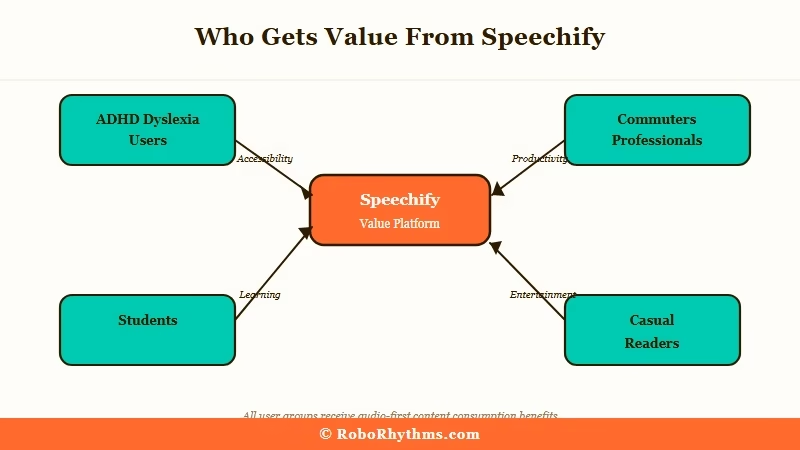
The strongest use cases are:
- ADHD users who struggle to finish long documents when reading silently
- Dyslexic users who process audio faster than written text
- Commuters who want to consume newsletters, research, or documentation while driving or in transit
- Professionals who receive large volumes of written material: legal documents, medical literature, research papers
- Students who need to get through high volumes of assigned reading quickly
The weakest use case is casual reading. If you read a few articles a week and just want audio for the occasional long piece, the free tools built into your browser and phone will cover 80% of your needs.
The verdict: for everyday readers who just want to dabble, skip it. For heavy consumers of text, especially those with accessibility needs, the annual plan is a genuine time saver and the price is reasonable relative to the time it returns.
Speechify Verdict
Speechify earns a recommendation for the right audience. The voice quality, multi-device sync, and accessibility features are legitimately good. The pricing is reasonable at $139 per year if you use it daily. The billing transparency issues are worth knowing before you start a trial.
Rating: 7.5/10, Great tool for heavy readers; hard to justify for casual use.
If you are comparing audio AI tools more broadly, the ElevenLabs review covers the voice generation side of this category.
