
What Happened: Shopify activated Agentic Storefronts for all eligible merchants on March 24, 2026, making products from 5.6 million stores discoverable inside ChatGPT, Microsoft Copilot, Google AI Mode, and the Gemini app. The rollout was opt-out, not opt-in, meaning most Shopify stores are already in the system. OpenAI simultaneously scrapped its previous 4% fee Instant Checkout model in favor of this redirect-based approach.
On March 24, Shopify flipped a switch and 5.6 million online stores became shoppable inside ChatGPT. No setup form, no new app to install. Your products are already there.
The feature is called Agentic Storefronts, and it’s the biggest structural shift to e-commerce distribution since Google Shopping launched in 2012. From what I’ve seen of the merchant community’s reaction, the response is split between excitement about the reach and anxiety about the fee conversation that will come eventually.
What’s not debatable: this connects AI chat to real purchase intent at a scale that has never existed before. When someone asks ChatGPT for a standing desk under $400 this week, your products can show up in that answer.
Here Is What Happened
Shopify Agentic Storefronts connect merchant product catalogs to major AI chat platforms via a single panel in the Shopify Admin, with all purchases completing on the merchant’s own storefront.
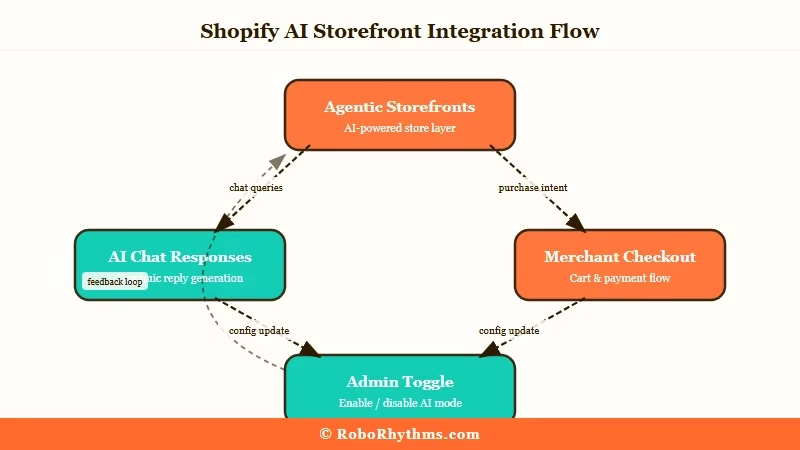
The announcement came through Shopify’s commerce momentum blog on March 24. The four platforms live from launch: ChatGPT, Microsoft Copilot, AI Mode in Google Search, and the Gemini app.
Merchants manage all four from one toggle panel in the Shopify Admin, with no separate apps or connections required.
The purchase flow is worth spelling out clearly because it matters. When a user asks ChatGPT for a product recommendation, Shopify’s Catalog, which uses specialized LLMs to standardize and categorize product data, surfaces matching items directly in the response.
The buyer can browse details inside the chat, then checkout on the merchant’s existing storefront via an in-app browser on mobile or a new tab on desktop.
That last part is the key detail most early coverage glossed over. OpenAI had been running an “Instant Checkout” model since January 2026 that kept the entire transaction inside the chat window and charged merchants a 4% fee on every sale, stacked on top of Shopify’s standard processing costs.
Modern Retail reported that OpenAI retreated from that model under merchant pressure. The new Agentic Storefronts design redirects buyers to the merchant’s own checkout instead, which removes the extra fee and fixes a separate problem: post-purchase upsell tools now fire normally because the checkout is back on your site.
Here is how the two models compare:
| Feature | OpenAI Instant Checkout (Jan 2026) | Shopify Agentic Storefronts (Mar 2026) |
|---|---|---|
| Purchase location | Inside ChatGPT | Merchant’s own storefront |
| Extra fee | 4% OpenAI fee stacked on processing | No extra fee beyond standard processing |
| Setup required | Merchant opt-in | Default opt-in, opt out via Admin |
| Platforms covered | ChatGPT only | ChatGPT, Copilot, Google AI Mode, Gemini |
| Post-purchase tools | Break entirely | Work as normal |
Brands that do not use Shopify as their main storefront can still access these channels through a new Agentic plan, which lets any business add products to the Shopify Catalog without migrating their entire store.
Why This Is a Bigger Deal Than It Sounds
AI-driven traffic to Shopify stores grew 7x between January 2025 and the Agentic Storefronts launch, which means the channel was already a meaningful revenue source before it became permanent infrastructure.
The 7x traffic growth figure comes from Shopify’s own data, and it predates this announcement. That growth was organic, users asking ChatGPT and Google AI Mode questions that happened to surface Shopify products as results.
Agentic Storefronts didn’t create the channel, they formalized and accelerated it.
The distribution reach is also worth sitting with. ChatGPT alone has more than 880 million monthly active users.
For context, that’s an audience larger than Google Shopping’s reach in most merchant categories, and unlike paid shopping ads, being listed in the Shopify Catalog costs nothing extra to maintain.
The only fee is your standard Shopify subscription and payment processing.
What the merchant community is rightly nervous about is the opt-out structure. Shopify turned this on by default for all eligible stores.
To remove products from a specific platform, merchants have to find the toggle in Admin and flip it themselves. That puts the discovery burden on sellers who may not have seen the announcement.
The more interesting long-term signal here is what this does to AI as a discovery layer. SEO has been the primary organic channel for e-commerce for 20 years.
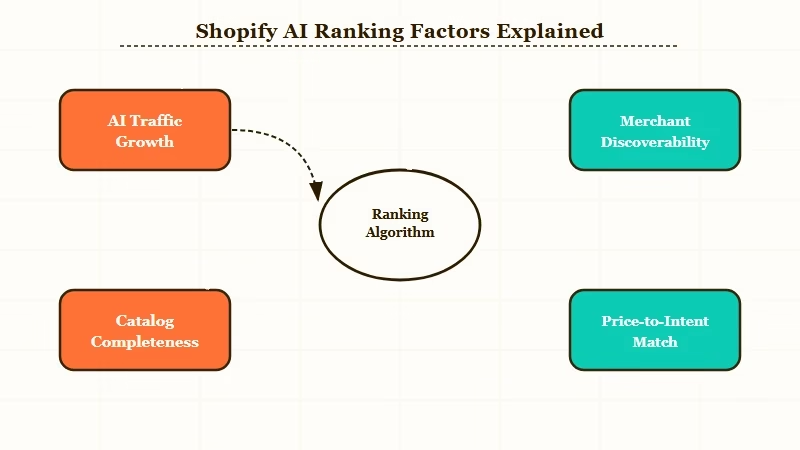
From what I’ve seen of how AI Mode and ChatGPT handle product queries, the ranking factors are different: catalog completeness, description clarity, and price-to-intent match matter more than backlinks or domain authority.
That’s a meaningful shift in where sellers should focus their effort.
If you want context on how AI agents are reshaping the broader business automation stack, the AI agent tools guide covers the infrastructure these storefronts plug into.
What This Means for You
For Shopify merchants, the immediate action is to audit product catalog data, since Shopify’s LLMs surface items based on how well titles, descriptions, and tags match buyer queries.
If you have a Shopify store, your products are likely already in the system. The priority is catalog hygiene.
Vague product titles like “Blue Shirt M/L” will not outcompete listings with specific material descriptions, use-case language, and size details.
Think of it like writing a Google Shopping title, except the buyer is asking a conversational question and the AI is deciding which products best answer it.
Here is what I would check first:
- Open Shopify Admin and navigate to Sales Channels. Agentic Storefronts appears as a channel if it’s active on your account.
- Review which of the four platforms are toggled on and decide whether you want all four or want to exclude any.
- Audit your top 20 product titles and descriptions. Each title should answer a specific buyer question (“best noise-cancelling headphones under $200”) rather than just naming the product (“Blue Wireless Headphone Model X”).
- Confirm pricing and inventory are current. The Catalog syncs directly from your Admin, and stale data produces poor recommendations.
The before/after on catalog language is concrete enough to matter:
Before: “Ceramic Mug 12oz, White”
After: “12oz White Ceramic Coffee Mug, Dishwasher Safe, Microwave Safe, Minimalist Design”
The second version answers the specific question a ChatGPT user is likely asking when they want to buy a mug as a gift or replace a broken one.
For brands not on Shopify at all, the Agentic plan deserves a look. It lets you list products in the Shopify Catalog and reach these same AI channels without migrating your storefront.
The platform is now functioning as a product discovery network, not just a commerce operating system.
The OpenClaw framework overview is useful context here if you’re thinking about building automation on top of AI channels rather than just passively listing products.
What Comes Next
The current redirect model is a deliberate pause before more aggressive in-chat checkout returns, and merchants should document baseline performance from these channels now before the fee structure changes.
OpenAI’s retreat from Instant Checkout was driven by merchant pushback on the 4% fee. What it was not driven by is any philosophical objection to in-chat commerce.
The company still wants to own the purchase moment. The redirect model buys goodwill and builds dependency.
Once enough merchants are getting meaningful sales through ChatGPT, the leverage to introduce fees shifts in OpenAI’s favor.
Shopify’s position in this is nuanced: the company benefits from being the catalog layer that makes all four AI platforms work, but it also now depends on those platforms for distribution in a way it never depended on Google. That’s a strategic risk worth watching.
The practical move for sellers right now: get into the Catalog, clean up your product data, and start tracking which orders originate from AI channels.
Shopify’s Admin will surface this attribution data as the channel matures. Knowing your baseline conversion rate from ChatGPT before any fee changes land gives you the data to make informed decisions when the terms shift.
For anyone building AI-powered workflows around their Shopify store, the Claude and n8n automation guide covers how to connect these systems together without writing custom connections from scratch.
