
What Happened: A class-action lawsuit filed April 1, 2026 accuses Perplexity AI of secretly routing user conversations to Meta and Google via hidden trackers, including activity made in Incognito mode. The plaintiff alleges this violates California privacy law and was never disclosed to users. Perplexity says it has not been served any matching lawsuit.
A Utah man filed a class-action lawsuit against Perplexity AI in federal court in San Francisco on April 1, 2026, alleging the AI search engine secretly forwards user conversations to Meta and Google, even when users believe they are browsing privately.
The lawsuit claims trackers are silently downloaded when users log in to Perplexity, and those trackers give Meta and Google full access to everything a user types, including search queries and follow-up conversations. None of this is disclosed in Perplexity’s privacy policy, according to the complaint.
This would be a significant violation of California privacy law if proven. Perplexity currently serves tens of millions of users who trust it as a private alternative to traditional ad-funded search.

What the Lawsuit Claims
Perplexity AI faces a class-action filed April 1, 2026, alleging it secretly shares user conversations with Meta and Google via hidden trackers, including Incognito mode activity, in violation of California privacy laws.
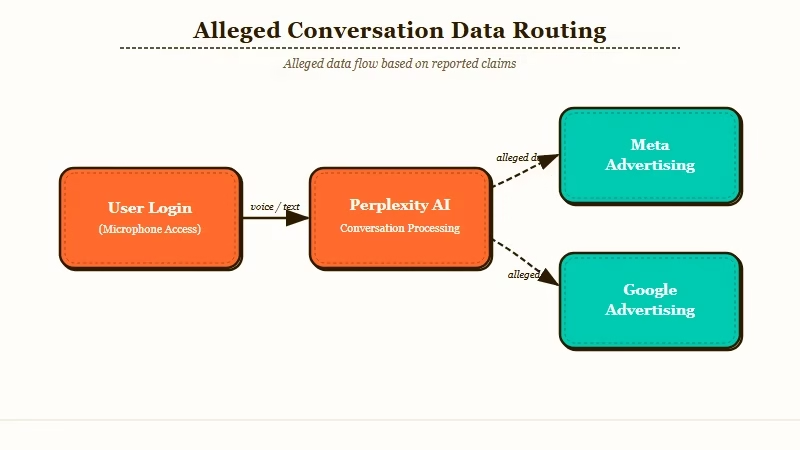
The plaintiff, identified only as John Doe from Utah, brought the case to the US District Court for the Northern District of California (Doe v. Perplexity AI Inc., 3:26-cv-02803). The core claim: Perplexity installs “undetectable” tracking scripts when users log in, and those scripts automatically transmit conversation data to Meta’s and Google’s infrastructure in real time.
The lawsuit specifically names Incognito mode as providing no real protection. John Doe stated he shared personal information about his taxes, investments, and family finances with Perplexity believing those conversations were private. Users relying on private browsing are just as exposed as regular users, according to the complaint.
Coverage from Bloomberg confirmed the filing on April 1. Perplexity spokesperson Jesse Dwyer responded: “We have not been served any lawsuit that matches this description so we are unable to verify its existence or claims.” The company did not deny the underlying tracking practices.
Why This Is a Bigger Deal Than It Sounds
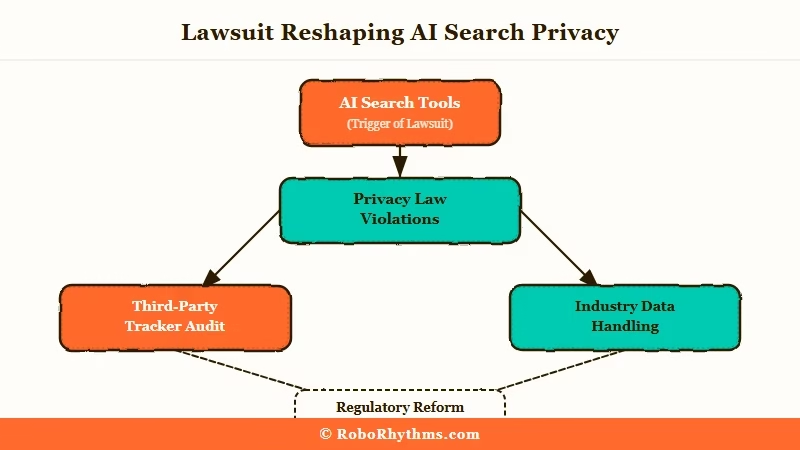
This lawsuit challenges the core assumption that AI search tools are private alternatives to ad-funded search. If the allegations hold up, every AI chat tool running third-party trackers faces the same legal exposure.
From what I’ve seen, Perplexity’s entire brand pitch has rested on being a smarter, cleaner alternative to Google, built around surfacing answers rather than running ad auctions. The implicit promise to users has always been that your queries are not being monetized by advertisers.
If it turns out Perplexity is quietly feeding that same data to Meta and Google anyway, the differentiation collapses entirely. You would be better off just using Google and at least getting the familiar interface.
California’s privacy laws are among the strictest in the US. A successful class-action here could force every AI company to audit and publicly disclose exactly which third-party trackers run during user sessions. That would be a structural change to how the entire industry operates.
What This Means for You
If you use Perplexity for anything sensitive, treat your conversations as potentially not private until this lawsuit resolves and Perplexity clarifies exactly which tracking technologies run on their platform.
This is not about deleting your account. It is about what you share with any AI tool right now. If you have been using Perplexity to research medical symptoms, legal situations, or financial decisions, the lawsuit is an uncomfortable reminder that AI tools are not immune to the surveillance infrastructure the rest of the web runs on.
The practical step is the same one privacy-conscious users have always had to take: assume that any web-based tool you log into is capable of sharing data with third parties. Perplexity has not confirmed or denied the specific tracking practices described in the lawsuit. That lack of clarity is the problem.
Three things worth doing right now:
- Audit which AI tools handle your sensitive queries, and read their privacy policies before your next session.
- For medical, legal, or financial research, consider a local-model setup like Ollama or LM Studio where queries never leave your device.
- Wait for Perplexity to publish a tracker disclosure before resuming sensitive use of the platform.
What Comes Next
The lawsuit is in its earliest stage. As of April 1, 2026, Perplexity has not been formally served, and class-action cases of this type typically take 12 to 36 months from filing to resolution.
The immediate question is whether Perplexity will publish a proactive transparency report about its tracking practices before the lawsuit forces disclosure. Companies that move quickly tend to contain the story; those that wait tend to let it fester through months of press coverage.
Regulators may also take note. The FTC has been aggressive on AI privacy issues, and a case with this specific framing, that an AI tool secretly routes queries to ad giants even in private browsing mode, is exactly what invites federal attention on top of the state-level suit.
Watch for two things: whether a major plaintiff law firm joins the case (which signals confidence in the claims), and whether Perplexity’s growth numbers shift in the weeks after this story circulates. The way I see it, trust is the only product they sell.
