
Summary
- Adam Mosseri argues that AI content has broken traditional signals of authenticity on Instagram.
- Younger users already shifted toward private sharing and candid messages as proof of real moments.
- Instagram plans to label AI content and surface more account context to rebuild trust.
- The platform expects trust to move from images themselves to the people behind them.
Instagram sits at an uncomfortable moment where the idea of authenticity no longer behaves the way it used to.
Content that once signaled effort and taste now struggles to prove it was ever real. The shift is not subtle, and it forces the platform to confront how trust works when images can be generated endlessly.
Adam Mosseri frames this as a race against change, with the pace of the world moving faster than platforms can comfortably adapt.
He argues that authenticity itself has entered a phase where it can be copied at scale, making traditional signals of realness unreliable.
That pressure explains why Instagram now worries less about how content looks and more about where it comes from.
Younger audiences already reflect this change in behavior. Polished grids no longer carry the same weight, while private sharing, direct messages, and unflattering candids have become the default proof that something actually happened.
Public feeds feel performative, while raw moments migrate to spaces that feel harder to fake.
Mosseri connects this reality to a broader rethink of trust on Instagram, pointing readers to his year-end essay on Threads, where he lays out the problem directly.
The post sets the tone for why Instagram believes it must evolve quickly to stay relevant. The full essay appears here https://www.threads.com/@mosseri/post/DS76UiklIDf/media
How Adam Mosseri describes the collapse of visual trust
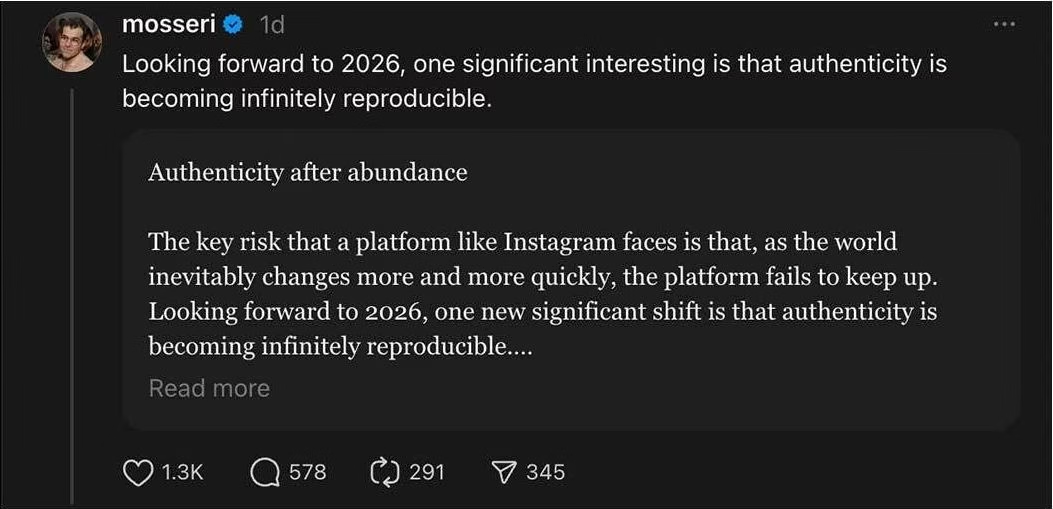
Adam Mosseri frames the problem as a collapse of visual trust rather than a design trend.
He points out that AI-generated images now mimic authenticity so well that the old signals no longer hold. Filters, polish, and even intentional imperfection can all be fabricated on demand.
That shift forces a rethink of what proof looks like on a visual platform. Seeing an image is no longer enough to believe it represents something real.
Trust moves away from the content itself and toward the account behind it.
This is where Mosseri draws a clear line between appearance and credibility. He argues that people will increasingly judge content based on who posted it and how, not just what appears on screen.
That mindset signals a structural change, not a temporary adjustment.
For a platform built on visual impact, this is a hard admission. Instagram helped normalize filter culture, yet now acknowledges that the same mechanics have made authenticity harder to verify at scale.
What Instagram plans to change to stay relevant
Instagram is not treating this as a cosmetic update. The platform plans to label AI-generated content and surface more context about accounts so people can judge credibility faster.
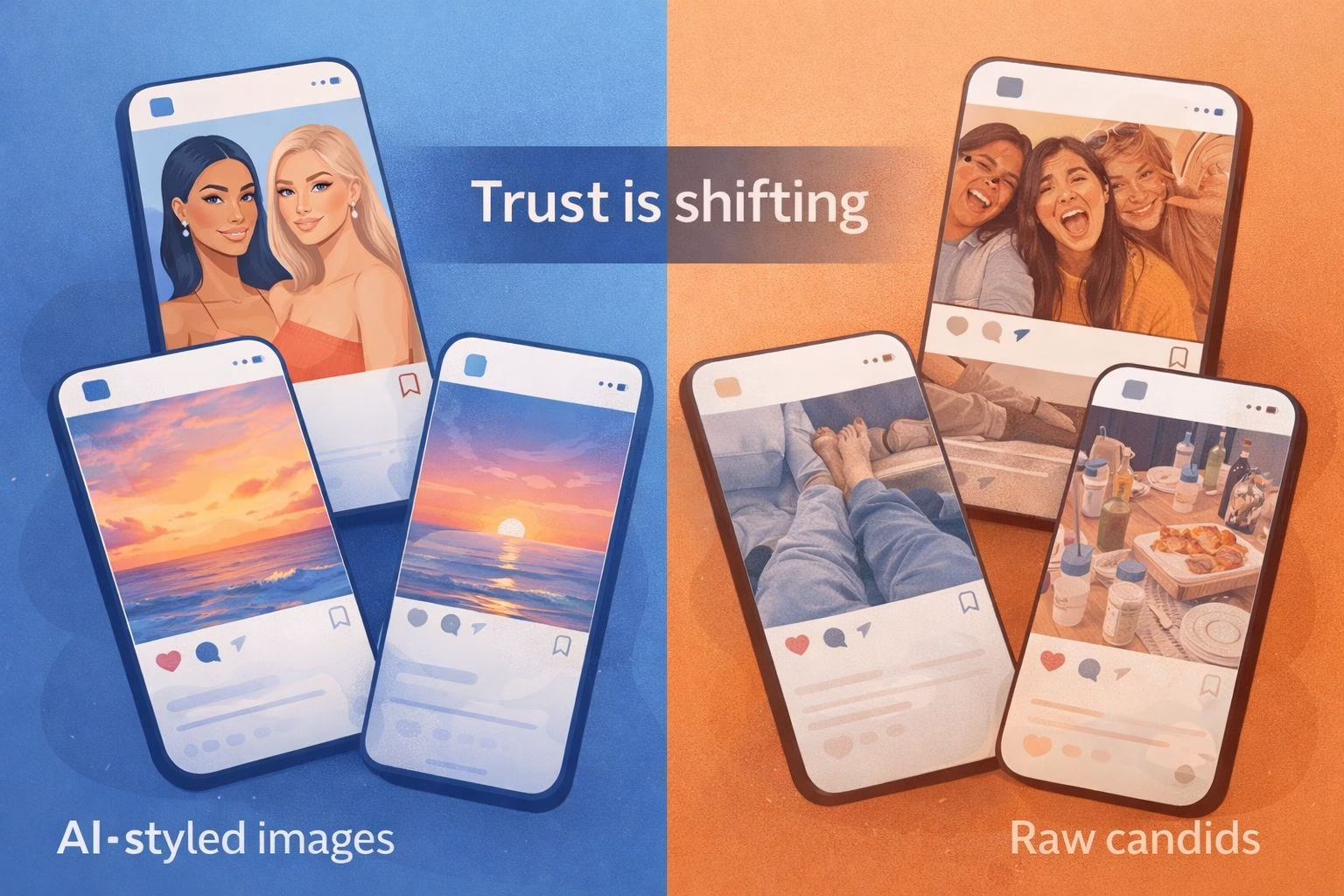
Those moves reflect a belief that context now matters more than aesthetics.
Mosseri also pushes the idea of cryptographic signatures at the moment of capture. The goal is to verify real media at the source instead of playing catch-up by removing fakes later.
That approach shifts responsibility toward hardware and capture tools rather than platform moderation alone.
Several changes follow from this thinking:
Clear labels to distinguish AI-generated media from real captures
More visible account context to help assess credibility
Tools aimed at helping creators compete with AI output
These steps suggest that Instagram accepts that AI content will not slow down.
The platform is adapting its trust model rather than trying to reverse the flood, a direction we track closely at RoboRhythms.com.
Younger users abandoned the polished Instagram feed
Mosseri points to a clear behavioral shift among people under 25. Carefully curated grids no longer function as proof of real life.
Private sharing has taken over, with direct messages and candid photos becoming the default way to signal authenticity.
Those spaces feel safer from performance pressure. Unflattering angles and casual moments act as credibility markers precisely because they are not optimized for public approval.
Public feeds, on the other hand, now feel closer to showcases than lived experience.
This split matters because it shows where trust migrated. Authenticity did not disappear; it changed locations.
Instagram’s challenge is that its core surface lost the role it once played in proving something actually happened.
The platform is responding after the behavior has already shifted. That timing explains the urgency in Mosseri’s tone when he talks about needing to evolve fast.
Instagram’s authenticity pivot feels ironic but unavoidable
Instagram helped define filter culture and visual perfection. Declaring the death of authenticity now carries an uncomfortable irony.
The same tools that once drove growth also weakened trust once AI made replication effortless.
Mosseri acknowledges this tension without trying to soften it. He describes a future where people stop trusting what they see and start scrutinizing who shared it.
That admission reframes Instagram less as a gallery and more as an identity layer.
This shift also reframes moderation and labeling. AI content itself is not the enemy, but confusion around what is real undermines the platform’s social contract.
Labels and context become survival tools, not optional features.
Platforms that fail to adapt risk becoming irrelevant to how people already communicate. Instagram’s pivot reads less like reinvention and more like catching up to reality.
