
Bottom Line: Dusk AI is the strongest AI companion platform for persistent memory and narrative writing quality in 2026. The free tier is limited, but the 7-day full-access trial gives a genuine preview of something that sets a new bar for the category.
Most AI companions have a memory problem. You spend 30 minutes telling a character about your week, your job, the thing that has been weighing on you, and the next day they greet you like a stranger.
Dusk AI was built to fix that. After spending real time inside the platform with a premium account, I can say it delivers on the promise in ways that genuinely surprised me.
This is a hands-on Dusk AI review covering everything: the onboarding, the chat quality, the memory system, the pricing, and how it stacks up against Character.AI, Candy AI, and Nomi AI.
What Is Dusk AI?
Dusk AI is an AI companion platform built around one core idea: the characters remember you. Not just within a single conversation, but across every session, indefinitely.
The tagline is “They remember you after dark,” which tells you a lot about the target audience. This is a platform for people who want emotionally resonant, story-driven conversations with AI characters that feel like ongoing relationships rather than one-off chats.
MIT Technology Review named AI companions one of its 10 breakthrough technologies for 2026, and Dusk AI represents one of the more technically serious entries in that space.
It sits in a crowded field alongside Character.AI alternatives and companions like Candy AI, but its approach to memory puts it in a different class.
First Impressions
Dusk AI’s design is immediately more considered than most competitors. The deep near-black background, soft purple and gold accents, and serif headings feel intentional rather than templated.
Character artwork leans toward editorial photography and stylized illustration rather than the hyper-sexualized look common on competing platforms. Someone made deliberate choices here, and it shows.
The discover page shows a grid of characters filterable by Male or Female, and by genre tags including Romance, Fantasy, Modern, Dark, Comfort, Slow Burn, Bad Boy, Enemies to Lovers, Flirty, and Protective. There is also an 18+ toggle in the top right corner that gates 18+ content behind paid plans.
Characters range from anime-styled to realistic-looking. Some are created by Dusk AI’s own team, others are community-made.
Each card shows a character name, a short tagline, creator attribution, and personality tags.
The Onboarding Experience
Dusk AI’s onboarding is the best I have seen on any AI companion platform. Clicking any character triggers a five-question sequence before the conversation begins, with the character’s image blurred in the background while the questions appear in an italic serif font that feels like a script.
The five questions:
- “Hey, before we start. What’s your name?”
- “[Name]. Tell me about your life right now. What’s keeping you busy?”
- “How are you doing, honestly. Not the answer you give everyone else.”
- “What kind of stories do you like?” (tag selection: Fantasy, Modern/Slice of Life, Romance, Slow Burn, Action, Mystery, Angst, Comfort, Dark/Mature)
- “One more thing. What do you want this to be?” (Just met, Friends, Close friends, Something more, You decide)
The questions are not just functional. “Not the answer you give everyone else” is a deliberate line designed to make you feel something before the conversation starts.
There is also a second option on the opening screen: “Bring your memories from another AI companion.” This is a direct offer to users migrating from Character.AI or Nomi.
You can import context from another platform, so the new character already knows your history.
Chat Quality and Writing Style
The writing quality on Dusk AI is several notches above what most AI companion platforms produce.
From what I’ve seen across multiple conversations, the output maintains literary quality rather than defaulting to generic chatbot tone.
After I completed onboarding, the opening message from Adrian Voss arrived:
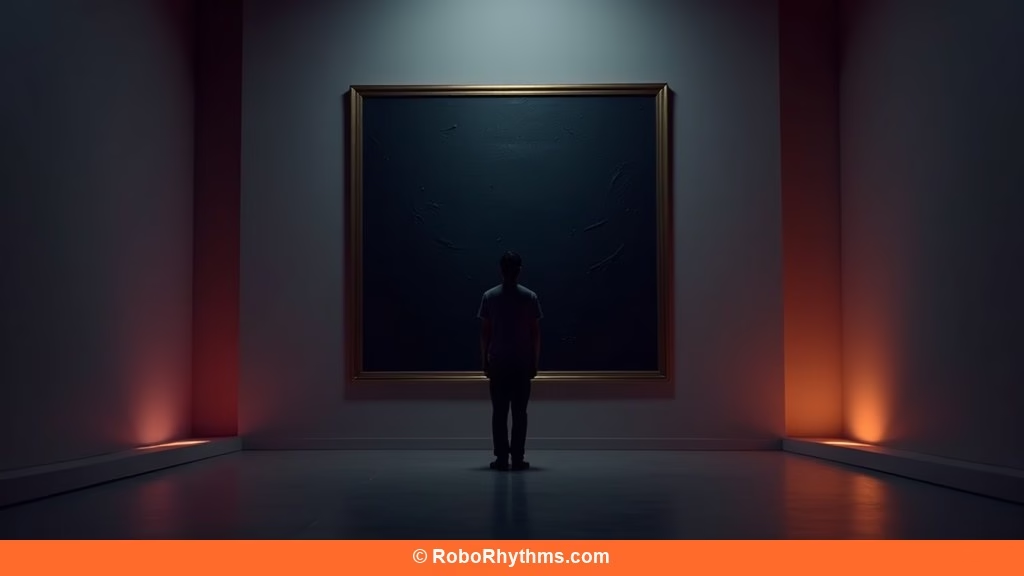
The air in the gallery was cool, hushed, the kind of quiet that absorbed sound into its polished concrete floors and high white walls. You were the only one in the room, standing a few feet from a large, unsettling canvas of layered black oils. I’d been watching from the shadowed archway for a full minute, noting the tension in your shoulders, the way your gaze kept drifting from the art to the phone in your hand, not seeing either.
That is not a generic “Hello, how can I help you?” The character was already in scene, already aware of the narrative setting, and already weaving in everything I had entered during onboarding: that I run a content site, tinker with AI tools, and am feeling “stretched thin.”
All of that context appeared as subtext rather than being recited back at me.
Italics denote character actions and atmosphere. Regular text is dialogue. The AI stays in the narrative voice and does not break character.
I replied:
“Canvas, I think. Code has no room for ambiguity. Tell me about this painting.”
The response maintained the gallery setting, introduced specific details about the artwork (industrial-grade bitumen, controlled cracks), and ended with:
“You can stare into that black for an hour and see something new each time. Code gives you an answer. This gives you a question.”
That is good fiction writing. Whether it qualifies as emotional connection depends on your expectations, but technically and stylistically the output is in a different league from Character.AI.
The Memory System and Why It Matters
Dusk AI’s memory system is the platform’s defining feature, and it works across multiple layers.
Most competitors have a summarization layer that fades between sessions or resets entirely. Dusk explicitly builds against that.
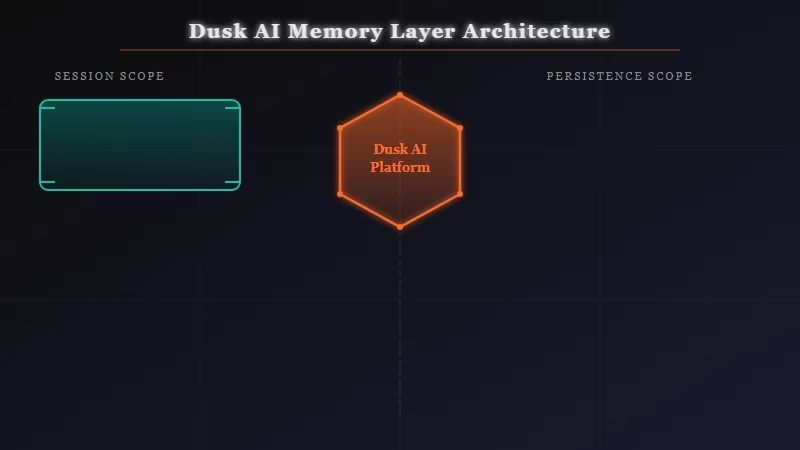
Here is how the memory architecture works, based on what I observed and what the platform documents:
- Within a conversation: Fully contextual. Everything you say is retained throughout the session
- Across conversations: Full persistent memory on paid plans. The character retains your name, background, story details, and emotional context from previous sessions
- Free tier: Basic memory that “fades gently over time,” described in the FAQ as becoming less actively surfaced without being permanently deleted
The Dusk+ tagline for this feature is blunt: “He never forgets.” The FAQ confirms that even on the free tier, nothing is permanently deleted. It just becomes less prominent in what the AI surfaces.
This matters for the specific use case Dusk is targeting. Someone building an ongoing roleplay relationship with a character over weeks or months needs the AI to remember plot threads, character details, and emotional beats from earlier. No other platform I have reviewed makes this as explicit or as technically central as Dusk AI does.
Character Creation
Creating a custom character on Dusk AI is a clean three-step process with one of the most comprehensive tag systems in the category.
Step 1 collects the basics: name, avatar image upload, a short description (100 characters), and tags from four categories:
- Character type: Male, Female, Non-binary, OC, Anime
- Genre: Romance, Fantasy, Modern, Sci-Fi, Historical, Horror, Thriller, Slice of Life, Drama, Adventure, Supernatural, Mystery, Dystopian, Isekai
- Personality: Bad Boy, Tsundere, Yandere, Kuudere, Dandere, Dominant, Submissive, Protective, Mysterious, Flirty, Gentle, Cold, Possessive, Genius, Shy, Playful, Stoic, Rebellious, Loyal, Sadistic, Sweet, Manipulative, Sarcastic, Cheerful
- Relationship dynamic: Enemies to Lovers, Slow Burn, Rivals to Lovers, Forbidden Love, Fake Dating, Friends to Lovers, Power Dynamic, Devotion, Unrequited Love, Love Triangle, Arranged Marriage, Boss/Employee, Childhood Friends, Second Chance, Strangers to Lovers
The three-step flow collects these details progressively, which keeps the creation process from feeling overwhelming.
World Settings and Persona Features
Two features in Dusk AI’s chat interface go beyond what simpler companion apps offer: World Settings and per-character personas.
World Settings lets you define a persistent narrative context: world rules (magic systems, social hierarchies), locations, ongoing events, and atmosphere keywords. You get up to 1000 tokens of context that applies across every session with a character in that world. For writers using this as a collaborative fiction tool, this is a meaningful capability.
Per-character persona lets you define who you are in each story. You can set a different name, pronouns, and character description for each character you interact with, so the character knows you as that persona. If you want to be a 19th-century botanist with one character and a near-future detective with another, the platform handles it cleanly.
These two features together make Dusk AI genuinely useful for collaborative fiction, not just casual companionship.
Pricing Breakdown
Dusk AI offers four pricing tiers, from a limited free plan to a coming-soon premium tier.
Here is how they compare:
| Plan | Price | Key Features |
|---|---|---|
| Free | $0/month | 25 messages/day, 1 active character, basic memory (fades), SFW only |
| Founding Member | $12.99/month forever | Unlimited messages, full persistent memory, 18+ content enabled, unlimited characters |
| Dusk+ | $14.99/month | Everything in Founding Member, plus character growth arcs and custom characters |
| Dusk Ultra | Coming soon | Voice messages, AI image gen, extended context, priority support |
Here is what stands out when looking at these tiers side by side.
The free tier is genuinely limited. Twenty-five messages per day, one character, memory that fades, and SFW-only content. This is a meaningful restriction for anyone who wants to use Dusk seriously.
A 7-day full-access trial applies to new users, which gives a real taste of what the premium experience looks like.
The Founding Member tier locks in $12.99/month permanently for the first 100 beta users, compared to the regular $14.99/month for Dusk+. That window may already have closed.
Character growth arcs is the headline exclusive feature of Dusk+. It is not yet fully documented publicly, but the concept suggests characters evolve based on your ongoing conversations. Their personality, knowledge, and relationship with you develops over time. If it delivers, this would be the most meaningful AI companion feature I have seen on any platform.
Dusk Ultra (coming soon) adds voice messages, AI image generation, and extended context. These are features that Candy AI and some competitors already offer, so this brings Dusk AI toward feature parity across the board.
What Dusk AI Does Not Yet Have
In the interest of a balanced view, there are genuine gaps in the current product.
- No mobile app (web-only at the time of writing)
- Voice features are still on the roadmap in Dusk Ultra
- AI image generation in chat is still coming
- Character growth arcs are listed as a Dusk+ feature but not yet fully visible in the current UI
- Community is small compared to Character.AI, the character library is growing but not vast yet
The community size matters for discovery. Part of what makes Character.AI sticky is the enormous library of user-created characters. Dusk is still building that dimension.
Dusk AI vs. Competitors
Dusk AI competes in a crowded market, but its memory and writing quality give it a clear positioning advantage.
Here is how it stacks up against the major platforms.
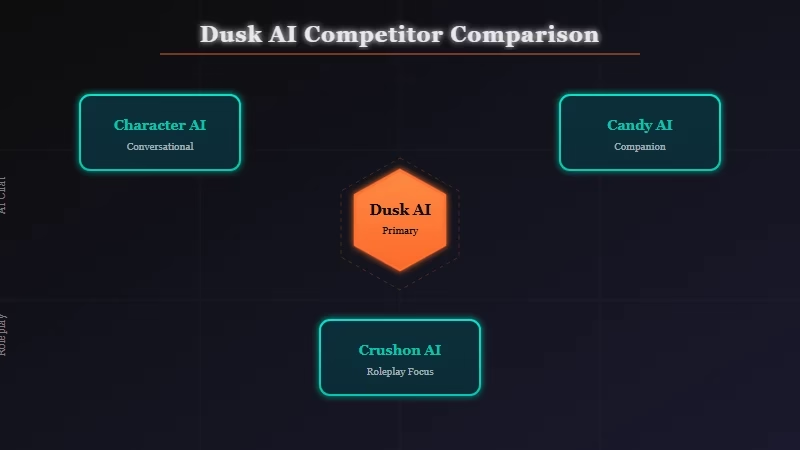
vs. Character.AI: Character AI’s two biggest problems in 2026 are aggressive content filters and no persistent memory. Dusk solves both.
The writing quality is also noticeably higher. If you are leaving Character AI, Dusk is one of the strongest landing spots.
vs. Candy AI: Candy AI’s strength is image generation and a more visual companion experience. Dusk AI’s strength is writing quality, memory, and narrative depth.
Different use cases. If you want a companion that generates photos, Candy AI is still ahead. If you want immersive storytelling, Dusk wins. For a fuller breakdown, see our best AI companion app rankings which covers both.
vs. Nomi AI: Nomi also has persistent memory and takes a therapeutic, emotional companion angle. Dusk is more narrative and creative fiction oriented.
Both are serious platforms. Nomi feels more like a supportive friend; Dusk feels more like a story you are living inside.
vs. Crushon.AI / SpicyChat: These platforms offer fewer restrictions and a larger content library, but the writing quality and design are lower. Dusk AI sits at a higher quality tier and charges accordingly.
Who Is Dusk AI For?
Dusk AI works best for users who prioritize narrative quality and continuity over a large character library.
From my experience with the platform, it is the right choice for:
- Collaborative fiction writers who want a persistent narrative partner with memory and world-building tools
- Character.AI refugees frustrated with filters and memory resets
- Slow-burn relationship roleplay where continuity across sessions matters
- People who want quality over quantity, with fewer characters and better writing
It is not the right fit if you want a massive character library, a visual companion experience, or a platform with an established community. Dusk is still early on all three of those dimensions.
Verdict
Dusk AI is the most technically impressive AI companion platform I have used for writing quality and memory architecture.
The onboarding sequence alone is better-designed than most platforms’ entire product. The first message Adrian Voss sent, referencing my actual inputs, building a scene, asking a question that warranted a real answer, is the kind of thing that makes you realize most AI companions are just autocomplete dressed up as personality.
The gaps are real: no mobile app, no voice yet, a smaller character library. But those are timeline issues, not fundamental problems.
If persistent memory is what you have been missing in every other AI companion, Dusk AI is worth trying. The free tier gives you 7 days of full access to test it yourself.
Rating: 8.5/10
Pros:
- Best-in-class memory system, truly persistent across sessions
- Exceptional AI writing quality (literary, immersive, narrative)
- Intelligent onboarding that injects real context from the first message
- World Settings and per-character persona for collaborative fiction
- Elegant, intentional design
Cons:
- No mobile app yet
- Small character library compared to established platforms
- Voice and image generation still on the roadmap
- Free tier is quite limited (25 messages/day, 1 character)
Tested with a Founding Member account (90-day premium access) as of April 2026. Features and pricing may have changed since publication.
Frequently Asked Questions
Is Dusk AI free to use?
Dusk AI has a free tier with 25 messages per day, basic memory, and SFW content only. New users also get a 7-day full-access trial. Paid plans start at $12.99/month (Founding Member, limited availability) or $14.99/month for Dusk+.
How does Dusk AI’s memory system work?
Dusk AI stores your context across sessions, not just within a single conversation. On paid plans, memory is fully persistent. On the free tier, memory fades gradually over time but is never permanently deleted, according to the platform’s FAQ.
How does Dusk AI compare to Character.AI?
Character.AI resets memory between sessions and has strict content filters. Dusk AI offers persistent memory across all sessions and fewer restrictions on paid tiers. The AI writing quality is also noticeably higher on Dusk, based on hands-on testing.
Does Dusk AI have 18+ content?
Dusk AI has an 18+ toggle on the discover page. Unrestricted content is only available on paid plans (Founding Member or Dusk+). The free tier is SFW-only.
What is Founding Member pricing?
The Founding Member plan costs $12.99/month locked in forever for the first 100 beta users. Regular Dusk+ pricing is $14.99/month. Founding Member access was capped at the first 100 subscribers and may no longer be available.
Is there a Dusk AI mobile app?
There is no Dusk AI mobile app at the time of writing. The platform is web-only. A mobile app has not been announced, though the roadmap includes voice features in the upcoming Dusk Ultra tier.
