
Summary
- DeepSeek blocks direct browser-based API requests
- Chub relies entirely on browser-side requests by design
- The incompatibility is intentional, not a bug
- Workarounds change model access and degrade output quality
- A true fix would require rebuilding how Chub operates
DeepSeek breaking on Chub feels abrupt if you relied on it for regular chats or roleplay.
One day things work, then requests fail or behave strangely, and it is easy to assume something quietly broke on Chub’s side.
That assumption misses what actually changed and why the situation is not being reversed.
The core issue is not a bug or a temporary outage. DeepSeek changed how its API accepts requests, and direct calls from a web browser are now blocked.
That single shift clashes head-on with how Chub is built and explains why the integration stopped working as expected.
Chub is designed to run API requests straight from your browser rather than from centralized servers. That design choice shapes everything else, including which models can connect and which cannot.
When an API tightens its browser security rules, compatibility simply disappears.
Workarounds exist, but they come with tradeoffs that affect output quality, model selection, and overall experience. Understanding those limits matters more than chasing fixes that are unlikely to happen.
What changed with the DeepSeek API
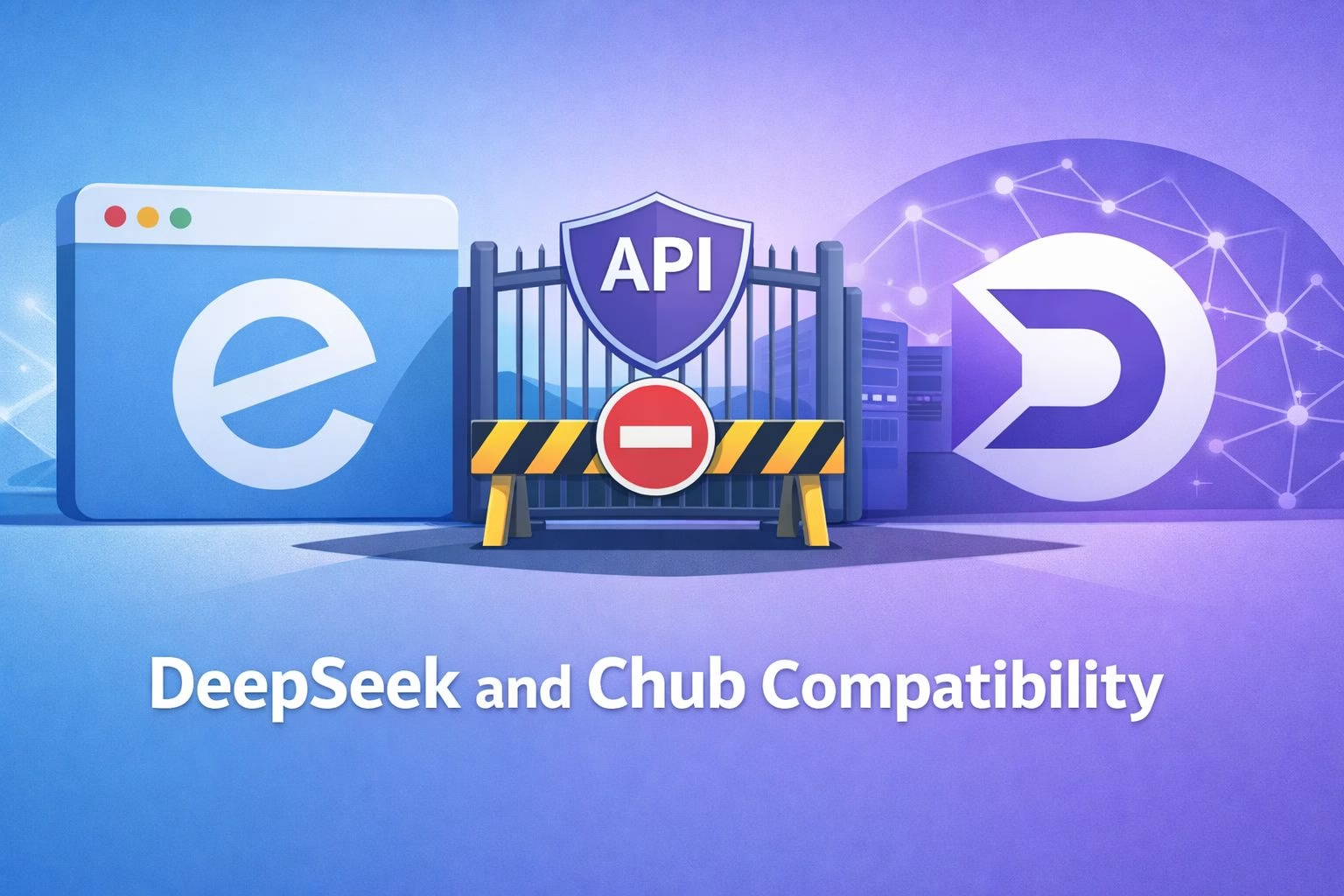
DeepSeek changed the requirements for how its API endpoints accept requests. Direct calls coming straight from a web browser are now blocked.
That shift is not specific to one site and shows up across other custom frontends that rely on browser-based requests.
This change appears intentional and permanent rather than a temporary failure. Other APIs already operate this way, which suggests DeepSeek aligned its setup with stricter browser security expectations.
The result is simple. If a service depends on browser-side API calls, DeepSeek will refuse those requests.
Nothing here points to a partial outage or degraded service on DeepSeek itself. The API still works when requests originate from approved environments.
The block only applies to how the request is made, not to the model being unavailable.
That distinction matters because it removes the idea of a quick fix.
The API behaves as designed, and compatibility depends entirely on how a frontend sends its requests.
Why Chub cannot adapt without a full rebuild
Chub sends every API request directly from your browser. That includes requests to external models and to Chub itself. This is a deliberate architectural choice that shapes the entire platform.
Because Chub runs as a webpage, it cannot act like a local server or a centralized backend without changing its core operation.
Making DeepSeek work again would require routing requests through Chub-controlled servers or through a local service on your device. That is not how the site is built today.
Other tools avoid this problem because they use different request paths. Some rely on central servers.
Others run a local web server on their machine. Chub does neither, and that limitation is structural rather than technical debt.
Changing this would mean rewriting how Chub works at a foundational level. That kind of shift affects cost, infrastructure, and operating principles.
Based on how the platform is designed, that outcome is extremely unlikely.
What happens when you use OR or other middle-layer setups
The common workaround routes DeepSeek requests through another service instead of sending them directly from the browser.
That restores connectivity, but it changes how requests are handled and which models are available. The request no longer reaches DeepSeek in the same way it did before.
One visible side effect is output degradation over time. Replies may start normally, then lose punctuation, spacing, or structure.
Once that decay begins, manual corrections do not stop it, and the problem spreads across subsequent responses.
Model choice also takes a hit. Reasoning-enabled variants are no longer selectable in this setup.
Requests get forced through the standard chat version instead, which feels like a downgrade if you relied on reasoning behavior for roleplay or long-form responses.
These outcomes are not random bugs. They follow directly from how the request is rerouted and what parameters the interface can pass along.
The workaround restores access, but it does not preserve parity with direct API use.
Why this is not getting fixed on Chub
Fixing this would require Chub to stop sending API requests from the browser.
Every request would need to pass through Chub-controlled servers or through a local service running on your device. That change cuts against how the platform was intentionally designed.
Routing everything through central servers introduces major infrastructure costs and operational complexity.
It also alters how responsibility and control over data flows are handled. That tradeoff has already been evaluated and rejected.
Some argue this could be solved with lightweight proxy layers. Even if that is technically possible, it still violates the current operating principles of the site.
The limitation here is not capability but willingness to change direction.
That leaves users with a hard truth. DeepSeek and Chub are both functioning as intended.
The incompatibility sits between them, and no patch or toggle can bridge that gap without a full architectural shift.
What this means if you relied on DeepSeek on Chub
If DeepSeek was part of your regular setup, the situation forces a choice rather than offering a fix. Direct browser-based use is gone, and the platform architecture blocks a clean replacement.
That reality shapes every option that follows.
Using a middle layer restores access but changes behavior. Output quality can decay, punctuation can fall apart, and model control becomes limited.
Reasoning-focused variants are no longer available, which matters if your use depended on that depth.
Switching to a different frontend avoids the browser restriction entirely. Tools that run requests from central servers or from a local service on your machine do not hit this wall.
That path preserves model access, but it requires leaving the Chub environment.
The tradeoffs are clear and unavoidable:
Direct DeepSeek API use works only outside browser-only frontends
OR style routing restores access but degrades quality and limits models
Chub cannot bridge the gap without abandoning its current design
This is not a temporary inconvenience. It is a structural mismatch that reshapes how you choose tools going forward.
