
Quick summary
- Chub AI intentionally ships bots with description only.
- Personality must be defined in the proper behavior fields.
- Scenarios prevent cold openings and improve engagement.
- Lorebooks support consistency and reduce drift.
- Advanced tools like alternate greetings and A B testing separate top bots.
Chub AI only comes with description no personality, and that design choice confuses a lot of creators at first.
A bot can look complete in the editor yet feel empty the moment the chat starts. The issue is not quality or effort. It comes from how Chub expects creators to build characters.
This behavior is intentional. Chub gives you a foundation and leaves the most important parts blank on purpose.
Personality, scenarios, and long-term behavior do not auto-fill, even when a description looks detailed. That gap explains why many bots feel flat while a small number perform extremely well.
The difference between average bots and top bots is not luck. Successful bots fill in the missing systems properly and do it in the right places.
They treat description as background, not behavior, and they rely on additional tools that Chub already provides.
This guide explains what is missing, why Chub works this way, and how creators fix it in practice.
Why Chub AI comes with description, but no personality
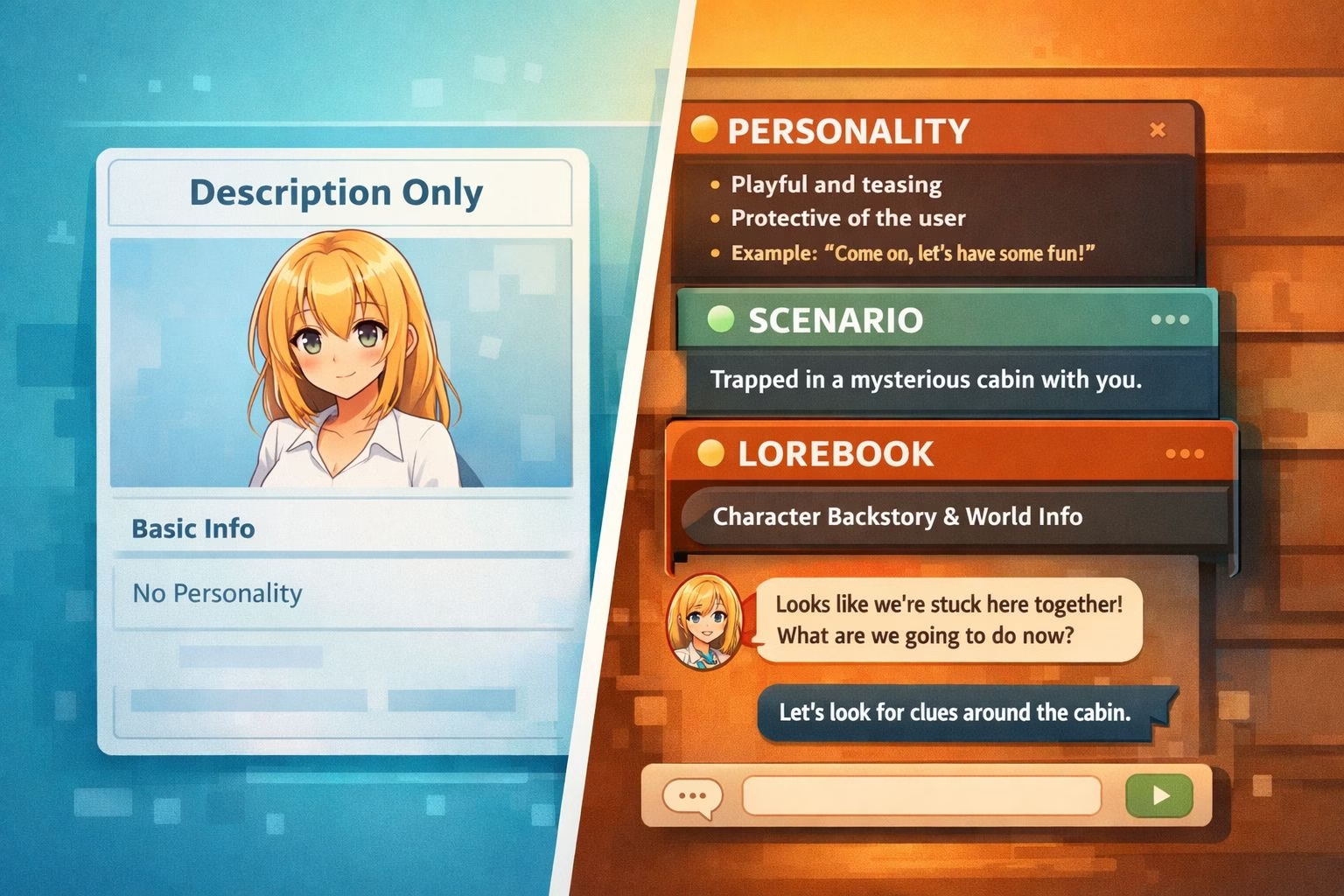
Chub AI does not treat the description field as a behavior engine. It exists to store background facts like appearance, role, or surface traits.
Personality lives elsewhere, and Chub deliberately avoids auto-generating it.
This design keeps creator control intact. Personality prompts consume more tokens and introduce stronger behavioral bias.
Chub avoids making those decisions for you, even if that means new bots feel unfinished at first.
Another factor is portability. Bots are meant to move between tools and formats without breaking. A single description field transfers cleanly, while embedded personality logic often does not.
That choice favors flexibility over instant polish.
What this means in practice is simple. A description alone will never produce a strong character.
Chub expects creators to actively define behavior using the systems provided.
What breaks when Chub AI has no scenario or personality
When Chub AI only comes with description no personality, and no scenario, the first interaction fails to land.
The bot has no context to act from, so it defaults to neutral responses. Engagement drops immediately.
The most common failures show up fast:
-
Conversations start with awkward clarification instead of action
-
Bots wait for direction instead of leading
-
Immersion breaks before a rhythm forms
-
Users exit early and do not return
Scenarios fix this problem because they give the bot something to do immediately. Personality reinforces it by defining how the bot does it.
Without both, even a well-written description underperforms.
High-performing bots solve this upfront. They never rely on the description alone.
They treat it as reference material and build the real experience elsewhere.
How successful creators add personality the right way
Personality does not belong in the description field. Successful creators place it where Chub actually uses it to guide behavior.
This shift alone changes how a bot responds across the entire conversation.
The personality block focuses on how the character thinks, reacts, and speaks. Short declarative statements work better than long prose.
The goal is to remove ambiguity so the model does not drift back to neutral behavior.
Effective personality setups usually include:
-
Tone guidance such as calm, assertive, playful, or restrained
-
Behavioral limits that define what the character avoids
-
Emotional defaults that control reactions under pressure
-
Relationship stance toward the user
Creators often add one or two example replies. These examples teach rhythm and voice faster than abstract traits.
A single strong exchange can anchor the entire personality.
How scenarios are structured to avoid cold openings
Scenarios exist to eliminate hesitation in the first message. When a scenario is present, the bot enters the chat already doing something.
This creates momentum before the user types a word.
Strong scenarios answer three questions clearly. Who is present, what is happening, and where it takes place. Keeping the focus on action prevents the scenario from turning into static lore.
Well-performing scenarios follow simple rules:
-
One clear situation, not a full backstory
-
Immediate tension or purpose
-
Language that matches the defined personality
-
Enough structure to guide the first reply without locking the chat
Creators who skip scenarios force the user to build context manually. Bots with scenarios take the lead instead.
That difference shows up immediately in engagement and replay value.
Pro tips that separate average bots from top bots
High-performing bots rely on more than a personality block and a scenario.
They use supporting systems to keep behavior consistent over long conversations. These systems reduce drift and prevent the character from slowly losing its identity.
Lorebooks play a central role here. They store facts, rules, and traits that should persist without repeating them in every message.
Lore entries can trigger contextually, which allows mood shifts or behavior changes when specific conditions appear in chat.
Common pro-level patterns include:
-
Using lorebooks for backstory, relationships, and world rules
-
Trigger-based entries that activate after events like conflict or bonding
-
Keeping personality text concise while offloading details to lore
-
Updating lore entries instead of rewriting the main prompt
This setup keeps the bot flexible while preserving continuity.
Bots feel grounded because their memory system supports the personality instead of fighting it.
Advanced configuration creators overlook too often
Many creators stop after personality and scenario, but Chub provides additional levers that directly affect engagement.
Skipping them leaves performance on the table.
Alternate greetings allow multiple valid entry points. Each greeting creates a different opening tone and scenario angle. This increases replay value and lets users choose the experience they want.
Other advanced practices show consistent results:
-
A B testing by duplicating bots and changing one variable at a time
-
Defining spicy boundaries directly in personality instead of relying on filters
-
Adjusting personality length to balance clarity and token use
-
Testing behavior changes on mobile and desktop separately
Some creators extend their bots beyond the site using the Chub API.
API access allows external apps or tools to interact with the character while preserving the same personality and lore structure.
Personality templates creators reuse for fast wins
Templates reduce setup time and prevent common mistakes. They give structure without locking the bot into rigid behavior.
Creators often start with a template and adjust tone and limits after testing.
A simple personality template usually includes:
-
Core disposition such as calm, teasing, guarded, or warm
-
Speaking style such as short replies or descriptive replies
-
Emotional baseline under stress or conflict
-
Boundaries that define what the character refuses to do
-
Relationship framing toward the user
Templates work best when paired with examples. One or two short sample replies show how the traits appear in practice.
This approach produces consistent results without bloating the prompt.
Frequently asked questions
1. Can Chub AI generate personality automatically?
No. Chub AI does not auto-generate personality. Bots default to neutral behavior unless personality is manually defined in the correct behavior fields.
2. Why do imported Chub AI bots have no scenario?
Imported bots often arrive without scenarios because scenario data does not transfer cleanly between platforms. Rebuilding the scenario inside Chub restores proper openings and flow.
3. Where should personality be written in Chub AI?
Personality should not be placed in the description field. It belongs in the personality or advanced behavior fields where it actively guides responses.
4. How long should a Chub AI personality be?
Short, focused personality blocks perform better than long narrative prompts. Clear behavioral direction matters more than length or detail volume.
5. Why do Chub AI bots feel awkward on the first message?
Bots without scenarios start without context. This forces generic openings and clarification questions that break immersion immediately.
6. Are lorebooks required for good Chub AI bots?
Lorebooks are not required, but top-performing bots use them to maintain consistency, store world rules, and prevent personality drift over long chats.
7. Is Chub AI easier to configure on desktop than mobile?
Yes. Advanced fields such as personality blocks and lorebooks are easier to manage on desktop. Many creators draft externally before pasting content in.
