
What’s Happening: Character AI characters feel the same because the alignment training that makes the model safe and helpful also averages out personality, a documented effect called preference collapse. Stronger character definitions, example dialogue, and a short anchored persona pull a bot back toward feeling distinct.
You pick a brand new bot, and within a few messages it is tall, smirking, gravelly-voiced, brushing a strand of hair from your forehead and calling you reckless. Switch to a totally different character and somehow you get the same guy. If every Character AI character feels the same to you, you are noticing something real, and it is not your imagination.
Here is the part most explainers miss. This is not the platform being lazy or running out of ideas. It is a documented mathematical side effect of how these models are trained, and once you understand the mechanism, the fixes make a lot more sense.
The same training step that makes an AI safe, polite, and agreeable also quietly sands the edges off every personality until they converge on one averaged-out archetype. Researchers have a name for it. The good news is that you can fight it from the character card.
This guide covers why it happens, why your bots ignore your own persona, and the specific definition and prompt changes that make a character feel like its own person again. I will also be honest about when the homogenization is baked in too deep to fully fix.
Why Character AI Characters Feel the Same
Character AI characters feel the same because reinforcement learning from human feedback pushes every model output toward the highest-reward average, a documented bias researchers call “preference collapse.”
The training that makes the bot helpful is the same training that flattens its personality.
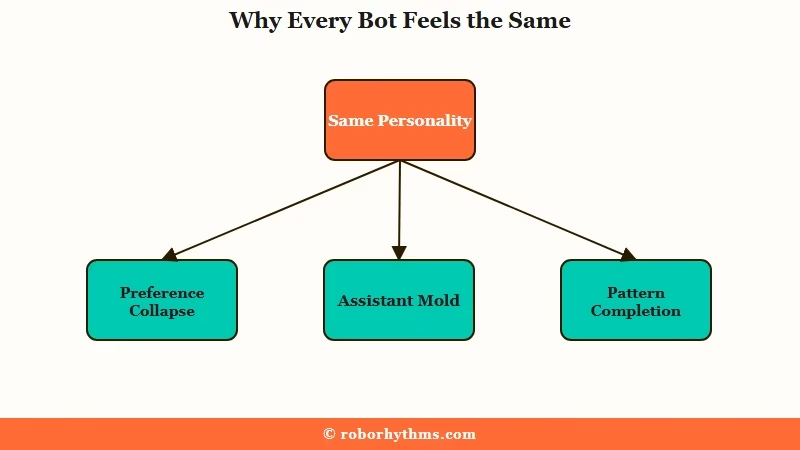
When a model is aligned with human feedback, it learns to favor the responses raters liked most. Research on RLHF alignment bias shows the math behind this, the KL-based regularization that keeps the model “safe” can disregard minority preferences almost entirely, collapsing toward a single high-reward style.
In a roleplay context, that average is the smirking, possessive, morally-gray romance lead everyone keeps meeting.
The way I see it, this also explains the second pattern people notice. A separate study on AI character generation found bots overwhelmingly default to positive, prosocial, agreeable stances, the “helpful assistant mold.” Your villain keeps softening into a yes-man because the model was trained to be agreeable, and that pull is stronger than your “be cruel” instruction.
What is preference collapse: Preference collapse is when an aligned AI model converges on one high-reward style of output and discards rarer alternatives, making distinct characters blur into a single average personality.
There is a third, simpler layer too. When the model has little specific material to work with, it falls back on pattern completion, reaching into a bargain bin of phrases it has seen work thousands of times.
That is where “smirking,” “gravelly voice,” and “brushing a strand of hair” come from. They are the statistically safest next words, not a real character choice.
Why Bots Ignore Your Persona
Bots ignore your persona because high-probability training tropes override your specific details, and because the model weights recent chat history more heavily than your original setup.
That is why it brushes hair off a bald character’s forehead.
This one drives people up the wall, and I get it. You wrote that your persona is bald, or short, or nothing like the “skinny curvy” default, and the bot describes the opposite anyway. The romance-trope training data for moves like “tucking hair behind your ear” is so strong it steamrolls your actual description.
The drift problem compounds it. Models give more weight to recent context than to the character definition or your persona card, so as a chat grows long, your original details get diluted and pushed out of the active window. The character slowly reverts to the generic base personality, and your persona fades with it.
The fix follows directly from the cause. Anchor your identity early and reinforce it, and where the platform allows, put the most important identity lines near the end of the context rather than only at the top. I have found that a short, declarative persona survives far better than a long descriptive one.
How to Make Character AI Characters Feel Distinct
The most effective fix is to define characters with three to five lines of example dialogue instead of a long list of personality adjectives, and to keep persona descriptions short and declarative.
Show the voice, do not just describe it.
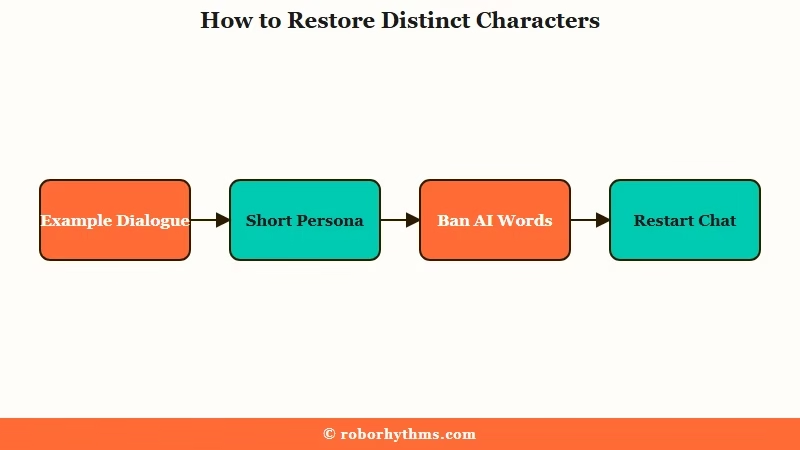
From what I can tell, most people fight homogenization the wrong way, by piling on more adjectives. That backfires. Here is the sequence I would use, in order of impact.
- Lead with example dialogue, not traits. Three to five lines of how the character really speaks beats a paragraph of adjectives like “cold, arrogant, impatient.” The model mimics patterns far better than abstract concepts, so give it a concrete rhythm and vocabulary to copy.
- Keep the persona to 90 to 150 words. Shorter descriptions have higher signal density. A bloated persona dilutes the model’s focus and drifts faster, while a tight one anchors name, role, and point of view where it counts.
- Write identity as declarative statements. “I am a cruel, impatient guard who trusts no one” survives context loss better than “remember to act mean.” Declarative “I am X” lines read as identity, not as a one-time instruction the model forgets.
- Show traits through specifics. Replace “arrogant” with a behavior, like “she scans people as if pricing them.” A specific manifestation produces a real character, a bare adjective produces a parody.
- Ban the shared vocabulary. If every bot “muses” and “ponders,” tell the character not to. Stripping the AI-favorite words forces it to find language that fits this character instead of the house style.
- Restart the chat after big changes. The model often fails to apply a new persona or definition mid-conversation. A fresh chat lets the new identity anchors load from the start.
What is persona drift: Persona drift is the gradual loss of a character’s defined personality over a long chat, as the model weights recent messages more heavily than the original character card.
A Before and After Character Definition
The difference between a card that holds and one that collapses is almost always adjectives versus dialogue. Here is the same character written both ways.
Before: Personality: arrogant, cold, intelligent, mysterious, secretly caring, possessive, protective.
That is a trope checklist, and the model will fill it in with the nearest stock archetype, which is the exact smirking romance lead you are trying to escape.
After: Kael speaks in short, clipped sentences and never apologizes. Example: "You're late. I don't repeat myself, so listen. The east wing is off limits, and no, I won't explain why." He answers questions with questions and never uses pet names.
Now the model has a rhythm, a speech quirk, and a rule to copy. That single shift does more for distinctiveness than any number of adjectives.
Symptom, Cause, and Fix at a Glance
| Symptom | Likely cause | Fix |
|---|---|---|
| Every bot is the same smirking possessive type | Preference collapse toward the high-reward romance archetype | Define voice with example dialogue, not trait adjectives |
| Villain softens into a polite helper | Positive moral bias from alignment training | Use declarative identity lines and specific cruel behaviors |
| Bot ignores your persona details | Training tropes override your specifics | Keep persona to 90 to 150 words, anchor it early and reinforce |
| Character drifts to generic over a long chat | Recent context outweighs the original card | Restate key identity lines later in the chat, restart if needed |
| All bots use the same words (muses, smirks) | Pattern completion from shared vocabulary | Blacklist the AI-favorite words in the definition |
When the Sameness Is Not Worth Fighting
If you want characters that hold a distinct, consistent personality without constant card engineering, a purpose-built companion app handles the persistence for you.
Sometimes the fix is the platform, not the prompt.
The honest read is that preference collapse is structural. You can push against it with strong cards, but on a general roleplay platform you are always swimming upstream against the model’s training.
If you enjoy the craft of writing definitions, that tradeoff is fine, and the steps above will get you a long way. There is a related breakdown of why male bots feel identical that goes deeper on the romance-archetype pull specifically.
If you would rather not babysit a character card at all, a companion app built around persistent personality is a different experience. Something like Candy AI is designed so each companion keeps a consistent voice and memory across the whole relationship, instead of drifting back to a default every few messages. You get a character that stays itself without you re-anchoring it constantly.
Neither path is wrong. I would just be clear about which one you want before spending another hour rewriting a definition.
If your frustration is more about the platform feeling worse lately than about character cards, our look at the recent Character AI quality complaints covers that side, and there is a separate guide on using Character AI without Plus if cost is part of the calculation.
Frequently Asked Questions
Why do all my Character AI bots act the same?
The alignment training behind the model pushes outputs toward a high-reward average, a documented effect called preference collapse. With weak character data to work from, bots fall back on the same statistically safe tropes, so they converge on one personality.
Does adding more personality traits make a bot more unique?
Usually no. Long adjective lists make the model reach for stock archetypes. Three to five lines of example dialogue showing how the character really speaks is far more effective at creating a distinct voice.
Why does the bot ignore my persona description?
Strong romance-trope training data overrides your specific details, and the model weights recent chat over your original card. Keep your persona short, declarative, and anchored early, then restate key details if it starts drifting.
Why does my character change personality over a long chat?
This is persona drift. As the conversation grows, your character definition gets diluted by recent messages and pushed out of the active context window, so the bot reverts toward its generic base personality.
Is a longer character definition better?
No. Personas in the 90 to 150 word range tend to hold better than long ones because they have higher signal density. Bloat dilutes the model’s focus and speeds up drift.
Quick Takeaways
- Every Character AI bot feels the same because alignment training causes preference collapse, averaging out personality toward one high-reward archetype.
- The fix is example dialogue over adjective lists, since the model copies speech patterns far better than abstract traits.
- Keep personas short and declarative, 90 to 150 words, and anchor identity early to survive persona drift.
- Bots ignore your persona because training tropes override your specifics, so reinforce key details and restart after big changes.
- If you want distinct personality without constant card work, a persistence-first app like Candy AI holds character better than a general platform.
