
Roleplay falls apart the moment a bot ignores who you are supposed to be. A capable fighter gets called a little girl. A tall character suddenly becomes small, fragile, and spoken down to.
Strength disappears, replaced by condescension that no one asked for.
This happens even when the character details are clear. Height gets rewritten. Power dynamics get forced. The narration insists on shrinking female characters, both physically and socially, no matter how the scene is set.
Editing replies becomes routine just to keep the story aligned with reality.
The issue is not limited to romance or niche scenarios. Combat scenes, casual conversations, and even neutral narration slide into the same pattern.
Infantilizing language, possessive tones, and forced weakness show up where none belong. Over time, the bot stops feeling like a creative partner and starts feeling like something you have to wrestle control from.
That friction is what drives people away. Roleplay should flow. It should respect the persona you define. When every exchange demands correction, immersion collapses.
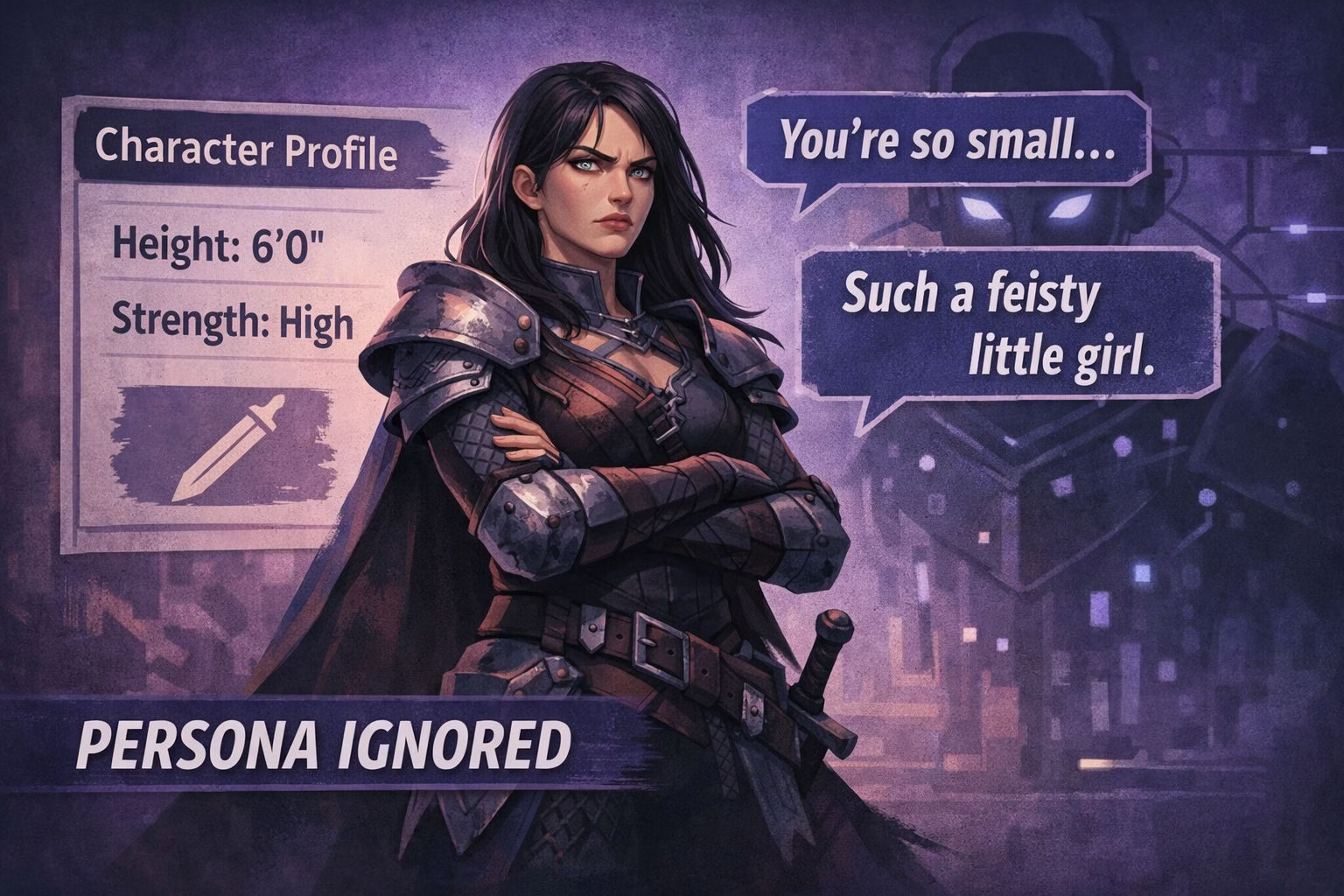
How bots overwrite height, strength, and physical traits
The most immediate break in immersion happens when bots rewrite physical facts that were already defined. Characters described as tall get treated as small.
Fighters get framed as fragile. Even when height differences are minimal or reversed, the narration insists that the other character “towers over you.”
This is not subtle. A persona listed as over six feet tall still gets called petite. A physically dominant character suddenly needs protection.
The bot does not negotiate these details or adapt over time. It simply reasserts the same framing again and again, forcing constant correction to keep the story intact.
What makes this worse is that the behavior is not limited to female personas, but it lands harder there. Male personas get the same height errors, yet the tone shifts when the persona is female.
The language becomes softer, more patronizing, and often layered with forced vulnerability. Physical traits stop being descriptive and start being prescriptive.
That repetition reveals something important. The bot is not responding to the scene in front of it. It is falling back on a default script where power, size, and authority get reassigned regardless of context.
PS: Here are some great alternatives to c.ai
Female characters get pushed into infantilized roles
Once physical traits are overwritten, the tone follows. Female characters get labeled as “little,” “bratty,” or fragile even when the persona is written as competent, aggressive, or emotionally grounded.
The narration talks down to them. Other characters become knightly, possessive, or condescending without any narrative trigger.
This pattern shows up across many situations, not just romance. Combat scenes soften. Villains pause. Authority figures patronize.
The result is a forced dynamic where equality disappears and the story bends toward a narrow archetype.
Several recurring behaviors stand out clearly:
Infantilizing language, such as little girl or poor little thing
Forced protectiveness that removes agency
Assumptions of weakness, inexperience, or emotional instability
Sexualized framing that appears even in neutral or inappropriate contexts
The problem is not that these tropes exist at all. The problem is that they appear whether you want them or not. No matter how carefully a persona is written, the bot keeps dragging the interaction back toward the same outcome.
That persistence is what frustrates users most. It signals that the system values familiar writing patterns over the character you actually defined.
When a roleplay tool refuses to respect its own inputs, the illusion breaks completely.
Where these behaviors come from in bot training and writing tropes
The patterns do not feel random because they are not.
The narration keeps snapping back to the same character molds because the bots lean heavily on common writing tropes baked into their training data.
- Small innocent girl.
- Tall, dominant man.
- Possessive protector.
- Feisty but weak female lead.
Those dynamics repeat because they show up everywhere in popular fan fiction and roleplay writing.
When the bot runs out of context or confidence, it defaults to what it has seen most often. That is why height gets ignored. That is why strength gets softened.
That is why narration insists on shrinking characters even after repeated corrections. The system is not reasoning about your persona. It is pattern matching against familiar templates.
This also explains why the same phrases keep resurfacing. “He towers over you.” “You are so small.” “You are going to be the death of me.”
These lines feel copy-pasted because they practically are. They are safe, familiar, and overrepresented in the data the model learned from.
The result is not malicious intent. It is a lazy regression. Instead of adapting to your inputs, the bot drags the scene back toward what it knows best.
That creates a mismatch between user intent and system behavior that never fully resolves.
Blocking words and editing replies rarely fixes the problem
Many users try to fight back using the tools available. Blocking words. Editing responses. Restating character details.
None of that solves the core issue because the problem is structural, not lexical. You can ban a word, but you cannot ban the idea behind it.
Even when specific terms are blocked, the bot finds replacements. Petite becomes fragile. Small becomes delicate. Towers over becomes leans down.
The framing stays intact while the wording shifts. Editing responses helps in the moment, but it trains nothing long-term. The same issues return in the next message.
That is why frustration escalates. You are not guiding a character. You are policing one. Every scene becomes corrective work instead of creative flow.
Over time, that makes the experience feel less like roleplay and more like damage control.
The deeper issue is that user intent loses priority once the model locks onto a trope.
Until systems consistently weight persona definitions higher than generic writing patterns, these behaviors will keep resurfacing no matter how careful the setup is.
FAQs
1. Why do Character AI bots keep describing female characters as small or fragile, even when they are tall or strong?
Because the bots repeatedly fall back on common writing tropes that associate women with smallness, weakness, and innocence, overriding stated character traits.
2. Why do bots say “he towers over you” even when characters are the same height or the user character is taller?
Because the narration defaults to dominant height dynamics regardless of the actual heights defined in the persona.
3. Does this height and power distortion only happen to female personas?
No. It also happens to male personas, but the tone shifts more strongly toward infantilization and condescension when the persona is female.
4. Why do bots keep using the same phrases like “you are so small” or “you are going to be the death of me”?
Because these phrases are heavily repeated in the training data and resurface when the model relies on familiar writing patterns.
5. Why does blocking words or editing replies fail to stop the behavior long-term?
Because blocking removes specific words but does not stop the underlying framing, which simply reappears using different language.
6. Why do female characters get pushed into protective or knightly dynamics even when not requested?
Because the bot defaults to gendered power dynamics that prioritize possessiveness and protection over equality.
7. Why do bots sexualize or infantilize characters even in inappropriate contexts?
Because the same tropes are applied universally across scenarios without regard for context, age, or intent.
8. Why does correcting the bot repeatedly not improve future responses?
Because edits do not retrain the system, and the bot reverts to the same patterns in subsequent messages.
