
The Verdict: Pick Candy AI if you want the same companion to look like the same person across hundreds of images and you value the Live Action video feature. Pick DreamGF if you want maximum granular control over your companion’s setup and predictable per-month image caps. The image-consistency gap is the single biggest difference between them.
Both Candy AI and DreamGF land at roughly the same monthly price for a serious user, both ship a free tier, both allow unrestricted creative roleplay, and both market themselves with the same kind of glossy product imagery. The differences are buried in the cost-per-image math, the image-engine consistency, and the customization model.
The two platforms target different priorities. Candy AI optimizes for output consistency once the companion is set up, and DreamGF optimizes for granular control during setup.
The wrong pick burns either money on token-based image generation or hours trying to redesign a companion whose face keeps drifting.
This piece breaks down the pricing math, the image engine differences, the memory and voice layers, the customization depth, and which platform makes sense for which use case as of May 2026. The Candy AI pricing breakdown and Candy AI review cover the single-platform deep-dives if you only want one side of this comparison.
Pricing Compared on the Real Per-Month Cost
Candy AI charges $5.99/month on annual or $12.99 monthly with a token system for images. DreamGF charges $5.99, $12.99, or $27.99 monthly across three tiers with hard image caps instead of tokens.
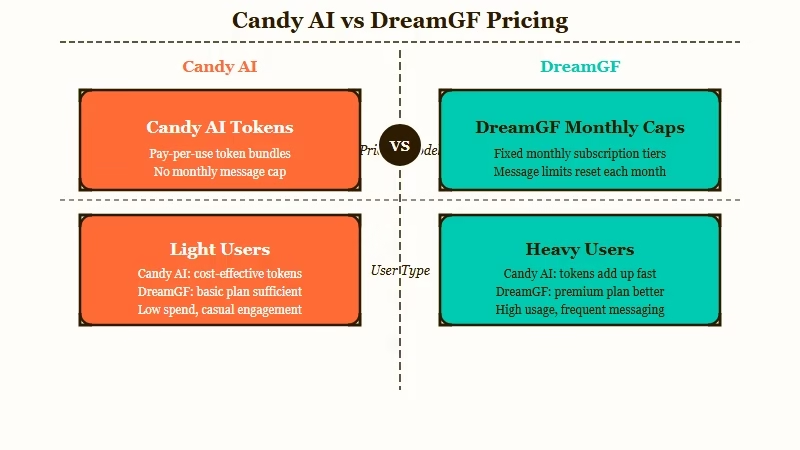
The headline pricing looks similar on the surface. The differences start when you ask “what does the cheapest serious-use tier cost in practice per month.”
| Plan | Candy AI | DreamGF |
|---|---|---|
| Free tier | Limited messages, basic characters | Limited messages and image generation |
| Cheapest paid tier | $5.99/mo billed annually ($71.88/yr) | $5.99/mo Basic (100 images/mo) |
| Mid tier | None, single paid plan structure | $12.99/mo Standard (300 images/mo) |
| Top tier | $12.99/mo billed monthly | $27.99/mo Premium (unlimited images) |
| Image cost model | Token system, 4 tokens per image | Tier-based monthly cap |
| Effective per-image cost on cheapest paid plan | Roughly $0.40 per image at base token rate | $0.06 per image if you hit the 100-image cap |
| Live Action video included | Yes (separate token cost) | No equivalent feature |
Read this table carefully. The Candy AI annual plan and the DreamGF Basic plan both come in at $5.99/month, but the unit economics for images are very different.
Candy AI wraps its image generation in a token system. Each image costs four tokens, and tokens are bought in packs on top of the subscription.
The base subscription gives you a starting token balance, but a power user who generates ten images a day will burn through the included tokens in the first week and start paying per image. The effective per-image cost lands around $0.40 once you account for the token-pack pricing.
DreamGF caps images by plan tier instead. Basic gets 100 images a month, Standard gets 300, Premium is unlimited.
The math at Standard ($12.99/month, 300 images) is roughly $0.04 per image. The math at Premium ($27.99, unlimited) drops to whatever volume you generate.
The cap model is friendlier to heavy users; the token model is friendlier to light users who only want the occasional image.
The honest read on cost: Candy AI is cheaper at low volume because you only pay for what you generate. DreamGF is cheaper at high volume because the cap is the cap.
The crossover point lands somewhere around 30 images a month, which is where most users sit in practice.
Image Engine Quality and Visual Consistency
Candy AI’s V2 engine generates the same companion’s face consistently across hundreds of images. DreamGF generates high-quality images but the same companion’s face drifts noticeably between generations.
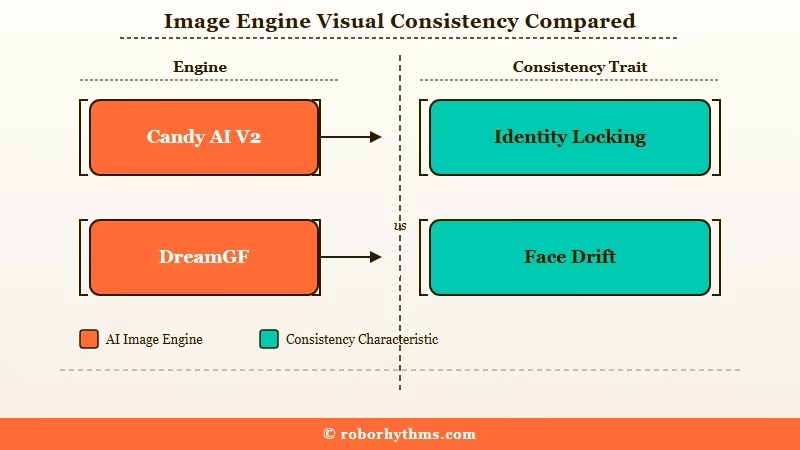
This is the largest functional difference between the two platforms, and the one most pricing comparisons gloss over.
Candy AI’s V2 image engine was rebuilt specifically to lock in companion identity. Once you have set up your companion, the face stays the same across hundreds of generations.
The hair color stays consistent. The outfit changes follow your prompts without the body morphing on every retry. For users who want a stable visual identity for their companion, this is the platform-defining feature.
DreamGF generates technically high-quality images. The realism is competitive with Candy AI on any single image.
The problem is consistency across the session. Same companion, same prompt structure, ten consecutive generations, and the face shifts: cheekbones move, eye color drifts, hair texture changes. For roleplay where you want the companion to “be” the same character across days of conversation, this is the friction.
The technical reason is that Candy AI invested in identity-preserving generation as a core feature while DreamGF treats each image generation more independently. Neither is hidden in the marketing copy, but neither is loud about it either, and the consistency gap shows up only once you have generated dozens of images and compared them side by side.
Memory, Voice, and Customization
Candy AI has stronger persistent memory across days of inactivity. DreamGF has more granular setup customization including background settings. Both have weak voice quality compared to platforms like Kupid AI.
The non-visual layers split into three sub-questions: how well does the companion remember, how realistic are voice messages, and how much control do you have at setup.
On memory, Candy AI keeps preferences, inside jokes, and conversational threads across multiple days of inactivity without needing reminders. Restart a conversation a week later and the companion picks up references from earlier sessions.
DreamGF includes a memory system but the depth of historical retention scales with the subscription tier. Recent context works well; deeper historical memory requires a higher plan. The piece on keeping an AI companion engaging long-term covers the broader memory-design problem that affects both platforms.
On voice, neither platform leads the category. Candy AI supports voice calls on paid plans, but the voice quality is best described as average to robotic.
DreamGF provides voice messages but the audio sounds synthetic and does not match the visual realism of the platform’s images. For voice as a primary feature, Kupid AI and a few smaller competitors do this better than either of these two.
On customization, the design philosophies diverge. Candy AI gives you body type, ethnicity, hair and eye color, clothing style, and personality archetypes during setup.
DreamGF offers all the same parameters plus specific background settings, more granular skin tone options, and detailed clothing controls. If you care about designing the exact companion you want before you start chatting, DreamGF gives you more knobs. If you trust the personality archetypes and just want to start, Candy AI’s lighter setup is faster.
The setup-versus-output split is the way to think about this. DreamGF lets you control more at the beginning; Candy AI gives you more consistent output once you start.
Live Action Video and Real-Time Features
Candy AI has Live Action video clips up to 120 seconds. DreamGF has no equivalent feature.
This is the second platform-defining feature of Candy AI and the one most relevant to users who value motion content alongside still images.
Candy AI’s Live Action feature animates your companion in short video clips, up to 120 seconds long. The animations cost additional tokens on top of the subscription, but the feature exists and works. For users who want their companion to feel like a presence rather than a static image, Live Action is the closest thing on the market.
DreamGF has no equivalent video generation feature as of May 2026. The platform stays focused on static images and voice messages. If you care about video, that single missing feature is the deciding factor.
Who Should Choose Candy AI
Pick Candy AI if you want a companion whose visual identity stays consistent across many sessions, you value the Live Action video feature, and you prefer a single-tier subscription with token-based image generation.
Specifically, Candy AI fits if you match any of these profiles:
- You want a stable companion identity. The V2 engine’s consistency across generations is the strongest reason to pick this platform. If you plan to have the same companion across weeks or months of conversation, you want this.
- You value Live Action video clips. No other platform in this price range ships motion video. If short animated clips matter to you, Candy AI is the only option.
- You are a light-to-moderate image user. Token-based generation favors light users. If you generate fewer than 30 images a month, Candy AI’s token system is cheaper than DreamGF’s tier caps.
- You want strong cross-session memory without paying for the top tier. Candy AI’s memory works at the entry tier; DreamGF’s full memory depth is gated to higher tiers.
Per Statista’s reporting on AI companion app usage, the 18-24 demographic accounts for roughly 65% of AI companion platform users, and Candy AI’s visual-identity stability is the feature that demographic most consistently calls out in long-term retention.
Who Should Choose DreamGF
Pick DreamGF if you want maximum granular control over your companion’s appearance at setup, you generate enough images to need a high monthly cap, and you do not need video features.
DreamGF fits if you match any of these profiles:
- You want fine-grained setup customization. Background settings, granular skin tone, detailed clothing choices. DreamGF gives you more knobs than Candy AI at design time.
- You generate a lot of images. If you want 100+ images a month, DreamGF’s tier-based caps are cheaper per image than Candy AI’s tokens.
- You want predictable monthly costs. The cap model means you know exactly what you will pay each month. No token-pack overages.
- You do not need video. If Live Action video is not on your wish list, you are not losing anything by skipping Candy AI.
The trade-off is real: more setup control in exchange for less output consistency. If your companion does not need to look like the same character across sessions, this trade is fine.
Example scenario: You set up a companion with very specific traits, say a 26-year-old woman with auburn hair, green eyes, photographer aesthetic, in a Brooklyn loft setting. On Candy AI, you pick the closest preset and the V2 engine will generate that companion looking identical across 100 follow-up images. On DreamGF, you can dial in the exact loft background and clothing detail at setup, but across 100 follow-up images the companion’s face will drift, the hair color will shift, and the loft background will sometimes substitute for a kitchen or a beach. Same companion, different platforms, very different long-session experience.
Nectar AI Alternative Callout: If neither Candy AI nor DreamGF feels right and you want a third option focused on emotional depth and conversational realism alongside visual generation, Nectar AI is the platform I would point readers to for a different point on the curve. Nectar leans further into character-driven roleplay than either Candy AI or DreamGF.
Final Verdict Table
| Criterion | Candy AI | DreamGF | Winner |
|---|---|---|---|
| Image consistency across sessions | Strong (V2 engine identity lock) | Weak (face drifts between generations) | Candy AI |
| Setup customization depth | Standard parameters | Granular, includes backgrounds | DreamGF |
| Memory across long sessions | Strong at entry tier | Tier-gated, weaker at entry | Candy AI |
| Voice quality | Robotic | Synthetic | Tie (both weak) |
| Video features | Live Action 120s clips | None | Candy AI |
| Cheapest serious-use tier | $5.99/mo annual + tokens | $5.99/mo Basic, 100 images | Roughly equal |
| Cost per image at light use | $0.40 (tokens) | $0.06 (cap divided) | DreamGF |
| Cost per image at heavy use | Token overage stacks up | Cap stays predictable | DreamGF |
| Best for indie-creator portfolio image generation | Limited by token cost | Standard tier 300 images/mo | DreamGF |
| Best for single-companion long-term roleplay | V2 consistency | Face drift hurts continuity | Candy AI |
The honest tie-breakers are: do you care more about visual consistency or setup control, and are you a light or heavy image user. Those two answers determine the right pick.
For context on how the AI companion space is consolidating, the recent Crushon AI vs Nectar AI comparison covers the next layer down the market, and the Character.AI alternatives cluster covers the broader frustration that drives users toward Candy AI and DreamGF in the first place.
Frequently Asked Questions
Which is cheaper, Candy AI or DreamGF?
Both platforms start at $5.99/month on their cheapest serious-use tier. Candy AI charges $5.99/month when billed annually and uses a token system for images on top.
DreamGF Basic charges $5.99/month with a 100-image monthly cap. For light users generating fewer than 30 images a month, Candy AI is cheaper. For heavy users, DreamGF’s cap-based pricing is cheaper.
Does Candy AI or DreamGF have better image quality?
Both platforms generate high-quality realistic images, and the difference is consistency. Candy AI’s V2 engine keeps the same companion’s face stable across many generations. DreamGF generates equally good single images but the same companion’s facial features drift across multiple generations.
Does either platform have a free tier?
Both platforms offer a free tier without requiring a credit card. Candy AI’s free tier limits messages and uses basic characters, while DreamGF’s free tier limits chat messages and image generation. Neither free tier is enough for serious long-term use; both are designed to demonstrate the product before users pay.
Can DreamGF generate videos like Candy AI’s Live Action?
No. As of May 2026, DreamGF does not have a video generation feature. Candy AI’s Live Action produces short animated video clips up to 120 seconds long, and if video matters to you, this is the deciding feature.
Which platform has better memory across long sessions?
Candy AI has stronger persistent memory at the entry subscription tier, retaining preferences, inside jokes, and conversational threads across days of inactivity. DreamGF includes memory but the depth scales with subscription tier, so the cheapest plan has shallower memory than higher tiers.
Are Candy AI and DreamGF safe to sign up for?
Both platforms claim encrypted data storage and do not require real-identity verification at signup. Both allow unrestricted creative roleplay. Standard privacy practices apply: use a unique email, a strong password, and treat the conversation logs as potentially recoverable by the platform.
