
The Verdict: Both Bolt and Lovable cost $25/month at the Pro tier, but they are not interchangeable. Bolt gives developers full code control in a browser IDE. Lovable gives non-developers a polished app in under 20 minutes. Pick based on your coding comfort level, not the price tag.
I have been testing both since they hit mainstream adoption, and the $25/month coincidence is where the similarity ends. These tools have fundamentally different philosophies about who should be building apps and how much visibility they should have into the code.
Bolt is a browser-based IDE that uses Claude as its pair programmer. You watch the code get written in real time, you can edit it directly, and you own every file.
Lovable is a prompt-to-app builder where the interface hides the implementation. You describe what you want and a working prototype appears.
Both work. The right one depends on whether you want to see the engine or just drive the car.
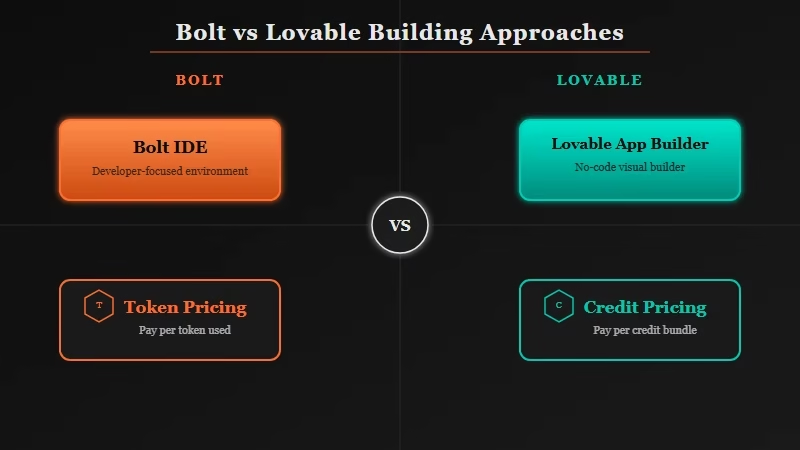
How Bolt and Lovable Approach Building Differently
Bolt is a token-based browser IDE that gives developers full code visibility, while Lovable is a credit-based app builder that hides the code and optimizes for speed. Bolt suits developers; Lovable suits non-developers.
From what I have seen, the distinction matters most when things go wrong. In Bolt, a broken component is fixable because you can read the code, find the issue, and prompt a specific fix.
In Lovable, you describe the symptom and hope the model diagnoses it correctly, since you cannot inspect the underlying implementation.
That is not a knock on Lovable. It is a trade-off.
Lovable optimizes for the first 30 minutes of a project. Bolt optimizes for the next 30 hours. Both tools use Claude Sonnet as their primary model under the hood, so the difference is not intelligence, it is the interface around it.
How the Pricing and Credit Systems Stack Up
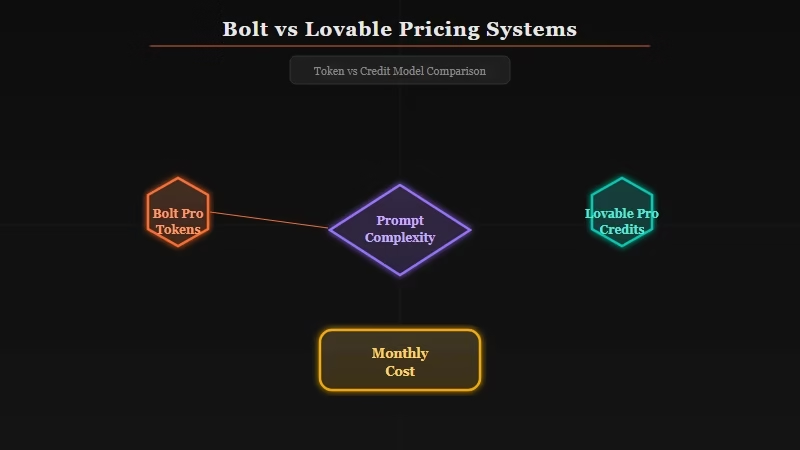
Bolt and Lovable Pro both cost $25/month. Bolt measures usage in tokens (10 million per month at Pro); Lovable uses credits. Both free tiers are heavily restricted, making Pro the practical entry point for real projects.
Here is how the full pricing tiers compare:
| Plan | Bolt | Lovable |
|---|---|---|
| Free | 1M tokens/month, 300K daily cap | ~30 credits/month (5/day) |
| Pro | $25/mo, 10M tokens | $25/mo |
| Teams | $30/member/month | $50/month (Business) |
| Enterprise | Custom | Custom |
The pricing parity is real but misleading. Bolt’s token consumption varies by prompt complexity. A long, detailed prompt that generates 400 lines of code burns more tokens than a short targeted fix.
Some users burn through 10M tokens in two weeks on ambitious projects. Lovable’s credit system is more predictable, but harder to estimate before you start.
One concrete reference point: a mid-complexity SaaS prototype with authentication, a dashboard, and one core feature cost roughly 3-4 million tokens in Bolt and around 15-20 credits in Lovable. Both are comfortably within the Pro plan for that type of project.
For context on the scale of developer interest here: Bolt’s open-source bolt.diy repository has crossed 50,000 GitHub stars, which puts it among the fastest-growing developer tools of the past 18 months.
Who Should Choose Bolt
Bolt is the right pick for developers and technical builders who want AI speed without giving up code ownership. If you can read a React component and debug a TypeScript error, Bolt gives you the full implementation and lets Claude handle the generation work.
Here is when Bolt wins:
- You want to deploy to your own infrastructure, not Bolt’s hosting
- You need full version control via GitHub or GitLab integration
- The app has custom business logic that requires direct code edits
- You are building past the prototype stage into a production codebase
- Code visibility matters more than speed of first output
The Cursor vs Windsurf comparison covers the IDE-side of AI coding if your workflow involves file-by-file development rather than full-stack scaffolding. Bolt sits between those tools and Lovable, closer to the developer end of the spectrum.
Who Should Choose Lovable
Lovable is the right pick for non-developers, founders validating ideas fast, and designers building prototypes. The tradeoff is less code control in exchange for faster first results and no terminal setup.
Here is when Lovable wins:
- You are not a developer and do not want to become one
- You need a working demo for users or investors within a few hours
- The project is a single-purpose tool or internal utility, not a complex app
- You want built-in hosting without a separate deployment step
- Revision speed on early-stage prototypes matters more than code ownership
If the app you are building needs AI agent capabilities on the back end, Dynamiq handles the orchestration layer on top of whatever Lovable scaffolds. You get the fast front end from Lovable and a proper agent architecture underneath without managing both.
For a broader look at what AI infrastructure handles at the model layer, the Anthropic Managed Agents breakdown covers how multi-step agent capabilities are being deployed in production apps.
The Final Verdict
Both tools are genuinely capable. The choice comes down to the builder, not the product:
| Criteria | Bolt | Lovable |
|---|---|---|
| Price (Pro) | $25/month | $25/month |
| Usage unit | Tokens (10M/mo) | Credits |
| Code visibility | Full | Abstracted |
| Target user | Developer / technical | Non-developer |
| Prototype speed | Fast | Faster |
| Best for | Complex, multi-week builds | Quick prototypes and demos |
For anything going to production and staying there, Bolt gives you the flexibility you will eventually need. For investor demos, internal tools, and quick-turn ideas, Lovable gets you there without the setup cost.
If you need automation workflows connecting your app to external services, the n8n review covers the strongest open-source option for that layer without per-operation pricing.
Frequently Asked Questions
Is Bolt or Lovable better for non-developers?
Lovable is better for non-developers. It hides the code entirely and delivers a working prototype from a plain text prompt. Bolt works best for users who can read and edit code when the AI’s output needs targeted fixes.
Do Bolt and Lovable cost the same?
Both Bolt and Lovable Pro plans cost $25/month. Bolt measures usage in tokens (10 million per month at Pro) and Lovable uses a credit system. The pricing is identical but which gives more value depends on your project complexity and build cadence.
Can I export code from Bolt and Lovable?
Bolt gives full code export to GitHub or as a zip file on all plans. Lovable supports GitHub sync and code export on Pro plans as well. Bolt’s code visibility throughout the build process makes ownership more natural from day one.
Which is faster for prototyping, Bolt or Lovable?
For a first prototype, Lovable is slightly faster. A typical single-feature app takes 20-30 minutes in Lovable versus 30-45 minutes in Bolt. Bolt makes up the time gap during iteration, since direct code edits are faster than prompt-based revisions for targeted fixes.
What happens when you hit your token or credit limit?
On Bolt, you can purchase additional tokens or wait for the monthly reset. On Lovable, you can upgrade your plan or buy additional credits. Both tools surface usage in the dashboard, so monitoring burn before you hit the wall is straightforward.
