
Key takeaways
- Alexa+ is now available through a browser, expanding beyond devices into research, writing, and planning.
- Agentic integrations allow Alexa+ to handle bookings and services inside a single conversation.
- Amazon is positioning Alexa+ as a daily AI interface while balancing its parallel investment in Anthropic.
Amazon has brought Alexa+ to the web, and that single move changes how we should read Amazon’s AI strategy.
Alexa is no longer confined to speakers or phones. A browser-based interface now places it directly in the same mental category as ChatGPT, Gemini, Claude, and Grok.
This shift matters because Alexa already lives inside daily habits. People plan, shop, cook, and organize life with it.
Giving that assistant a full web interface removes the device barrier and reframes Alexa+ as a general-purpose AI, not just a voice helper.
Early access signals intent. Research, writing, and planning now sit alongside shopping and household tasks.
The experience pushes conversational AI to the front instead of hiding it inside menus or secondary screens.
Amazon also sits in a strategically awkward spot. Heavy investment in Anthropic means backing Claude while positioning Alexa+ as a parallel offering.
Distribution through widely used devices gives Alexa+ leverage that most chatbots lack, even before we judge the interface itself.
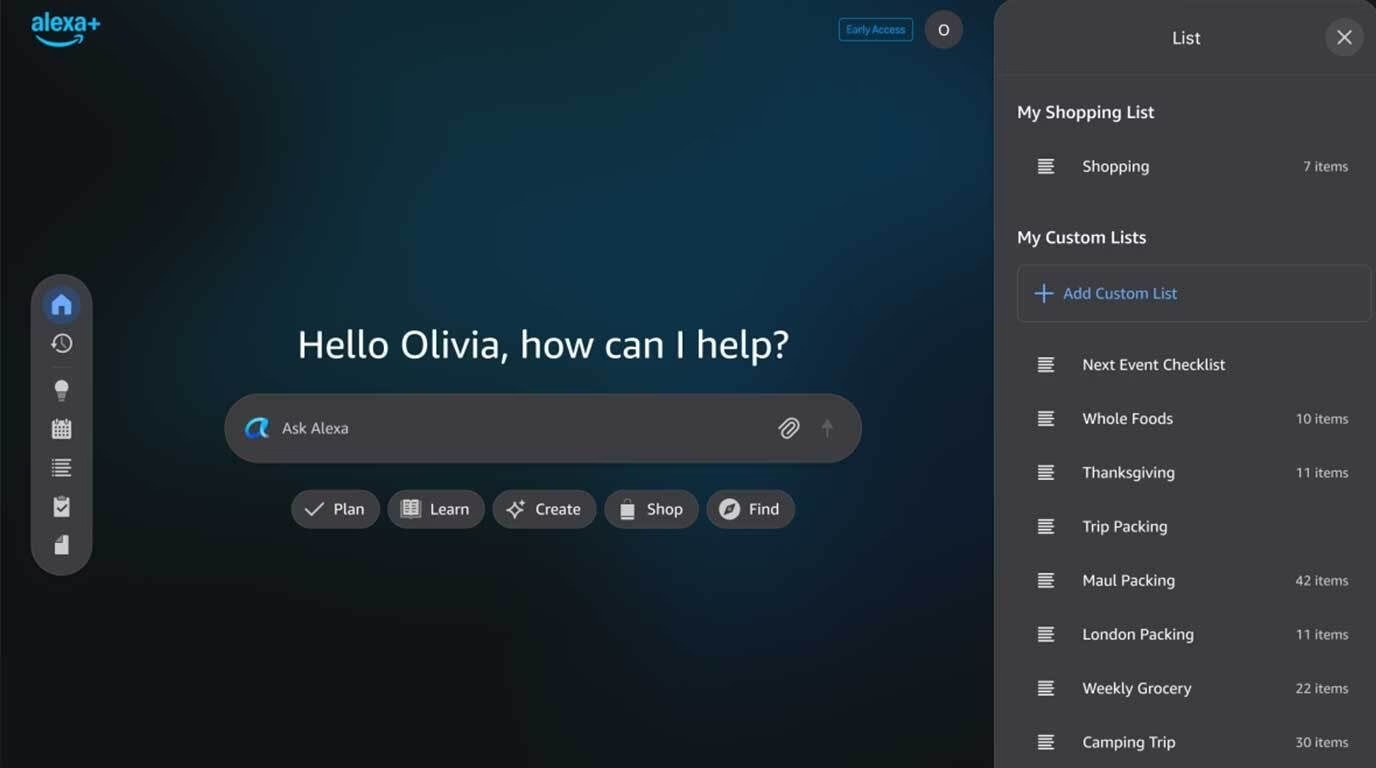
How Alexa+ on the web changes how people use Alexa
Alexa+ moving into the browser removes a long-standing limitation. Tasks like research, writing, and planning no longer require a speaker or a phone.
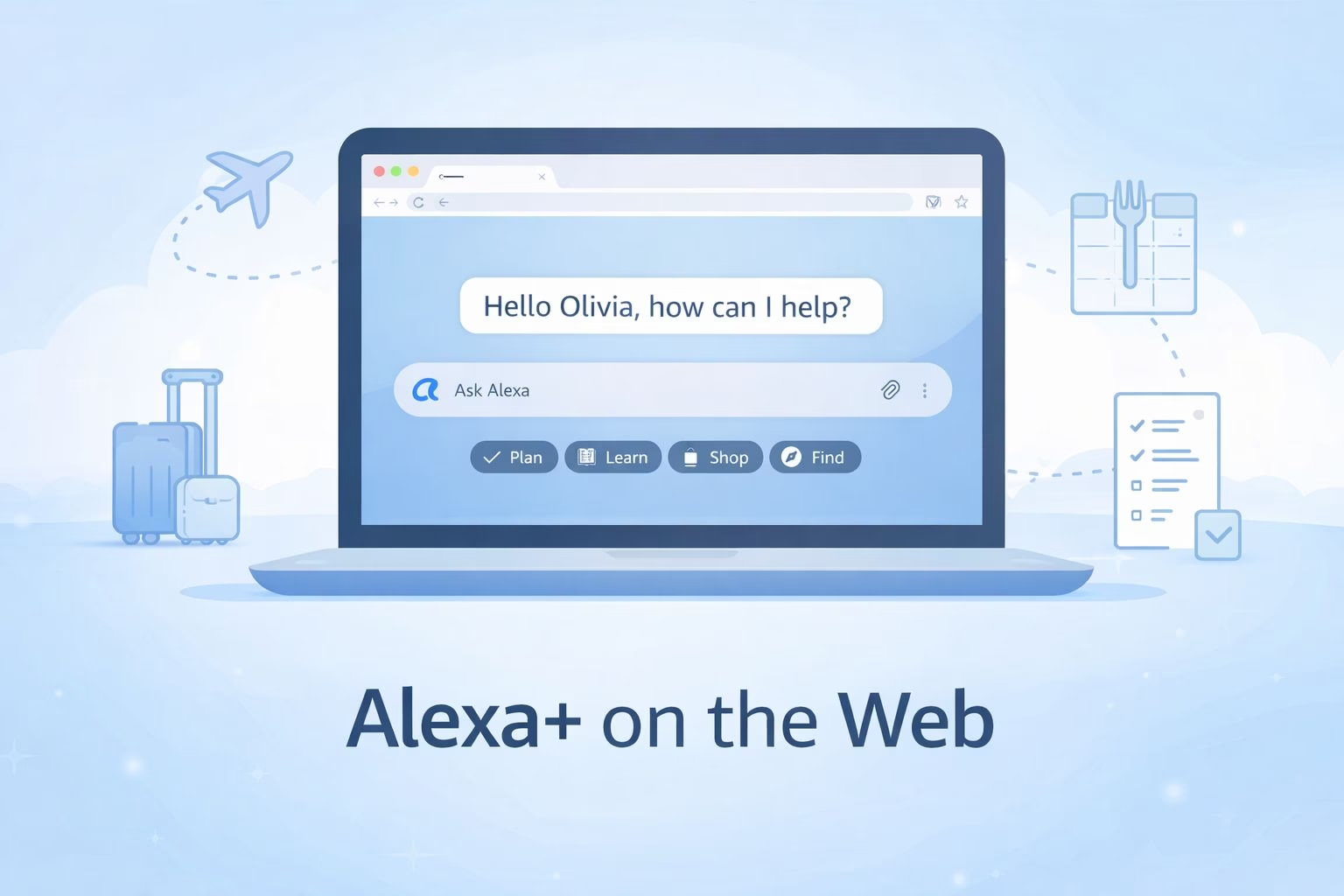
Access now works through any browser for Early Access users, which marks a clear expansion beyond physical devices via Alexa.com.
That change reframes Alexa+ as something you sit down with, not just something you talk to in passing. Planning a trip, outlining text, or organizing tasks fits more naturally on a larger screen.
The assistant stops feeling peripheral and starts acting like a primary workspace tool.
Amazon reinforced that direction by redesigning the Alexa mobile app around a chatbot-first experience. Conversational AI is no longer buried inside menus.
The chat interface becomes the main interaction point, which signals how Amazon expects people to use Alexa going forward.
Usage patterns back up the shift. Amazon reports that engagement jumped sharply after the Alexa+ rollout, with shopping and cooking activity running at three to five times previous levels.
That suggests people respond when the assistant feels more present and less constrained.
What Alexa+ agentic features mean for real tasks
Alexa+ now handles actions, not just answers.
Its expanded agentic capabilities support bookings and services through partners like Expedia, Yelp, Angi, and Square, alongside Uber and OpenTable, allowing tasks to be completed inside a single conversational flow according to Amazon’s Alexa+ integrations announcement.
This matters because it reduces handoffs. Instead of searching, switching apps, and confirming details manually, tasks stay inside one interaction.
That positions Alexa+ closer to an assistant that executes, not just advises.
The web interface strengthens that promise. Managing reservations or planning services makes more sense when details are visible and editable on screen.
The browser setting supports more deliberate tasks that voice alone struggles to handle cleanly.
Amazon is betting that these integrations create stickiness. If people rely on Alexa+ for planning and execution, switching to another chatbot becomes less attractive.
That advantage does not depend on model benchmarks, only on how well the assistant fits into daily workflows.
Why Amazon is pushing Alexa+ into the chatbot space
Amazon’s move into browser-based AI places Alexa+ directly against established chatbots.
The launch of Alexa.com gives it a familiar web surface where people already expect to research, write, and plan. That choice signals intent to compete head-on rather than stay confined to voice-first use.
This push feels strategically tense. Amazon has invested heavily in Anthropic while also positioning Alexa+ as a first-party AI assistant.
Running two bets in overlapping spaces creates internal pressure, even if the public framing stays neutral.
Distribution softens that tension. Alexa already exists on devices people actively use, which most chatbots cannot claim.
Bringing that assistant to the web extends reach without rebuilding habits from scratch.
From our perspective at RoboRhythms.com, this looks less like a feature launch and more like a positioning reset.
Amazon wants Alexa+ to be seen as a daily AI interface, not a background utility.
Where Alexa+ sits compared to other AI assistants
Alexa+ now occupies an unusual middle ground. It competes with chatbots focused on text-based tasks while retaining deep ties to shopping, cooking, and household routines.
That blend sets it apart without introducing entirely new categories.
Unlike tools built purely for conversation, Alexa+ leans into execution. Agentic integrations with travel, local services, and reservations emphasize outcomes over dialogue.
The browser interface supports that goal by making actions easier to review and adjust.
The strategic contrast matters more than model comparisons.
Amazon appears comfortable with that tradeoff. Alexa+ does not need to win every comparison to matter. It only needs to stay embedded where people already plan and act.
