
My Take: Stop trying to spot deepfakes by eye. The experts who study this say human detection has already lost the arms race, so the endless “here are the tells” guides are teaching a skill that no longer works. The real danger is not that you will believe a fake, it is that you will stop believing what is real.
Every week another article teaches you to spot AI fakes: count the fingers, watch the blinking, look for melting jawlines. It is comforting advice, and it is already obsolete.
The people who build deepfake detection for a living are blunt about this. Human eyes have crossed into a zone where synthetic video and cloned voices are, for ordinary viewers, indistinguishable from the real thing. The tells you are being taught are the tells the next model fixes.
Here is the argument I want to make: we are training people for the wrong fight. The threat that matters in 2026 is not that you will be fooled by a fake video. It is that you will wave away a real one as “probably AI,” and so will everyone else.
The Mainstream View and Why It Falls Short
The mainstream advice is to learn the visual tells and verify with your own eyes, and that advice is quietly expiring.
The detection checklist keeps getting longer because each old tell stops working.
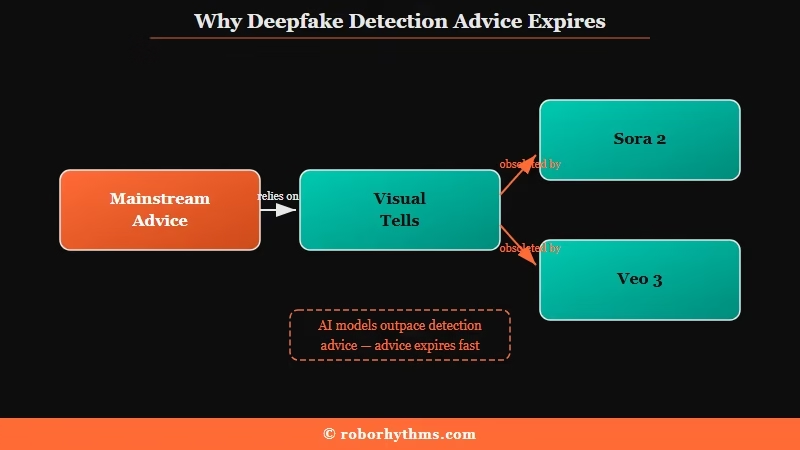
The standard guidance has moved on from “weird teeth” to subtler cues. Dr. Ryan Ries recommends watching for unnatural blinking, jawlines that detach when a head turns to profile, and breathing sounds that loop or land at the wrong moment. It is smart, specific advice, and it has a short shelf life.
The problem is that this framing treats detection as a skill you can keep sharp. The experts who study it disagree. As NPR reported on AI crowds, researchers now describe verifying reality as a “practice” rather than a glance, because models like Sora 2 and Veo 3 close each visual gap faster than people can learn it.
What I keep noticing is that every “spot the deepfake” guide is a snapshot of last quarter’s flaws. By the time it ranks on Google, the model that produced those flaws is two versions back. You are studying for an exam whose questions changed.
What’s Actually Happening
Human detection has already lost; the defense has moved to provenance and infrastructure, not your eyes. This is the part the listicles skip.
Dr. Siwei Lyu at the University at Buffalo describes synthetic media reaching an “indistinguishable threshold,” where it is visually and audibly identical to a real recording for non-experts. The way I read that, the honest takeaway is not “look harder,” it is “looking has stopped working.” Even the technical detection software is, in his framing, losing the arms race.
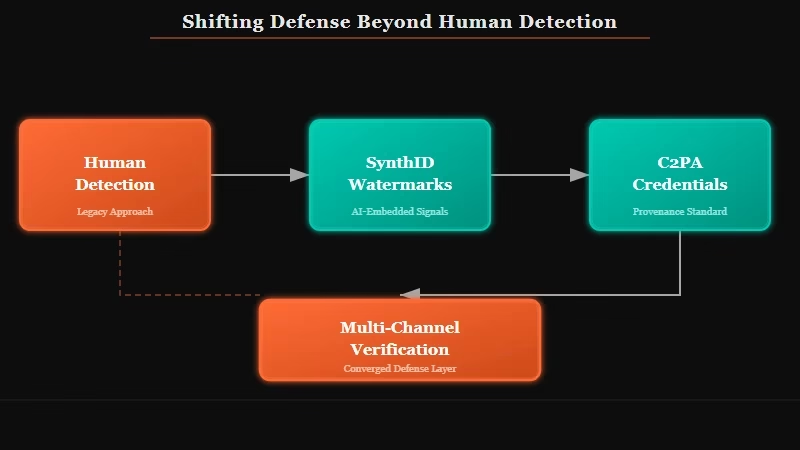
The serious money is going somewhere else entirely. Google DeepMind’s Oliver Wang points to invisible watermarks like SynthID and cryptographic content credentials such as the C2PA standard, which tag where a piece of media came from. The catch I find telling: platforms like X often strip that metadata to save space, so the one verification layer that works rarely survives the trip to your feed.
So the realistic defense is procedural, not perceptual. Security researchers now recommend the same low-tech habits you would use against a phone scammer: a family safe word for suspicious video calls, and multi-channel confirmation before you act on any urgent request. From what I have seen, that advice ages far better than any list of pixel artifacts.
Here is the shift in plain terms.
| Old advice (expiring) | 2026 reality |
|---|---|
| Spot the fake by eye | Human detection has hit the indistinguishable threshold |
| Learn the visual tells | Each tell is patched in the next model release |
| Trust detection software | Detection is losing the arms race |
| Believe it if it looks real | Provenance and signatures matter more than appearance |
The Part Nobody Wants to Admit
The bigger danger is the liar’s dividend: once everyone knows fakes are perfect, real evidence gets dismissed as fake. Fakery does not just manufacture lies, it discredits the truth.
Thomas Smith of Gado Images describes the move that is already routine: damaging but genuine footage surfaces, and the subject simply says “that’s an AI fake.” The accusation no longer has to be proven, because everyone now knows a perfect fake is possible. Doubt is free.
What I find more corrosive than any single fake is what this does to accountability. A real recording of misconduct used to be the end of an argument. Now it is the start of one, and the person caught on camera gets a built-in escape hatch the rest of us handed them by panicking about fakes.
There is a quieter version too. Charlie Fink at Chapman University notes that most people view everything on a small phone screen and default to “if it looks real, it is real.” Combine credulity about fakes with cynicism about reality and you get the worst of both: people believe the lies that flatter them and disbelieve the truths that do not.
Hot Take
Teaching people to spot deepfakes is the most useless digital-literacy lesson of 2026, and it is actively harmful because it sells the comforting fiction that your eyes are still in charge. They are not. Stop auditing pixels and start auditing provenance, because the only question that will still matter next year is not “does this look real” but “where did this come from and who signed it.”
Before you share or rage at the next viral clip, change the reflex.
Before: A shocking video lands in your feed, it looks real, so you believe it and repost, or it looks slightly off, so you smugly call it fake.
After: You ignore how convincing it looks, check whether it carries content credentials, trace it to a primary source, and withhold judgment until provenance is clear.
If you want the practical habits to pull this off, work through these in order:
- Treat every emotionally charged clip as unverified until you find its original source, not just the account that reposted it.
- Check for content credentials or a C2PA signature, and be suspicious of media that arrives stripped of all metadata.
- Use a second channel to confirm anything urgent, especially a video or voice call asking for money or access.
- Refuse to accept “it is just AI” as proof a real recording is fake, and demand the same provenance trail you would for a fake.
This is the same erosion of trust I have written about in why Americans distrust AI, and it connects to the damage done by false AI detection accusations.
The political version is already here, as the 2026 midterm AI deepfakes showed.
Quick Takeaways
- Learning to spot deepfakes by eye is a dead skill; researchers say synthetic media has hit the indistinguishable threshold.
- Every “spot the tells” guide documents flaws the next model already fixed.
- The real defense is provenance, content credentials like C2PA and SynthID, plus procedural habits like safe words.
- The liar’s dividend is the underrated threat: real footage gets waved away as “probably AI,” gutting accountability.
- Stop asking “does this look real” and start asking “where did this come from and who signed it.”
