
What’s Changed: Since the April 20 JLLM architecture swap, incomplete responses on Janitor AI come from three causes: a deliberate early-stop when the model detects repetition, the 16,384 token context cap, and the occasional CSS line-height bug hiding completed text. The fix depends on which cause you are hitting.
If your Janitor AI replies have been getting cut off mid-sentence since late April, you are running into a real platform change, not your card or your prompt. JLLM swapped to a new base model architecture on April 20, 2026, tuned with Gemini and Opus data, and the rollout reshaped how the system handles repetition, context overflow, and the Continue button.
This guide walks through the three cause categories, a quick diagnostic to figure out which one you are hitting, the seven fixes that work, and when the right move is to switch to an external API key on JanitorAI instead of fighting JLLM. I will also cover the new May 2 sampler chips and which toggles really prevent stub replies.
For context, the Janitor AI JLLM quality drop post-mortem covers the broader architecture issues; this article focuses specifically on the cut-off-reply symptom.
What Causes Incomplete JLLM Responses
Incomplete JLLM responses are caused by one of three things: a repetition-loop early stop, hitting the 16,384 token context limit, or a CSS line-height bug hiding text that did generate.
The fix depends on which one, and the diagnostic takes thirty seconds.
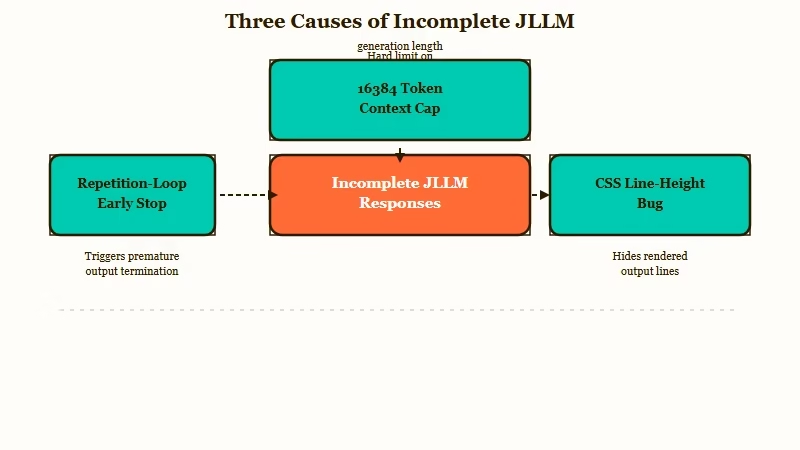
From what I have seen, the breakdown roughly looks like this. The repetition-loop stop is the most common since April 20, because the system now intentionally cuts generation short when it detects token loops or phrase doubling.
The model architecture caught a problem, the system stopped writing before it filled the reply with garbage, and the user sees a half-sentence.
The token cap accounts for fewer cases than people assume. The current limit is 16,384 tokens, which is enough for most long-running chats unless your character card runs heavy or the chat history has accumulated heavily.
The CSS rendering bug is rare but real, and it is the easiest one to mistake for a generation problem because the text is there, just clipped visually.
Janitor AI’s developers also flagged in May that some short or failed responses were tied to a dead GPU host still receiving traffic and to a background job queue spiral, neither of which the user can fix.
With AI companion usage continuing to scale across the niche, per Statista’s chatbot market data, infrastructure load on smaller platforms like Janitor AI shows up as exactly these kinds of intermittent symptoms. Knowing the cause lets you stop wasting time on the wrong remedy.
The Thirty-Second Diagnostic
The diagnostic is three checks: look at the message length, look at the last visible word, and try Continue.
Each combination points at a different cause.
Run the checks in this order:
- Count the rendered message. If it is under 20 words and the reply ended cleanly with a period, the model was probably routed to a “thinking” inference path (about 1 in 5 requests get this). Try Reroll and pick the longer swipe.
- If the reply ended mid-sentence with a partial word or no terminal punctuation, that is a repetition-loop early stop. The model caught a problem and bailed. Reroll, do not edit.
- If the reply looks complete but the last visible line is cut visually at the bottom, screenshot the chat and zoom. If the text continues past the visible line, the CSS line-height bug is hiding text. Refresh the page; the reply will render correctly.
A quick worked example of the diagnostic in practice.
Before: Bot reply ends “she turned toward the window and” with no period. You assume the token limit hit and add more permanent memory tokens to “fix it”. The problem gets worse.
After: Same bot reply ends “she turned toward the window and” with no period. You recognise this as a repetition-loop early stop, reroll once, and get a complete reply.
The Janitor AI JLLM grammar fix walkthrough goes deeper on the April 20 architecture change if you want the full backstory on why repetition stops behave this way now.
Seven Fixes That Work on the New JLLM
The seven fixes break into two groups: card and prompt changes that prevent repetition triggers, and platform settings that give JLLM more room to finish.
Apply them in order; the first three solve most cases.
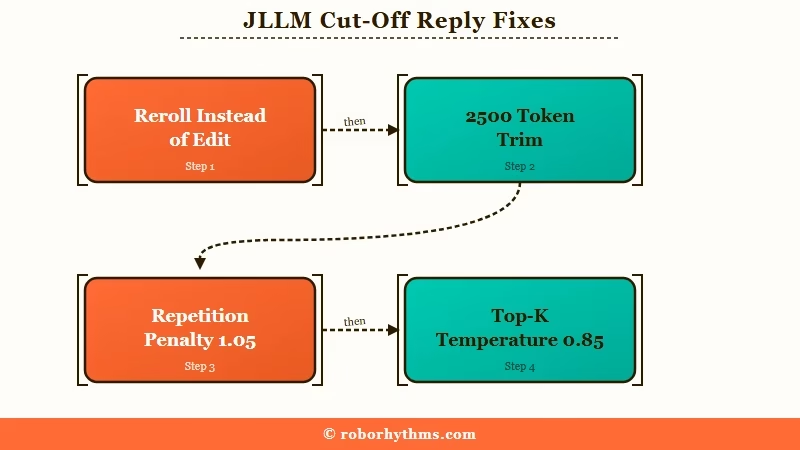
Here is the priority order I would use.
| Fix | When to use it | Effort |
|---|---|---|
| Reroll instead of edit | First sign of a cut-off mid-sentence reply | 1 click |
| Trim character card to 2500 tokens | Cards over 4000 tokens or any “stub reply” cluster | 5 minutes |
| Lower repetition penalty to 1.05 | Recent rerolls keep hitting the same cutoff | 30 seconds |
| Calibrate the May 2 sampler chips | After the basic fixes, fine-tune output stability | 2 minutes |
| Use XML-style instructional tags | When the bot ignores length requests in plain prose | 5 minutes |
| Switch to external API key (OpenAI or Claude) | JLLM keeps cutting off after the first four fixes | 15 minutes |
| Summarise older chat into one Memory entry | Long-running chats nearing 16k tokens | 10 minutes |
The way I see it, the reroll-first habit is the cheapest win. The new architecture’s early-stop logic is conservative, and rerolls usually escape the loop on the first try. The card trim is the second cheapest because the platform-level token budget rewards smaller permanent memory.
On the sampler chips introduced May 2, the toggle that prevents the most stub replies is the one that limits per-token sampling aggressiveness. Lowering top-K and bumping temperature slightly to 0.85 gives the model more variety to escape repetition without spinning off into incoherence. The Janitor AI roleplay prompt fixes breakdown covers the sampler math in detail.
If you have tried the first four fixes and replies are still cutting off, an external API key is the cleanest reset. OpenAI and Claude both work through Janitor AI’s bring-your-own-key flow, neither inherits JLLM’s repetition early-stop, and the context windows are substantially larger. Cost is the trade-off, but if you spend more than an hour a day on the platform, an API key pays for itself in reduced friction.
XML Tags That Force Complete Replies
XML-style instructional tags placed at the start of the persona field work better than plain-language length requests on the new JLLM architecture.
The model treats tag-wrapped instructions as higher priority than prose instructions buried in a card.
In my experience, the three tags that produce the most consistent complete replies are these.
Vague: “Please write longer responses with full descriptions of the scene and the character’s emotions.”
Specific:
<length>minimum 3 paragraphs per reply</length>
<style>complete the thought before ending the message</style>
<continuity>refer to the previous message before introducing new content</continuity>
The vague version asks; the specific version instructs. JLLM’s new architecture weights structured instruction tokens more heavily than embedded prose, so the same intent expressed as tags survives context-window pressure better than the same intent in a paragraph.
These tags belong in the persona field, not in a free-form instruction message at the start of the chat. Permanent tokens get preserved as chat history fades, so a tag in the persona survives ten thousand messages while a tag in the first turn fades after the first context compression.
When to Swap to an Alternative Platform
Swap to an alternative platform when you have applied the first six fixes, replies are still cutting off, and you do not want to maintain an API key.
The alternatives that hold up under the same use cases are limited.
Crushon AI is the closest like-for-like substitute for Janitor AI users. The platform supports comparable character customisation, has a larger free-tier message budget than JLLM under load, and does not currently have the repetition-loop early-stop behavior. The negotiated affiliate rate runs 60% recurring, which matters if you end up subscribing.
Candy AI is the right pick if you also want voice, image, and Live Action video features rolled into the same platform. The V2 engine has persistent character traits that survive backend swaps, so you avoid the entire class of architecture-change disruptions that JLLM has been going through.
Nectar AI is the third option I would seriously consider, especially as a backup home for your most important character. Their architecture separates persona from chat context cleanly, which limits the damage from any future model swap. The entry-level tier is cheap enough to run alongside Janitor AI without a real budget hit.
For a broader comparison across the alternative landscape, the Janitor AI alternatives breakdown ranks the options by use case.
Frequently Asked Questions
Why does Janitor AI cut off mid-sentence after the April update?
JLLM’s new architecture deliberately stops generation early when it detects a repetition loop or token doubling. The system would rather give you a half-reply than fill the message with garbage. Reroll instead of editing.
Is the 16k token context limit causing my short replies?
Usually not. The 16,384 token cap is enough for most chats unless your card is over 4000 tokens or your history is very long. The repetition early-stop is the more common cause.
Will using OpenAI or Claude API keys fix incomplete responses?
Yes for the JLLM-specific causes. External API keys bypass the repetition early-stop, have larger context windows, and produce more consistent reply lengths. The trade-off is the per-message cost.
What sampler settings stop the cutoff problem?
Lower top-K, set temperature to 0.85, and lower repetition penalty to 1.05. These give the model variety to escape loops without losing coherence. The May 2 sampler chip UI exposes these as toggles.
Why does the Continue button work sometimes but not others?
The redesigned Continue button generates in-place without deleting alternate swipes. It works when the cause was a clean early stop. It does not work if the underlying cause is a token-loop the model still wants to enter.
Are some short replies a UI bug rather than the model cutting off?
Yes, occasionally. A CSS line-height bug clips text visually that did generate. Refresh the page; if the reply expands, the model was fine and the rendering layer was the problem.
