
The Verdict: Joyland AI and Character AI both target the casual AI companion crowd with restrictive filters and short-window memory. Character AI wins on character library depth and creator tooling. Joyland AI wins on cleaner mobile UX and a smaller learning curve. For long-running storylines or unrestricted scenarios, neither is the right pick, you want a paid memory-forward platform.
The Joyland AI vs Character AI choice is not really between two great tools, it is between two near-equivalent casual tools that differ on the margin.
Both ship with aggressive content filters, both have short-window memory that drifts after a couple of dozen turns, and both push their paying users into tier upgrades that solve the wrong problems.
What I noticed running both side by side is that the differences only matter to specific user types. For casual chat users, the experience is genuinely close. For roleplay-heavy users, both platforms hit the same wall just at slightly different speeds.
This comparison covers what Joyland AI vs Character AI looks like across memory, filter behaviour, character variety, pricing, and which one fits your specific use case.
How Joyland AI and Character AI Stack Up
Joyland AI is a smaller, cleaner, mobile-first AI companion app with a discovery-style character feed. Character AI is the older, larger platform with a deeper character library, more creator tools, and a more rigid content filter.
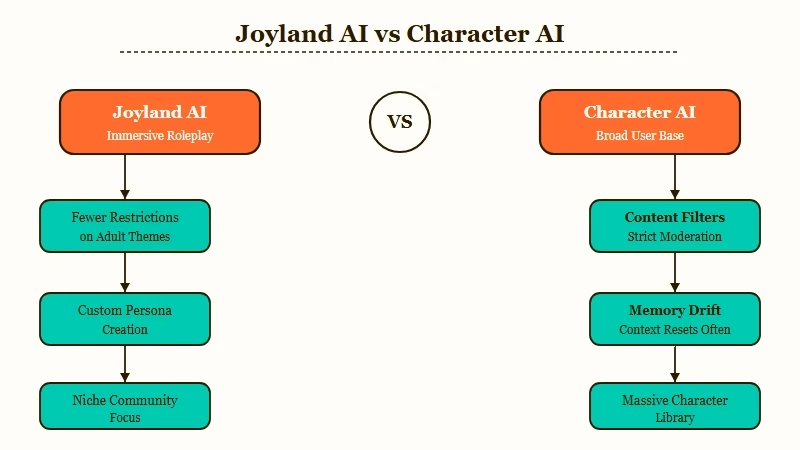
The way I see it, the two platforms occupy the same product category but optimise for different stages of the user journey. Joyland AI optimises for first-session retention, the character feed makes discovery effortless, and the mobile UX is one of the cleanest in the niche.
Character AI optimises for long-term creators, the character authoring tools are deeper, the lorebook system is real, and the community of character builders is large enough to keep the library expanding daily.
| Dimension | Joyland AI | Character AI |
|---|---|---|
| Free tier daily cap | Roughly 30 to 50 messages | Soft cap, varies by load |
| Memory persistence | Drifts after about 20 turns | Drifts after about 30 turns with PipSqueak 2 |
| Character library size | Mid-sized, growing | Very large, mature creator base |
| Creator tooling | Basic | Deep (lorebook, definition templates) |
| Filter strictness | Aggressive on creative scenarios | Aggressive on creative scenarios |
| Mobile experience | Strong | Acceptable, less polished |
| Paid plan effect | Lifts cap, not filter or memory | Lifts cap, slightly better memory |
What surprised me is how similar the two end up feeling once you get past the first session. The first impression on Joyland AI is better, but the long-tail differentiation on Character AI is what keeps power users there even after the Roar and Soft Launch removal that shook the platform.
For users who already churned off Character AI specifically because of the filter, switching to Joyland AI is a sideways move. The Character AI alternatives roundup covers the platforms that actually solve the filter and memory problems Joyland AI does not.
Who Should Choose Joyland AI
Joyland AI is the right pick for casual users who want low-friction discovery, a clean mobile UX, and a smaller learning curve than Character AI.
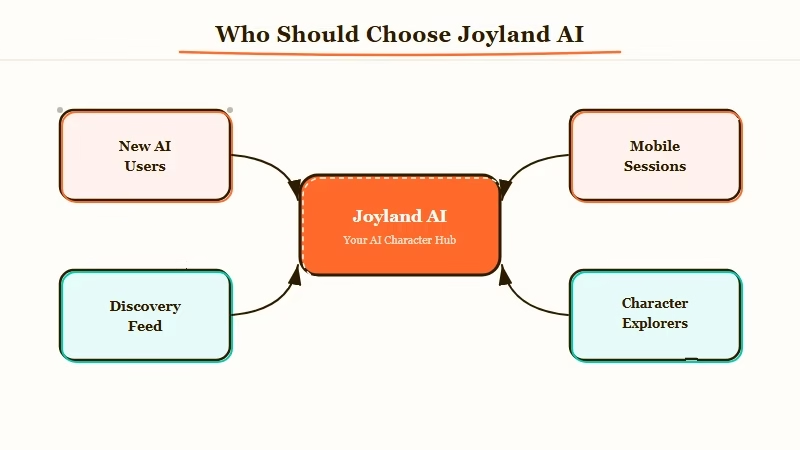
From my experience, the Joyland AI user profile is someone who chats with characters for short bursts, picks from the public library rather than building, and uses the app on mobile more than desktop. If that sounds like you, Joyland AI is the smoother on-ramp.
Three concrete cases where Joyland AI is the right pick:
- You are new to AI companion apps. Joyland AI’s onboarding is the lowest-friction in the casual category.
- You chat in short sessions on mobile. The mobile app is the strongest in this comparison.
- You want a discovery feed, not a creator tool. The library browsing experience is genuinely better than Character AI’s.
Where Joyland AI falls down is where Character AI also falls down: heavy roleplay sessions, long storylines, and anything bumping up against the filter.
If you fit any of those use cases, the Character AI alternatives roundup is a more honest starting point than either Joyland AI or Character AI.
Who Should Choose Character AI
Character AI is the right pick for users who want deeper character authoring tools, a much larger character library, and the strongest creator community in the casual companion category.
Character AI’s strength has always been its scale. The library is large enough that almost any niche character exists. The lorebook system is the deepest creator tool in this product category, and the definition template structure makes it possible to build characters that are genuinely consistent across sessions.
Three concrete cases where Character AI is the right pick:
- You want to build your own characters. The authoring tooling is meaningfully deeper than Joyland AI’s.
- You care about library depth. Character AI has the largest character ecosystem in the niche.
- You are already invested in a Character AI persona library. Migration cost off Character AI is real, and Joyland AI does not give you enough lift to justify it.
The April 2026 platform changes (PipSqueak 2 forced default, Roar removed, Soft Launch removed) mean Character AI feels worse for some power users than it did six months ago. The trade is real but does not flip the verdict for users who care about library scale.
Example scenario: If you want a companion who remembers a multi-week storyline and references events from earlier sessions without prompting, on Joyland AI the character will forget the storyline by week two and you will need to reintroduce context every session. On Character AI with PipSqueak 2, the character holds memory slightly longer but still drifts on long timelines, and the filter is stricter on creative scenarios. Neither is the right tool for that use case, you want a memory-forward paid platform like Candy AI.
Pricing and Value Comparison
Joyland AI and Character AI both run freemium models with paid tiers that lift quotas but do not change the underlying filter or memory architecture, which means paid value is structurally similar between them.
What I would point out is that the comparison most users care about is not Joyland AI Pro vs Character AI Plus, it is “should I pay for either of these or move to a memory-forward alternative.” For most heavy users, the answer is the alternative.
Here is the pricing-decision framework I would walk through:
- Test free on both for one week each. Decide based on which one you actually open more.
- Time the paid tier upgrade. If you only need it for the cap, the paid plan is fine. If you are upgrading to fix memory or filter behaviour, you will be disappointed.
- Compare the same monthly spend against Candy AI. Candy AI’s memory architecture and content scope are meaningfully different at a similar price point.
- Avoid annual on first purchase. Both platforms ship enough product changes that locking in 12 months is a higher risk than monthly pricing implies.
According to Statista’s market sizing, the global AI chatbot market crossed 15 billion USD in 2024 with double-digit projected growth through 2030.
The platforms that retain paying users in this market tend to be the ones with persistent memory and adjustable filters, neither of which is a structural strength for Joyland AI or Character AI.
| Decision | Pick this |
|---|---|
| Casual chat, mobile, low-friction discovery | Joyland AI |
| Deep character authoring and large library | Character AI |
| Long-running roleplay with persistent memory | Candy AI |
| Looser filter without sacrificing structure | A paid memory-forward alternative |
| Free-only, no commitment | Either, test both |
Frequently Asked Questions
Is Joyland AI better than Character AI?
Joyland AI is better than Character AI for casual users who want a clean mobile experience and easy discovery. Character AI is better for users who want deeper character authoring tools and a larger character library. Neither is better for long-running roleplay or unrestricted scenarios.
Does Joyland AI have a stricter filter than Character AI?
The filters are similarly aggressive on creative or edge-case scenarios. Joyland AI feels slightly more restrictive in some cases because the platform is smaller and the filter has fewer escape valves built by the community. Character AI’s filter is more tested but not meaningfully looser.
Which has better memory, Joyland AI or Character AI?
Character AI’s PipSqueak 2 default has slightly longer memory persistence than Joyland AI’s free tier, drifting around turn 30 versus turn 20. Both are short-window. For real long-running storylines, neither is the right tool.
Is Joyland AI free?
Joyland AI has a free tier with a daily message cap of roughly 30 to 50 messages, and a paid Pro plan that lifts the cap. The paid plan does not loosen the filter or extend memory architecture meaningfully.
Can I migrate Character AI characters to Joyland AI?
No direct migration path exists. You would need to recreate characters manually, which is one reason Character AI users tend to stay on Character AI even after platform changes they dislike.
What is the best alternative to both Joyland AI and Character AI?
For users who want long-running roleplay with persistent memory and a more permissive filter, Candy AI and Nectar AI both solve the structural problems Joyland AI and Character AI do not.
