
What Happened: Apple pulled the high-memory Mac Mini and Mac Studio configs from sale in early April 2026, with the rest quoting 16 to 18 week lead times. The driver is not a generic DRAM crunch. It is consumers buying headless Macs to run local AI agents like OpenClaw.
The Mac Mini and Mac Studio shortage in April 2026 is not the usual supply story. In the first two weeks of this month, Apple stopped accepting orders entirely for Mac Mini configurations with 32GB and 64GB of RAM, and for Mac Studio configurations with 128GB and 256GB of unified memory. The ones still orderable are shipping 16 to 18 weeks out in the US.
What is unusual is why. This is not a DRAM-price ripple working its way through consumer hardware. It is AI agent demand hitting Apple’s silicon allocation, and it is the first time consumer-level AI use has physically dented a Mac product lineup.
I have been watching OpenClaw setup threads for months, and something shifted in March. The people who used to ask if they could get away with 16GB started buying 64GB Mac Minis as dedicated agent boxes. Then Tom’s Hardware and TechRadar confirmed what the forum talk was already suggesting.
If you care about what is happening at the consumer end of the AI stack, this shortage is the hardware receipt for Anthropic hitting 30 billion ARR. The enterprise and consumer sides are the same demand story told from two angles.
What Actually Happened
The Mac Mini and Mac Studio shortage hit in early April 2026 when Apple pulled high-RAM configs entirely and slapped 16-to-18 week ship times on the rest.
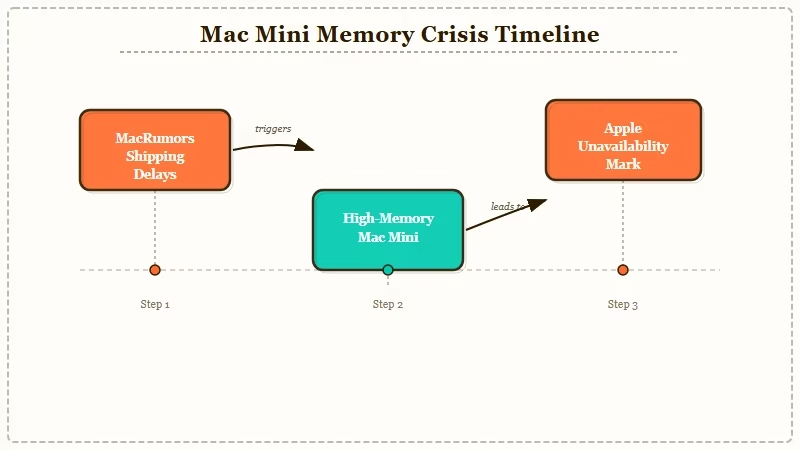
Here is the timeline reconstructed from the coverage. On April 6, MacRumors reported that Mac Mini and Mac Studio orders were facing extreme shipping delays, with the highest-memory configurations taking the biggest hit. A Mac Mini with M4 Pro and 64GB of RAM was quoting 16 to 18 weeks in the US.
Five days later, on April 11, Apple went further. MacRumors followed up with confirmation that the top Mac Mini and Mac Studio RAM tiers were now listed “currently unavailable” on the US store.
AppleInsider verified it independently the same day. Cult of Mac summarised the moment as Apple quietly stopping the bleeding.
Apple’s earnings call earlier this year had already flagged what was coming. Tim Cook told analysts the company was seeing “less flexibility in the supply chain than normal” and that wholesale memory pricing was “increasing significantly.”
Last month Apple removed the 512GB Mac Studio RAM option entirely and raised the price of the 256GB upgrade by 25 percent. From what I have seen, those were preemptive moves, not cleanup after the fact.
Why the Mac Mini and Mac Studio Shortage Is Bigger Than a Supply Story
The cause is not the general DRAM shortage; it is a specific surge in people buying headless Macs to run local AI agents.
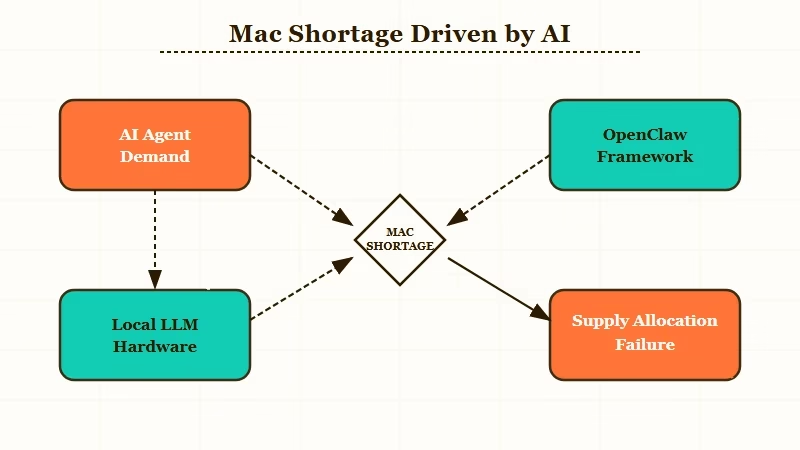
Both Tom’s Hardware and TechRadar linked the shortage directly to the OpenClaw boom. The pattern matches what is happening on builder forums and in the Reddit threads I follow.
OpenClaw, for readers new to it, is the open-source agent framework that runs Claude Code workflows and general-purpose AI agents against local LLMs. A Mac Mini with 64GB of unified memory is right now the cheapest credible way to run it with serious models.
A Mac Studio with 128GB or 256GB is the not-cheap-but-sane way. That hardware profile is exactly what Apple just pulled from the store.
I want to be specific about why this matters. The hyperscaler AI story, where Meta and Microsoft are buying every H100 on the planet, has been running for two years. What is new is that the same demand shape is now showing up on the consumer side.
Indie developers, small teams, and power users are buying multi-thousand-dollar Macs for one reason. They need to run AI agents without paying cloud API bills, and they order whatever ships soonest regardless of price.
That demand curve is inelastic. Apple’s supply allocation for those SKUs was not built for buyers who treat $4,000 hardware as a line-item cost of doing AI work, and the allocation broke in about six weeks.
The real signal: the AI compute crunch is no longer an enterprise-only story. If you read RR regularly, you already know individuals are beating enterprise AI on adoption speed. This shortage is what that trend looks like when it hits physical inventory.
What This Means for You
If you were planning to buy a Mac Mini or Mac Studio for AI work in April 2026, you have three paths and none are great.
Here is how I would think about each one if you are sitting on a purchase decision this month. The three paths, in order of what most RR readers will consider.
- Wait for the M5 refresh. Mark Gurman has been reporting that Apple is prepping M5-generation Mac Mini and Mac Studio models, likely around WWDC in June. If you can wait 8 to 10 weeks, this is the cleanest path.
- Buy a lower-tier config now. A Mac Mini with 16GB or 24GB is still in stock and shipping normally. For smaller local models like Qwen 2.5 7B, Gemma 3 9B, or Phi-4, this is enough.
- Switch to a Linux workstation. A DDR5 workstation with a consumer GPU has been roughly equivalent on raw compute for a year, and the pricing gap just narrowed. If you already run Linux for dev work, this path is more obvious than it was in January.
Here is the quick decision framework I would walk someone through before they click buy.
| If you are | Buy | Wait for |
|---|---|---|
| Running cloud-API agents | 16-24GB Mac Mini M4 now | Nothing, ships fast |
| Running local LLMs under 14B params | 32GB Mac Mini M4 Pro | 4 to 6 weeks max |
| Running local LLMs above 30B params | Currently unavailable | M5 Mac Studio at WWDC |
| Cost-sensitive and OS-flexible | Linux workstation with DDR5 plus GPU | Nothing, parts in stock |
The pricing pressure is the piece most buyers are underestimating. Apple already raised 256GB Mac Studio upgrades by 25 percent last month. If wholesale memory prices keep climbing, and Tim Cook’s earnings quote says they will, the M5 refresh is not going to ship cheaper configurations.
One more thing worth knowing. If you are already sitting on an M2 or M3 Mac Studio with decent memory, your used resale value just jumped. eBay listings for 96GB and 192GB Mac Studios have been tracking 15 to 20 percent above what they were moving at in February.
From what I have seen, this is a genuinely good window to upgrade if you have been putting it off. You can offset more of the cost right now than you could two months ago.
What Comes Next
The shortage is unlikely to fully resolve until the M5 lineup ships at WWDC, and memory pricing will stay high even then.
Near term, Apple will keep the high-memory SKUs unavailable rather than reintroduce them at their old prices. When M5 ships, I would expect the max memory ceiling to start at 64GB for Mac Mini and 128GB for Mac Studio.
The 512GB Mac Studio config is almost certainly gone for good. The 256GB tier comes back as the premium option at a higher price than it was in Q1.
Longer term, this changes how RR readers should think about local AI. The Mac-as-agent-box story was always partly aesthetic, and the numbers work for a narrow use case.
When they stop working, people move to Linux or stay in the cloud. I expect we will see more OpenClaw setups on Linux by summer, and the run-everything-on-a-Mac moment will get filed as a short window rather than a new default.
The cloud-API option also gets more attractive as this plays out. If you are running an agent stack and the hardware math breaks, paying a few hundred dollars a month to Anthropic or OpenAI starts looking cheap compared to waiting five months for silicon that might never get cheaper again.
Bottom line from where I sit: this is less a crisis and more a signal. The consumer AI compute story is now a real thing, and it just took out a product lineup big enough for the tech press to notice.
