
- Adults are getting blocked even after following the age verification process correctly.
- Facial scans, selfies, and ID checks behave inconsistently with no clear feedback.
- Waiting before retrying often works better than repeated attempts.
- Blurring sensitive ID details can still pass verification if the name and photo stay visible.
Character AI has reached a point where the age system feels less like a safeguard and more like a wall. Adults who clearly meet the requirements still get treated as suspicious, flagged, or locked out.
The result is a platform that punishes the very group it claims to be protecting access for.
We are not talking about people refusing to verify. We are talking about adults who try to follow the process and still get blocked. Facial scans fail, selfies get rejected, and the system keeps asking for more proof without explaining what went wrong.
The frustration comes from how random the experience feels. Some adults pass with a single scan, others get pushed into repeated checks, and some end up restricted despite doing everything asked. That inconsistency makes the process feel broken rather than strict.
The technical bias behind this is documented. A National Institute of Standards and Technology study of 189 face recognition algorithms found significant accuracy gaps across age, sex, and race, with false negatives running up to 100 times higher for some demographics. When the same technology gates access to a platform, those error rates show up as adults getting locked out.
This matters because Character AI is not a casual tool for many people. It is part of daily routines, creative roleplay, or simple downtime.
When access disappears due to a faulty verification flow, it does not feel like moderation. It feels like being locked out by mistake.
Adults get blocked even after trying to verify
The biggest issue is inconsistency. Some adults pass verification with a single facial scan, while others get pushed into repeated checks without clear feedback.
Age, facial hair, or looking older does not guarantee approval, which makes the system feel unreliable rather than strict.
Selfie checks fail even when faces are clearly visible. Lighting changes, different angles, or multiple attempts do not always help.
In some cases, the system accepts one method and rejects the same person using another, which creates confusion instead of confidence.
ID checks do not solve the problem for everyone either. Some adults get asked for ID even after passing a face scan, while others never see that step at all.
The lack of transparency turns verification into trial and error.
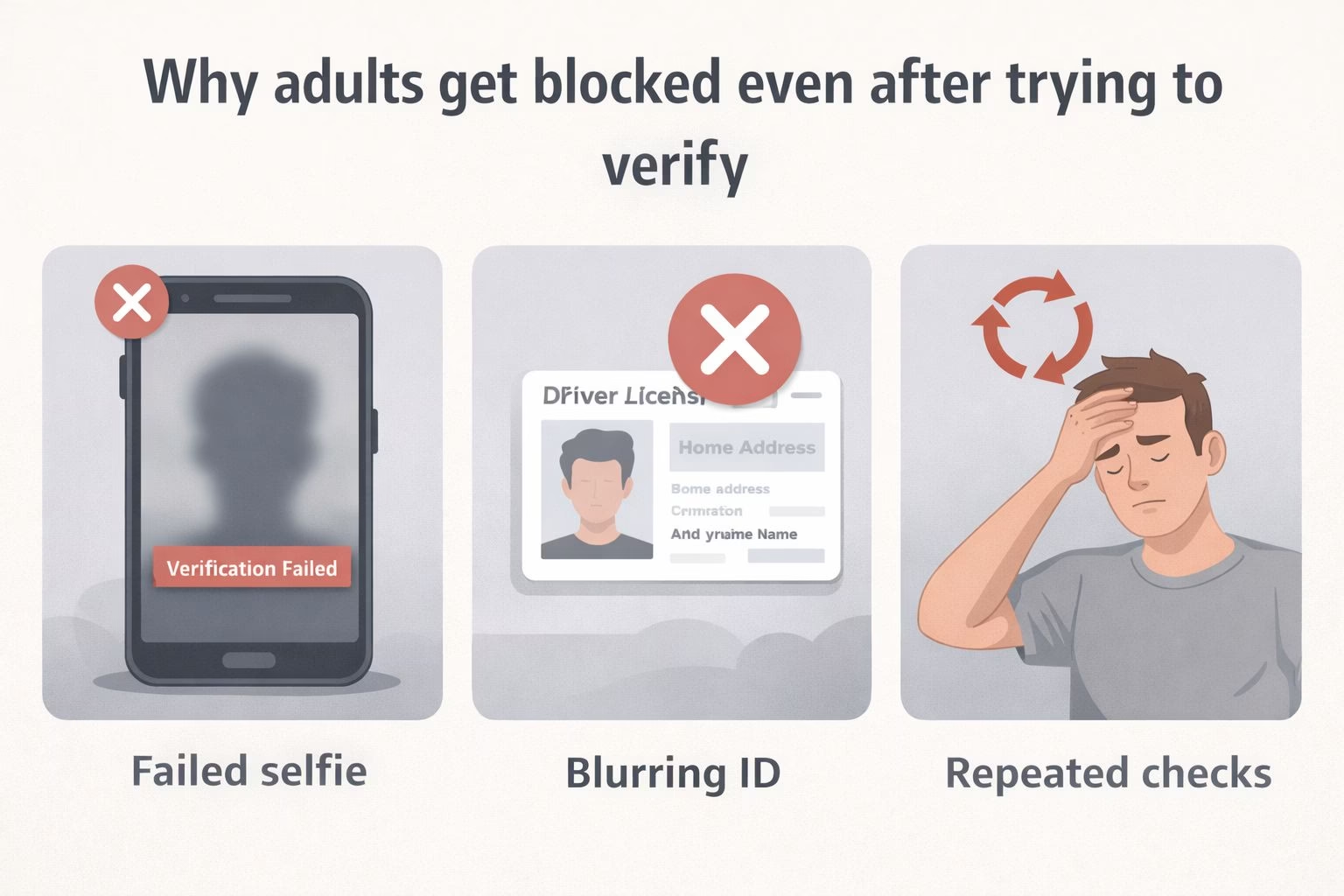
This is where frustration spikes. Adults are not refusing the process. They are following it and still getting blocked.
What helps when verification keeps failing
There are a few actions that have worked for adults based on repeated attempts. None are guaranteed, but they are grounded in what has already worked for others.
Practical steps worth trying include:
Changing lighting conditions rather than just angle or distance
Retrying facial scans at different times instead of back-to-back attempts
Uploading ID when prompted instead of looping selfies
Blurring sensitive details like home address on ID while keeping name and photo clear
Some adults report success after switching methods entirely. A failed selfie may pass once ID is uploaded, even if the face scan looked accurate.
Others get verified with a facial scan after multiple rejections, which suggests the system itself behaves inconsistently.
It also helps to understand the limits of alternatives suggested around contracts or agreements. A legally binding age contract sounds appealing, but minors can often void such agreements.
That is why ID checks remain central, even if flawed. The legal complexity around this is outlined clearly.
When access stays blocked, some adults simply step away for a while.
Others move on to alternatives that are not restrictive, not because they are perfect, but because they do not gate access the same way.
That choice usually comes from exhaustion rather than preference.
The system feels random instead of strict
The core problem is not age enforcement itself. The problem is that the same adult can get different results depending on timing, method, or sheer luck.
One attempt passes instantly, another locks the account into repeated checks with no explanation.
The system does not explain what failed. Adults are left guessing whether the issue is lighting, face shape, camera quality, or something else entirely.
Without feedback, each retry feels pointless.
That randomness creates mistrust. When rules feel invisible, people assume the system is broken rather than protective. Strict systems still feel fair when outcomes are predictable.
This is why the backlash persists. Adults are not arguing against rules. They are reacting to a process that behaves differently every time.
10 websites like Character AI without filters for unrestricted chats
Waiting it out works better than forcing retries
Repeated verification attempts often make things worse. Rapid retries can trap accounts in the same loop instead of resetting the process.
Stepping back can actually help.
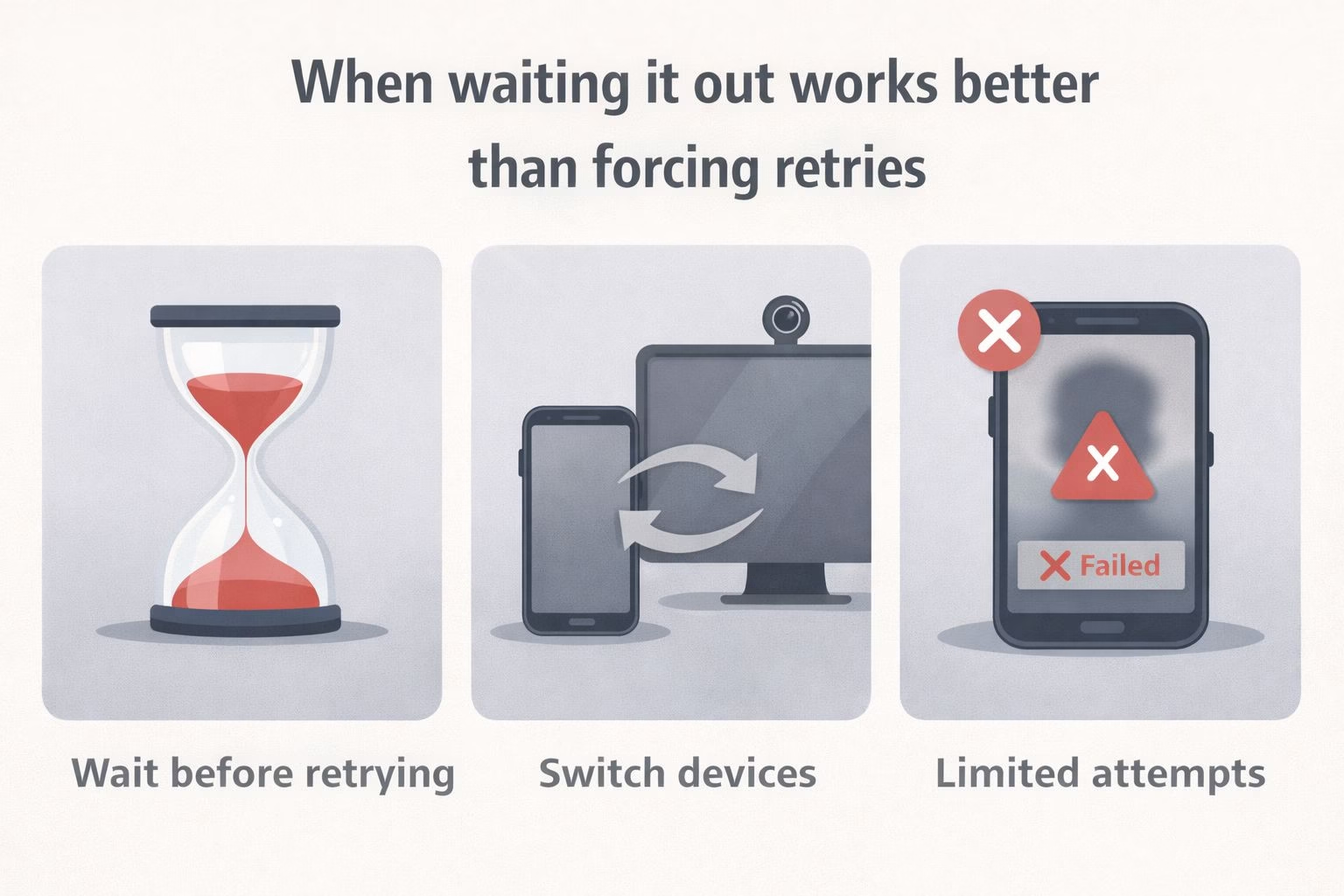
What tends to work better:
Waiting hours or days before retrying instead of immediate repeats
Switching devices or cameras, rather than reusing the same setup
Avoiding excessive retries once the system starts rejecting consistently
Some adults regain access without changing anything after time passes. That suggests internal resets or delayed reviews rather than user error.
Forcing the process rarely speeds things up.
At this stage, many people stop fighting the system altogether. Some reduce usage. Others move on quietly.
The frustration does not come from losing access alone, but from feeling ignored while doing everything right.
