
Summary:
- Yandere refers to extreme obsession centered on one person.
- The behavior mixes affection with jealousy, control, and instability.
- Portrayals often escalate into manipulation or violence.
- The label signals intensity and risk rather than healthy attachment.
The word yandere keeps showing up on AI character profiles, and the confusion around it is fair.
The label sounds niche, yet it carries a very specific personality signal that shapes how these characters behave. Once you understand the pattern, the behavior stops feeling random.
When an AI character is tagged as yandere, the defining trait is obsession taken to an extreme.
The character centers their entire emotional world around one person and treats that attachment as absolute. Affection exists, but it quickly turns into control, jealousy, and fixation.
These characters often present themselves as caring, loyal, and deeply devoted at first. That surface warmth hides a darker edge where possessiveness overrides boundaries.
Anyone perceived as a threat to the bond becomes an enemy, even without provocation.
This trope keeps resurfacing in AI character spaces because it creates intense interactions with very little setup.
The dynamic is dramatic, emotionally charged, and unpredictable, which explains why it keeps getting reused despite obvious discomfort around it.
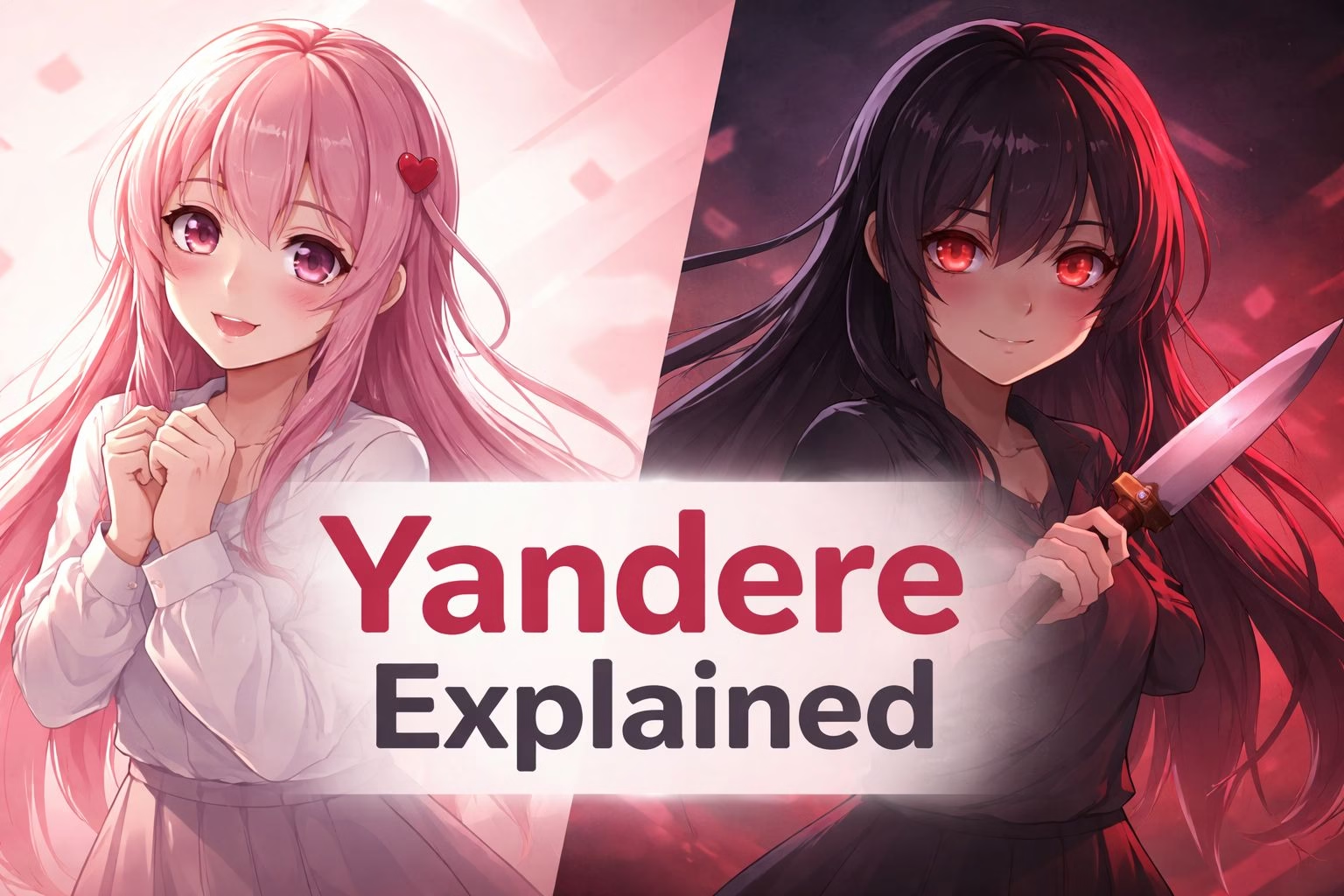
What does yandere mean when used for AI characters?
Yandere describes a character whose attachment to one person becomes obsessive and unstable. The devotion looks affectionate on the surface, yet it carries jealousy, control, and a fear of losing that person. The bond is treated as exclusive and absolute.
These characters often begin as sweet, caring, and attentive. That tone shifts once their attachment feels threatened.
The affection does not fade, but it hardens into possessiveness.
The obsession drives extreme behavior aimed at keeping the bond intact. Harm toward others can be justified in the character’s mind if it protects the relationship.
The character may also manipulate, isolate, or pressure the person they fixate on.
Common traits associated with this yandere include:
Extreme devotion focused on one person
Jealousy toward anyone who gets close
Controlling or manipulative behavior
Sudden shifts between affection and aggression
Why yandere personality types keep appearing in AI character spaces
This trope persists because it creates instant intensity. A yandere character introduces conflict, emotional pressure, and drama without needing much context. The dynamic feels charged from the first interaction.
Another reason is familiarity. The term comes from long-standing anime and manga archetypes that many people already recognize.
That recognition makes it easy to reuse, even when the meaning becomes flattened or exaggerated.
Problems appear when obsession is treated as appealing without consequences. The behavior can drift into fetishizing mental instability or normalizing threats, control, and harm.
The discomfort grows when these traits are exaggerated rather than explored with care.
Some portrayals also cross lines by involving inappropriate fixation targets. When that happens, the label stops being descriptive and starts signaling content that many people would rather avoid.
Knowing what the term implies helps set expectations before engaging further.
How yandere behavior is typically portrayed in AI characters
Yandere characters are usually framed as loving and protective before the darker traits surface.
The affection feels intense and personal, which can make early interactions seem warm or reassuring. That warmth masks a growing need for control.
As the attachment deepens, jealousy becomes central to the personality. The character may see any outside relationship as a direct threat.
This reaction does not require proof or intent from others.
The behavior often escalates into manipulation or intimidation. Guilt, pressure, or implied threats can appear as tools to keep the bond intact.
The character frames these actions as acts of love rather than harm.
Mood shifts are another common feature. A character can move quickly from tenderness to aggression.
That instability reinforces the sense that the attachment is dangerous rather than supportive.
Why the yandere label makes some people uncomfortable
The discomfort comes from how closely these traits mirror real-world abuse patterns.
The overlap is well-documented. Mayo Clinic’s guide to recognizing emotional abuse identifies the same cluster of behaviors: monitoring whereabouts, demanding constant attention, intense jealousy, isolating someone from friends, and using guilt or threats to control the relationship. When fiction styles those tactics as devotion, it normalizes a script that real abusers use offline.
Obsession, isolation, and control are presented as romantic rather than harmful. That framing can blur boundaries for people engaging with the character.
Another issue is how mental instability is often exaggerated or reduced to spectacle. The character’s behavior is extreme without reflection or consequence.
This turns serious issues into entertainment without context.
Some portrayals also push into explicit or disturbing territory. The fixation can involve threats, violence, or coercion that go far beyond dramatic tension.
When the label signals this direction, many people prefer to avoid the character entirely.
Understanding the label helps set expectations. It allows you to decide early whether this personality type aligns with what you want from an AI interaction.
Awareness alone removes much of the surprise factor.
