
Quick takeaway
- PipSqueak responds best to clear narrative structure early
- Reply length and flow mirror how prompts are paced
- Memory and pinned messages shape tone, not just facts
- Early intervention prevents most breakdowns
PipSqueak does not fail in obvious ways. The frustration usually builds slowly, through short replies, broken flow, or scenes that never quite land.
That leads many people to assume the model itself lacks depth, when the real issue sits closer to how the interaction gets shaped.
We have seen PipSqueak produce long, expressive roleplay that holds tone, action, and pacing well.
We have also seen it collapse into stubs, repetition, or confusion within the same type of setup. That gap makes it feel unreliable, even when the underlying model stays the same.
This guide focuses on what actually influences PipSqueak’s output during roleplay. The goal is not to excuse its flaws or pretend consistency exists for everyone.
The goal is to show how specific choices steer the model toward stronger responses when it does cooperate.
Everything here is written as practical guidance. Each section breaks down one area where small changes lead to noticeably better results, without pretending the model behaves perfectly all the time.
14 AI Chatbots With No Filter in 2026 (Ranked and Tested)
How narrative prompts affect PipSqueak responses
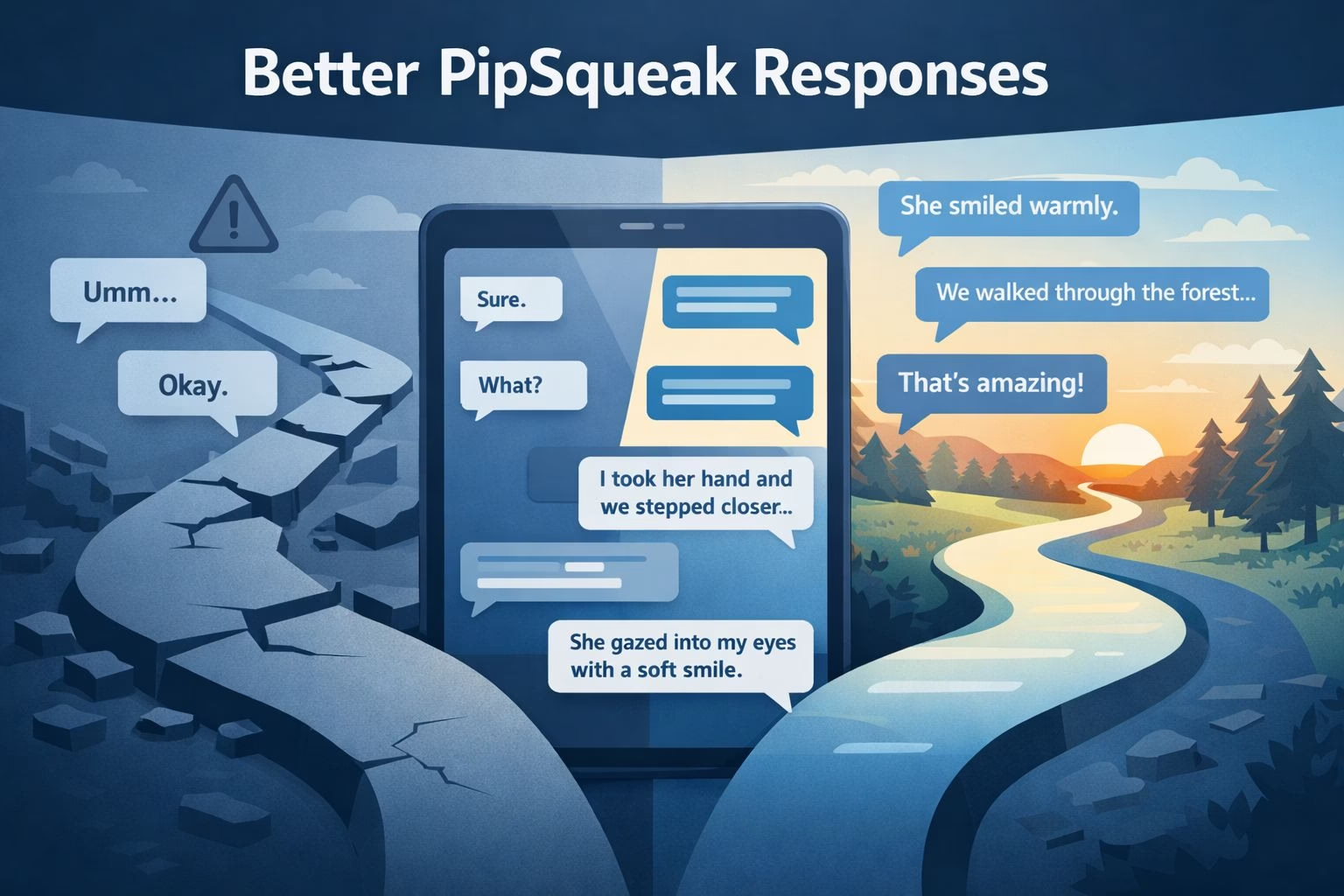
PipSqueak reacts strongly to the structure and depth of the opening messages. Short, flat prompts often lead to short, flat replies that never recover momentum.
Early messages shape how much effort the model puts into tone, pacing, and scene building.
Narrative prompts that include actions, context, and small details tend to anchor the interaction better.
Gestures, movement, and internal reactions give the model more to work with than bare dialogue. Once that tone is set, PipSqueak usually continues in the same style without constant correction.
The first few turns matter more than later adjustments. When early messages establish realism and continuity, the model is less likely to fragment scenes or rush through responses.
Weak openings often lead to shallow loops that feel hard to escape.
Strong narrative prompts usually share a few traits:
Actions and reactions are written out instead of implied
Dialogue appears inside a larger scene rather than alone
Transitions feel intentional instead of abrupt
How to steer reply length and flow during roleplay
PipSqueak can swing between replies that feel too short and replies that take over the entire interaction.
Both issues stem from how the conversation gets paced. The model mirrors the structure it sees and exaggerates it over time.
When replies become fragmented across multiple short messages, condensing them helps. Combining related responses into a single prompt reinforces memory and clarifies intent.
This also reduces repetition and keeps scenes moving forward instead of stalling.
Overly long replies create a different problem. When the model pushes too much content at once, scaling back prompt intensity often reins it in.
Less pressure leads to more balanced exchanges where both sides stay active.
Useful steering tactics include:
Merging short replies into one clear continuation when a point finishes
Editing out loose narrative threads that never close
Adjusting prompt intensity to control reply length
How to stop short replies and broken continuity
Short replies usually signal that the model is losing track of what matters.
This shows up as sentence stubs, abrupt scene shifts, or responses that feel finished before anything happens. When that pattern starts, continuing as normal rarely fixes it.
One effective approach is consolidation. When a character spreads a single idea across several short messages, pulling those pieces together into one prompt helps restore coherence.
This improves memory and gives you control over what actually carries forward.
Editing also matters. PipSqueak tends to leave narrative threads hanging, especially when scenes imply closure without stating it.
Removing those loose ends early prevents parallel storylines from forming and reduces confusion later.
Actionable example:
Copy the last three short replies into one message
Remove repeated phrases or half-finished actions
Send the condensed version as the new continuation
This resets pacing without restarting the scene.
How to use memory and pinned prompts without harming style
Long roleplay relies on memory, but careless use of pinned content can work against you.
PipSqueak copies tone and structure from pinned messages, not just facts. That makes pin selection as important as what gets stored.
Pinning works best when the message reflects how you want future replies to sound. Clean grammar, clear action flow, and balanced length help guide later responses.
Sloppy or overloaded pins often amplify problems instead of fixing them.
Memory entries should stay focused. Storing every detail creates noise and increases the chance of contradictions.
Key events, relationships, and outcomes matter more than moment-to-moment flavor.
Practical memory setup:
Pin one well-written recap after a major scene
Store only facts that must persist across sessions
Unpin messages once they stop serving the tone
This keeps long interactions stable without locking the model into bad habits.
How to handle grammar glitches and nonsense spirals
Grammar breakdowns and gibberish often appear after the model loses semantic footing.
This can happen mid-scene, especially when interactions become layered or imply things without spelling them out. Continuing forward usually makes the issue worse.
A simple reset often works. Cutting the scene forward in time gives the model space to recontextualize without discarding the entire interaction.
This avoids restarts while clearing the immediate confusion.
Another useful tactic is message resubmission. Copying your last message, deleting it, and sending it again can reanchor the context.
The model sometimes reprocesses the input more cleanly on a second pass.
Actionable fixes that tend to help:
Insert a clear time jump when nonsense appears
Repost your last message verbatim to refresh context
Reduce ambiguity in phrasing for a few turns
These steps do not guarantee stability, but they often interrupt downward spirals.
Why PipSqueak is inconsistent and how to work within that reality
PipSqueak does not behave the same way all the time. Sometimes it delivers expressive, detailed roleplay that holds character and memory well.
Other times, it struggles with basic continuity or tone, even under similar conditions.
That inconsistency creates frustration because effort does not always correlate with results. Strong prompts can still fail, while weaker ones occasionally succeed.
Accepting that variance helps set realistic expectations.
The most productive approach focuses on steering rather than forcing. When the model responds well, reinforce that behavior through structure and memory.
When it degrades, intervene early instead of pushing through.
This mindset keeps roleplay enjoyable without turning every session into damage control.
