Images shape trust, credibility, and decisions. Sometimes, a single reused or misattributed visual can weaken your content, damage originality, or even raise legal concerns.
Content creators often add images to every part of their content and end up losing their credibility.
Do you know what the worst thing here is?
Guesswork no longer works when images spread fast and edits blur ownership. Therefore, you have to opt for a solution that gives clear answers, not just leaves you on mere assumptions.
And honestly, the best and most reliable solution here is to use a reverse image search tool.
The need for image verification has only grown. The Content Authenticity Initiative, backed by Adobe, Microsoft, the BBC, the New York Times, and dozens of other publishers, exists specifically because image provenance has become unreliable in the AI generation era. Reverse image search is one of the most accessible ways to push back against that drift.
However, here’s a catch: with so many tools available online, sometimes it is quite confusing to decide which one will actually work.
So, to help you get through this hassle, we have tested, tried, and enlisted some of the best and market-leading image search tools that you can actually rely on to find duplicate images online.
7 Best Image Search Tools Online
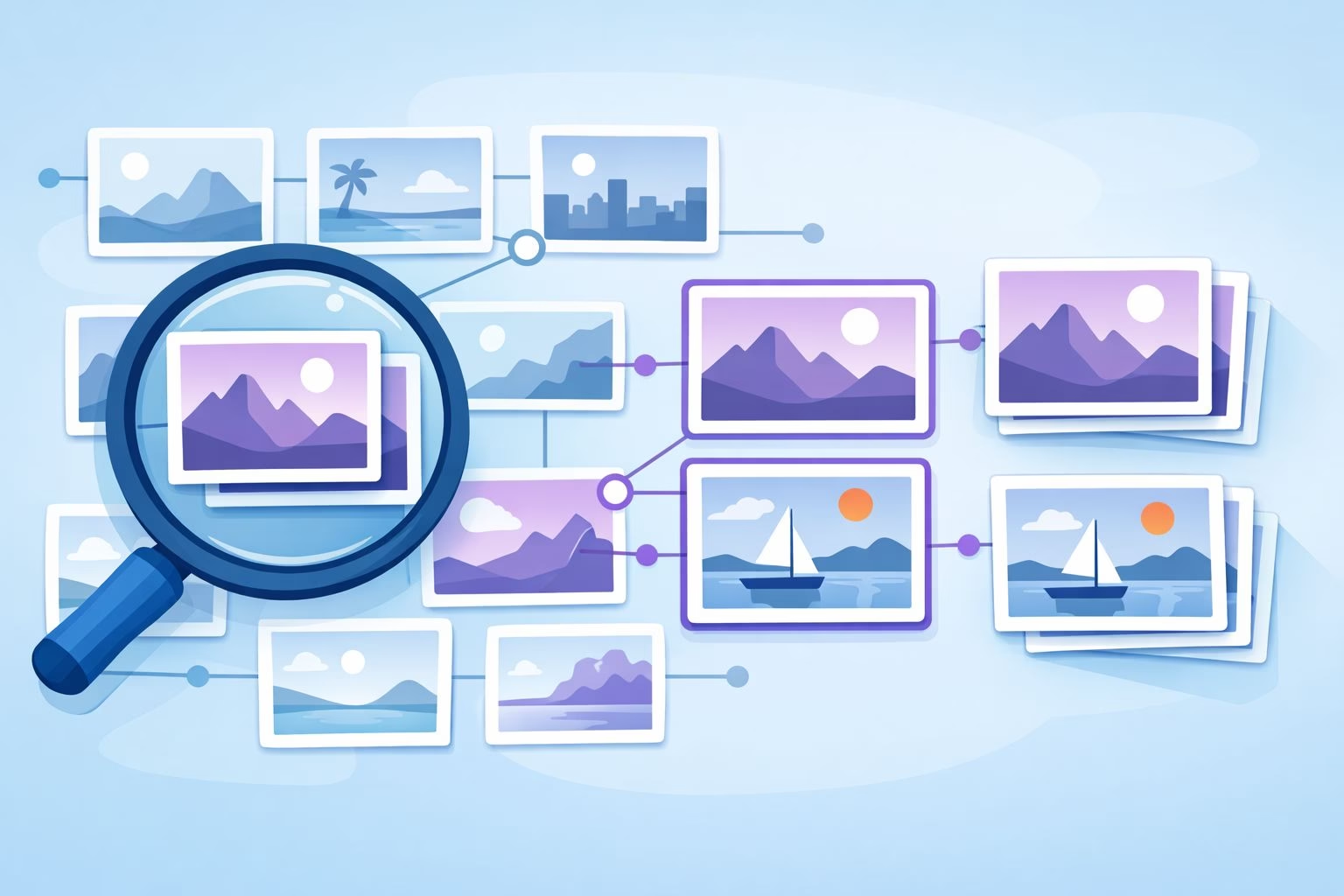
Here are some of the best image search tools you can use to verify sources, confirm originality, and understand how an image appears across the web.
1. Reversely.ai
Reversely.ai is indeed the most popular, reliable, and free AI Reverse image search tool that many people rely on to effectively detect the originality of any visual online.
The best thing about this tool is that it can help you accurately detect edited or altered versions of an image.
Thus, it works well for people who need quick clarity on whether an image already circulates online. The interface stays clean and task-focused, which reduces friction during repeated searches.
Key Features
- Detects near-duplicate images with minor edits
- Highlights original-looking sources clearly
- Fast processing for single-image checks
- Clean interface with minimal distractions
- Source-page previews for quick validation
Pros
- Strong accuracy on edited copies
- Easy to use without guidance
- Clear result structure
Cons
- Limited bulk search options
- Fewer advanced filters
2. Reverseimagesearch.org
Reverseimagesearch.org is not just a simple image search tool. In fact, you can count on the platform as a practical gateway that helps you track an image across multiple search engines at the same time.
What makes it the best reverse image search tool is the fact that it never locks its users within a single database. Instead, it connects results from different sources to widen coverage and provide more accurate and reliable search results.
Thus, by using reverseimagesearch.org, you can ensure one thing clearly: it helps you uncover duplicates that a single engine might miss.
Key Features
- Aggregates results from multiple search engines
- Simple upload and URL-based search
- Quick redirection to matching pages
- No account required
- Works on desktop and mobile browsers
Pros
- Wider coverage with minimal effort
- Saves time switching platforms
Cons
- Limited control over result filtering
- Depends on third-party engines
3. Reverseimagesearch.com
Reverseimagesearch.com is known for its clean interface, efficiency, and reliability. The tool is especially designed for users who need a fast and accessible image search solution for everyday use.
What makes it stand out from its competitors is its strong focus on speed and accessibility.
The interface is simple. It does not ask users to perform unnecessary steps such as registration or manual verification for tracking an image.
Honestly, this tool is an ideal choice for users who want to search by image without learning any complicated procedures.
Key Features
- Fast image upload and processing
- Supports common image formats
- Lightweight interface for quick use
- URL-based image search option
- Mobile-friendly design
Pros
- Very easy to use
- Quick results
Cons
- Fewer advanced insights
- Basic result presentation
4. Duplichecker – Reverse Image Search
If you do not want to experiment much and need a reliable and globally trusted image search tool, then Duplichecker’s image search tool is precisely what you need.
The tool is designed to thoroughly scan the given image, search for it online, and provide results that include the image’s origin, where it appears online, and a list of similar visuals.
In simpler words, the tool helps you identify whether an image already exists elsewhere online, which strongly supports plagiarism prevention workflows.
It delivers clear matches and source links without overwhelming details. This makes it practical for users who already monitor content originality and want the same discipline for images.
Key Features
- Integrated with Duplichecker’s originality tools
- Simple upload and paste-image options
- Clear source links for matched images
- No technical setup required
- Suitable for repeated checks
Pros
- Fits well into content review workflows
- Straightforward results
Cons
- Limited customization options
- Ads can distract free users
5. SmallSEOTools – Reverse Image Search
SmallSEOTools offers reverse image search that helps users understand where images appear online, which supports better content decisions.
You can use this advanced tool to search image quite easily. All it asks you is to upload the picture and click the given button to obtain results instantly.
This image finder conducts in-depth analysis on the provided picture using AI-based technology. You can rest assured to find duplicate versions of your images with this tool effortlessly.
Key Features
- Integrated with SEO and content tools
- Easy image upload process
- Clear match redirections
- No learning curve
- Accessible without sign-up
Pros
- Convenient for SEO-focused users
- Consistent interface
Cons
- Not built for detailed image comparison
- Relies on external engines
Wrap Up
If you work with visuals regularly, duplicate image search is no longer optional. Images travel fast, get reused easily, and often lose their original context along the way.
The right tool helps you stay informed instead of guessing. The tip here is, when choosing a tool, opt for the one that offers clarity, reliability, and ease of use, and actually aligns with your work needs.
Trust me, when the tool matches your purpose, image verification becomes a routine step rather than a challenge. That consistency protects your credibility, supports ethical content use, and saves time you would otherwise spend searching manually.
