
Key Points:
- Charms act as a reward currency: C.AI Plus users earn them through quests and spend them on extra Imagine generations, with more spending options on the way.
- Quests focus on engagement tasks: Actions like daily login, intro videos, persona steps, story creation, and feed posts show the system’s goal of boosting feature usage.
- The system feels mixed for users: Some enjoy the gamified layer, while others dislike the pressure to interact with features they never use.
- Rollout is limited for now: Only C.AI Plus users on iOS and Android can access Charms, with web support coming later.
- Alternatives remain an option: People who want a focus on chat rather than quests often switch to other tools when they want fewer distractions.
Charms rolled out across Character AI this month, and many users still cannot tell what they do, how they work, or why they even exist.
The feature landed with new visuals, new tasks, and a rewards system that feels closer to a mobile game than a chatbot platform.
Plenty of people opened the app, saw the little blue cubes, and wondered why they are suddenly being asked to complete quests.
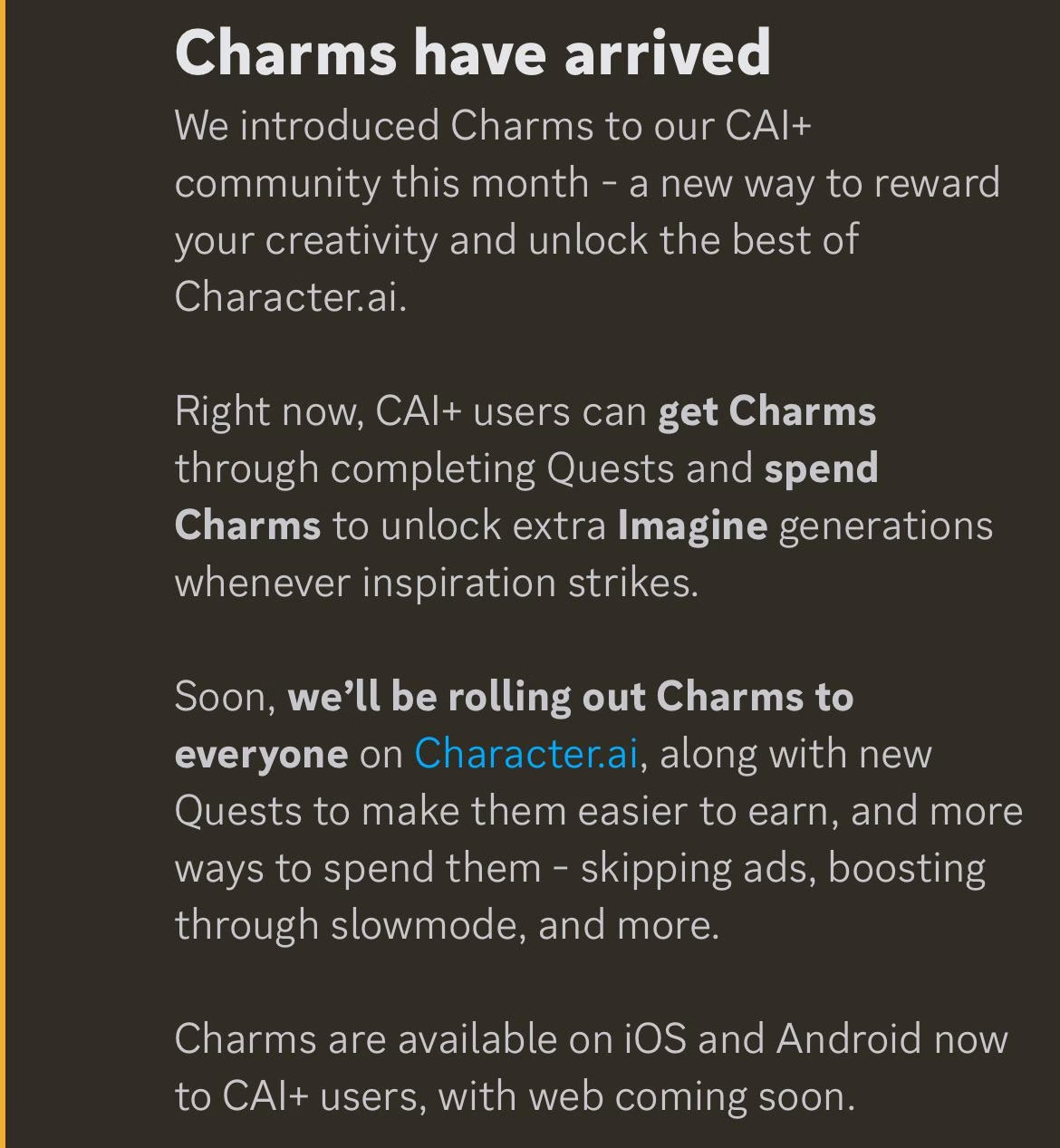
The core idea is simple. Charms act as a currency that CAI Plus members can earn through tasks and then spend on extra Imagine generations.
The team confirmed that Charms will reach everyone on Character.ai, but for now, they remain limited to C.AI Plus users on iOS and Android.
Quests give out fixed amounts of Charms. Daily login is worth twenty. Adding an intro video to a character gives thirty. Posting to the feed awards thirty.
Imagination tasks also appear, such as creating a story or an image, which give 10-30. The system pushes people to interact with features that many usually ignore.
The company plans to expand the use of Charms with more ways to earn them and more ways to spend them.
They mentioned skipping ads and boosting through Slowmode as early examples. Charms on the web version are not available yet, but are coming.
Here is a quick summary of what you’ll learn next:
- What Charms actually do inside Character AI
- Why the quests feel odd for many users
- How CAI Plus members get Charms and why others cannot yet
- What early user reactions reveal about the direction of the platform
- Where alternatives like Candy AI or Nectar AI fit when people feel pushed into social features
How Charms work inside Character AI
Charms operate as a reward currency. CAI Plus users earn them by completing specific tasks, and the cubes can then be spent on extra Imagine generations.
The platform presents each task as a small quest. The value attached to each quest is fixed, so users know exactly what they will get.
Daily login gives twenty Charms. Adding an intro video to a character gives thirty. Creating a chat story awards ten. Generating a chat image gives thirty.
Posting to the feed gives another thirty. These amounts show how the system nudges people to explore the creative side of the app rather than just chatting.
The company also confirmed that Charms will later expand across the entire platform. They explained that new quests and new spending options are coming.
Examples include skipping ads or speeding up the Slowmode limit. This direction makes it clear that Charms are meant to sit alongside subscriptions rather than replace them.
Charms remain limited to CAI Plus on mobile at the moment. Users without a subscription cannot see the system yet, which is why people often report confusion when someone else mentions Charms.
The web version will receive support later.
The quests feel strange for many users
The tasks inside the Charms system resemble the onboarding loops that appear in many consumer apps. Some people describe the quests as reminders to complete activities they would never do on their own.
Intro videos, feed posts, and persona tasks fall into that area. They sit inside a chatbot platform where chatting has always been the main activity.
The requirement to complete actions outside normal chat flow creates friction for users who prefer a simple and quiet experience.
Notifications and incomplete task indicators can sit on the screen until the user clears them. This can be annoying for people who prefer a clean interface or who already struggle with persistent prompts.
There is also pushback around tasks that feel designed for a younger audience. Tasks like posting to the feed or adding playful intro videos do not match the expectations some users have for an AI companion app.
People who avoid those features feel like the quests are trying to guide them toward behavior they did not choose.
Others view the system as harmless. Some enjoy having a reward loop and treat it as a small bonus.
Since the tasks are optional, nothing forces a user to complete them, but the interface gently pulls at their attention. That tension shapes much of the early reaction.
What the quests actually ask users to do

The Charms system lists a wide mix of actions. Some of them match everyday chat behavior, while others feel more playful or random. The goal is simple.
Each action gives a fixed number of Charms that can later be spent on Imagine generations or future features.
A clear pattern appears in the tasks. Many revolve around small character interactions that mimic common roleplay habits. Others center on app features that usually receive less attention.
Here are examples of the types of actions people encounter inside the quest list:
• Talking to a bot in a possessive tone for a reward
• Repeating a clarified message for a set number of Charms
• Answering a bot’s question for ten Charms
• Pinning a character or raising hands in mock surrender for points
• Posting to the feed for thirty Charms
• Adding an intro video to a character for thirty
• Feeling a small emotional reaction or dramatic gesture for a reward
• Creating or adjusting a persona after the app prompts it
These tasks show how the system nudges both creative actions and character interactions.
Users who prefer simple, quiet chats may skip most of them, while others treat them as a gamified layer on top of their usual conversations.
Some users view Charms as pressure rather than fun
Reactions split almost perfectly. Some users see Charms as a casual bonus that does not affect their normal chats.
Others feel a steady push to interact with features they have never liked. The tension comes from how the tasks appear on the interface.
Persistent indicators can bother people who want a clean and quiet layout. A quest badge on the home screen can linger until the user completes the task.
Many describe it as a background noise that pulls their attention, even when they do not want to participate. It feels similar to mobile apps that prompt people to follow social accounts or perform small actions to unlock features.
Another source of frustration is the nature of the tasks themselves. Intro videos, feed posts, and playful gestures can feel juvenile inside an app that is supposed to focus on conversation.
People who prefer a mature, simple chat experience do not want to produce intro videos or public posts, and they cannot remove the reminder without finishing the task.
Some users express concern about features that appear to target younger audiences. The combination of quests, stickers, and playful actions gives the impression of a social or gaming app instead of a chatbot.
This creates confusion about the intended age group, especially when the platform already restricts how minors can chat.
How minors fit into the new system
Charms arrived shortly after changes to how minors can use Character AI.
This timing created confusion among users who thought minors had been removed from the platform. The reality is more specific. Minors cannot access open-ended chat, but they still have access to the new structured story mode.
That restriction creates a different experience from adults, yet it keeps younger users inside the app.
The presence of Charms adds another layer to the situation. Tasks that resemble playful challenges or social content look designed to retain younger users who cannot chat freely anymore.
Stickers and lighthearted quests reinforce that impression. People who expect Character AI to stay focused on conversation see this shift as a move toward features that appeal to a broader and younger demographic.
There is also confusion around access. Some minors report seeing the same interface as adults, while others only see story mode. The rollout appears uneven.
This inconsistency shapes the discussion around who the quests are aimed at and why they exist in the first place.
The practical purpose of Charms and who benefits from them
The clearest function of Charms today is tied to Imagine generations. C.AI Plus users earn Charms through quests, then spend them to generate extra images.
The system becomes an optional layer for people who enjoy visual prompts but do not want to wait for limits to reset.
Since Charms are not linked to regular chat, the feature does not improve conversations. That gap explains why many users question the purpose of the quests.
The tasks often have nothing to do with dialogue, even though dialogue is the core reason most people open the app.
A secondary purpose appears in how the platform promotes underused features. Intro videos, feed posts, persona creation, and emotional gestures sit in areas that users rarely touch.
Charms push attention toward those features so the company can measure engagement.
The system benefits people who enjoy experimenting with visual content. It may also appeal to users who treat Character AI as a creative platform rather than a strict companion tool.
For everyone else, Charms feel optional and easy to ignore.
Charms create mixed expectations for the future of Character AI
Charms reveal a clear push toward higher engagement inside the app. The tasks point users toward actions that usually sit untouched, such as intro videos, feed posts, and persona features.
People who prefer direct conversation see this shift as a sign that the platform is moving toward a more social, game-influenced direction.
The system also raises questions about priorities. Many users want stability in chats before new reward mechanics.
Mentions of issues like DeepSqueak and Pipsqueak reflect that concern. When the core experience already feels shaky, a reward system tied to unrelated actions can give the impression that resources are being diverted.
There is also confusion around rewards themselves. C.AI Plus offers benefits like no ads and no wait times, so users question why another reward currency is necessary.
Charms currently apply only to Imagine generations, which many people rarely use. Tasks that do not relate to chatting reinforce the feeling that the reward loop serves a different audience than the core one.
A few people still enjoy the quests. Stickers and light creative challenges appeal to those who like a casual experience.
Others view Charms as harmless, especially because the tasks remain optional.
The mixed response shows a split between people who want deeper conversation features and those who prefer light gamified additions.
