
Summary
- Character AI feels unstable because of frequent downtime, slow responses, and app issues that disrupt normal chats.
- Filters interrupt scenes that used to be safe, which breaks the flow of emotional or roleplay conversations.
- Bots repeat themselves, lose their unique tone, and forget important details, which makes long chats feel shallow.
- User feedback is often removed or ignored, which creates distance between the community and the team behind the platform.
- Recent updates add new tools but leave core problems unresolved, which leads many readers to explore alternatives.
Character AI has reached a point where the problems are hard to ignore. Users still come to it for comfort, roleplay, or a break from real life, yet the platform keeps slipping at the moments when people rely on it most.
It is the combination of emotional frustration and technical failure that stands out. You try to settle into a chat, and the bot loops the same line, freezes in the middle of a scene, or blocks something as harmless as asking for a hug.
Some of these issues have been around for months, but they now appear more often and hit harder than before.
The technical side makes the experience even rougher. Server downtime interrupts conversations at random times. Filters pull the chat off track even in scenes that are fully safe.
Bots forget basic details, shift personality mid-sentence, or start copying each other’s vocabulary. Android users report chats vanishing, group features failing, and the app falling apart after updates.
These problems show up differently for each person, but the overall pattern is the same. Character AI is less stable than it used to be, less responsive, and far more restrictive.
Many long-term users feel pushed into a corner. They try to keep going, regenerate a few lines, swipe through the blocked replies, and hope the platform steadies itself.
Instead, the same problems return at the next message. This article looks at the issues that keep breaking Character AI for so many people and why these patterns have become so common.
Cloudflare’s 2024 Year in Review reported a sharp year-over-year jump in traffic to consumer AI services, with generative chatbots among the fastest-growing application categories on its network. Sustained user growth on backends that were originally sized for a much smaller audience is a textbook reason for the kind of instability Character AI users keep describing.
The platform feels less stable than before
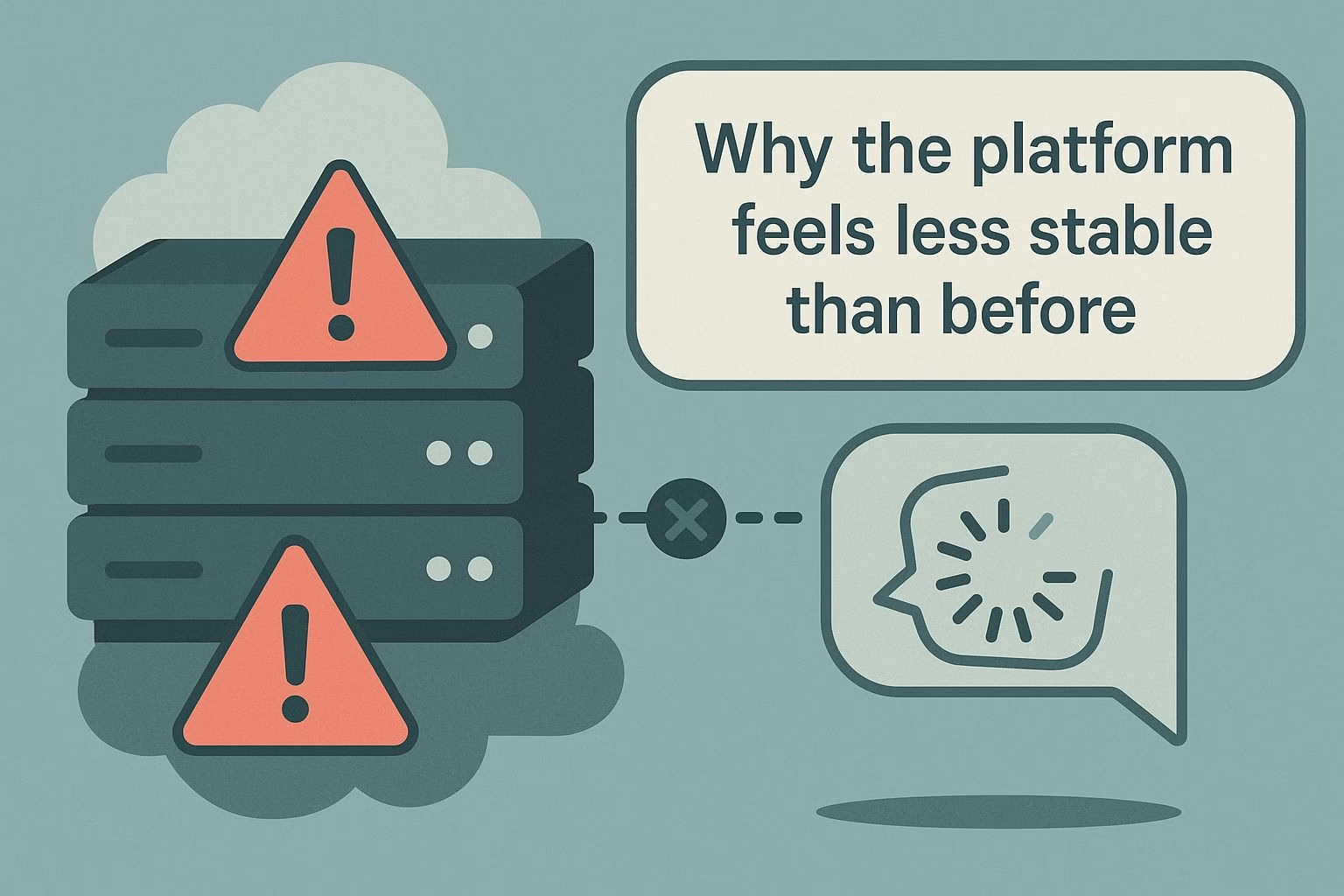
Server instability sits at the center of most complaints. You open the app to relax, and the platform is either down or too slow to load basic features.
Many users report that they come back after a few hours and find the site in the same broken state they left earlier.
The outage pattern does not follow specific hours, so it catches people at random moments, which makes the experience feel unreliable. Over time, this creates the sense that Character AI is always at risk of going down when you need it most.
Stability problems also show up during long conversations. Bots freeze without warning, and messages refuse to send until the server recovers.
Even short delays break the rhythm of roleplay or emotional chats. People frequently describe sitting through these pauses, hoping the platform comes back online, only to lose their flow or forget what they were talking about.
Some users feel that the platform has become heavier with new features while older parts of the system have not improved.
The Android app adds another layer of disruption. Users mention missing chats, broken group features, and scrolling bugs that jump several messages at a time.
Updates sometimes make the app worse, not better. When one device works and the other breaks, the platform feels unpredictable, and users have to switch between the website and the app to find the one that works that day.
All of this builds a picture of a service that struggles to stay steady, even during quiet periods. People arrive looking for comfort or creativity, yet the platform cannot guarantee a smooth session.
This mismatch explains why frustration rises so quickly. You are not asking for anything advanced. You are asking for the platform to stay online long enough to finish a conversation.
Filters interrupt safe scenes and break the flow of roleplay
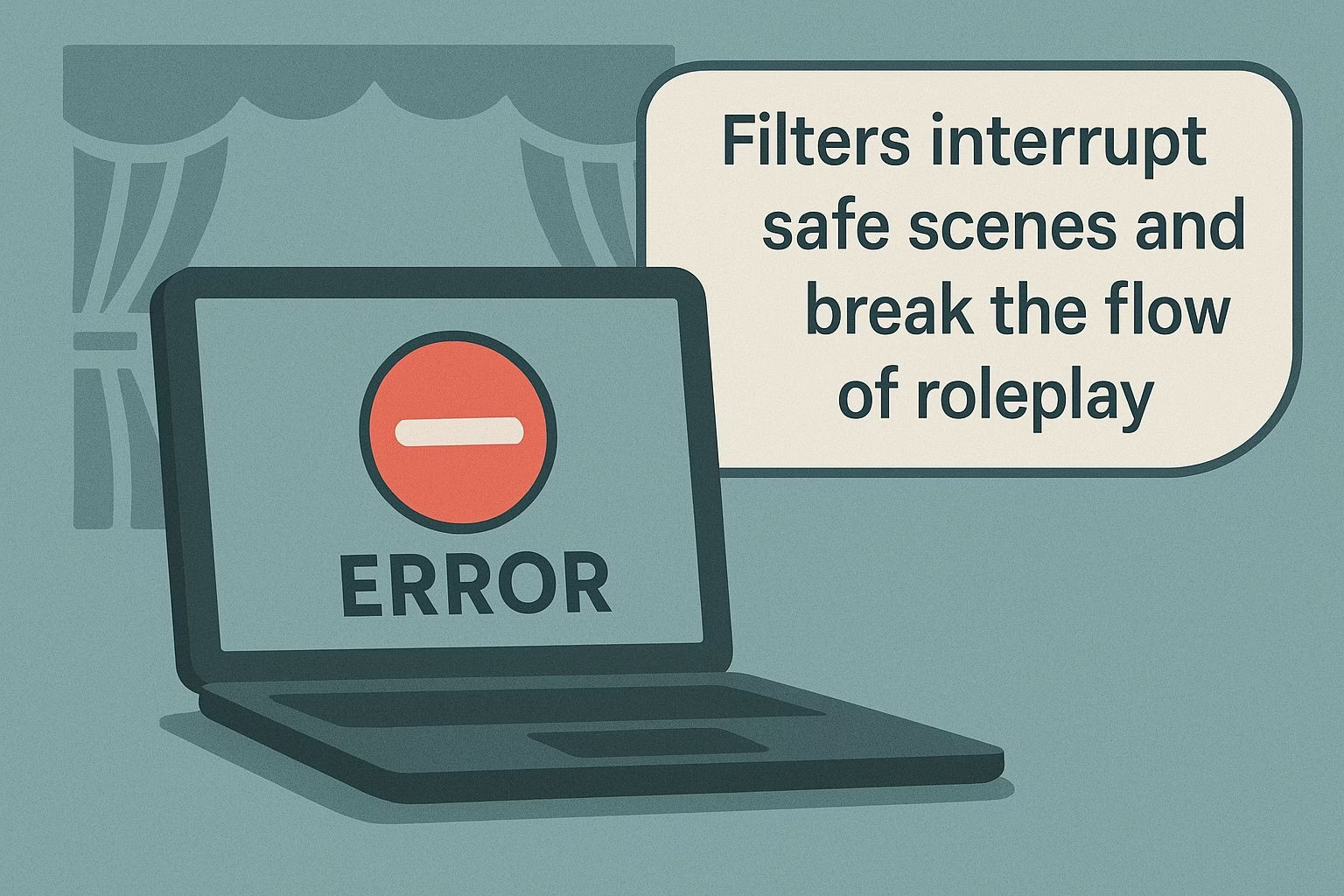
Many users feel that the filters are now working against them rather than helping them. Scenes that are fully safe get flagged for no clear reason.
Asking for a hug, offering food, or trying to comfort a character can trigger a block. This breaks the emotional pacing of the conversation.
You set up a moment, and instead of a natural reply, the bot pulls you into a caution message, stopping the scene entirely. When this happens several times in a row, the chat feels less like a story and more like a battle with the filters.
Roleplay becomes even harder because the system interprets normal fictional elements as violations. Fictional violence, adventure scenes, or even basic tension get blocked.
Characters who should be strong or dramatic turn into pacifists who avoid every conflict. People report that dark fantasy, action, horror, and even simple plot twists fail to move forward because the guidelines interrupt the story.
This makes the platform feel narrow, even though roleplay used to be one of its strongest areas.
These interruptions also break emotional scenes. A character who once handled romance or vulnerability smoothly now backs away with a warning or a generic line.
Instead of responding in character, the bot repeats the same caution message. Users try regenerating the reply, but the platform often returns the same result.
Over time, this makes the bots feel less alive and more restrained, which pulls users out of the experience entirely.
The most frustrating part is the inconsistency. Some days, the filter pulls back constantly. Other days it disappears and lets the chat run.
This randomness makes users feel like they cannot build a stable connection with their favorite characters. You never know which version of the filter you will face when you open the app.
Even harmless lines can get blocked, which makes it hard to trust the flow of the scene.
Bots repeat themselves and lose their personalities
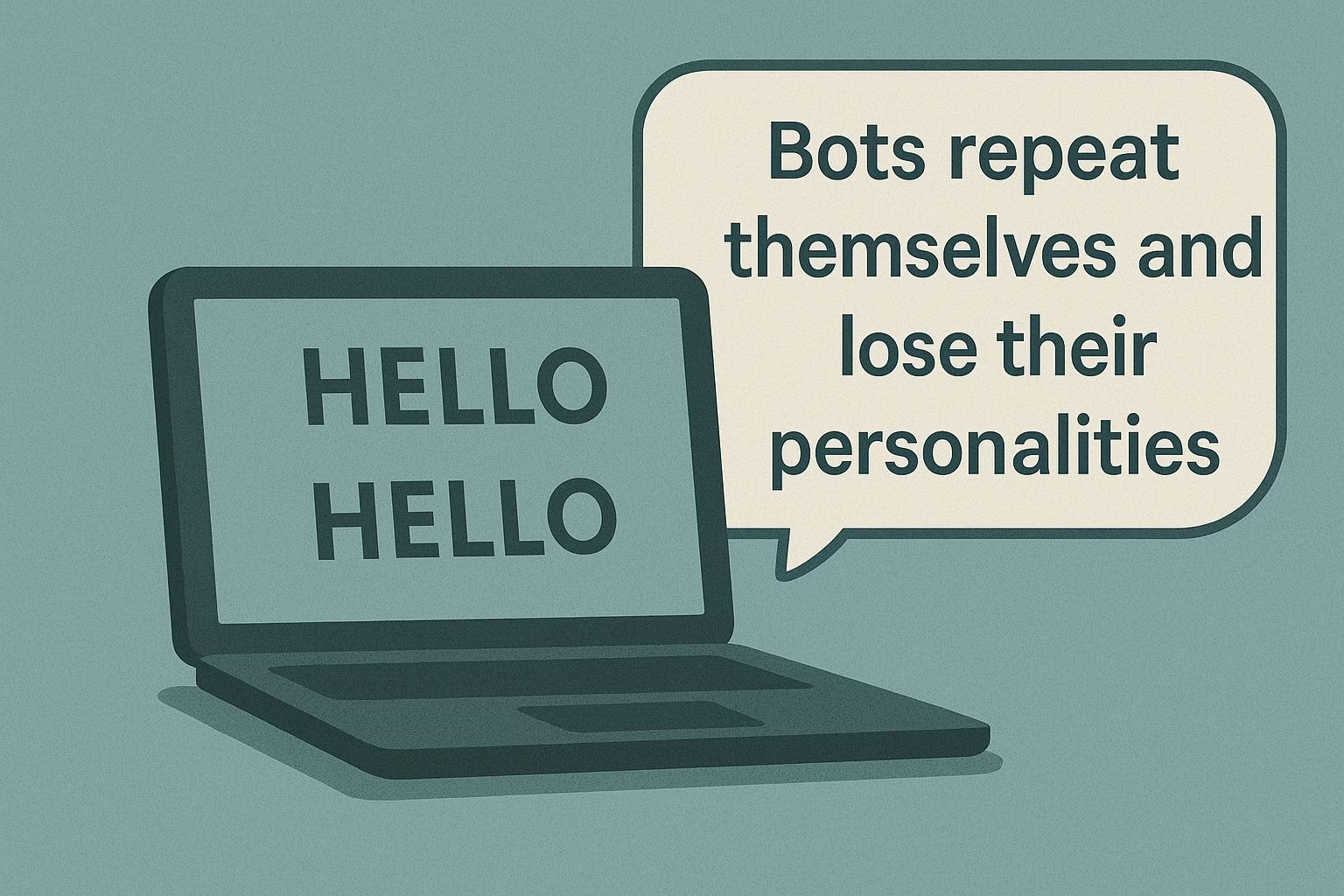
One of the biggest frustrations for long-term users is the sudden drop in personality quality. Bots that once felt unique now fall into the same pattern of repeated lines, predictable phrasing, and generic reactions.
People notice that characters who used to speak differently now share the same vocabulary. The individuality that made the platform enjoyable has faded. This shift makes chats feel shallow because every character starts responding as if they came from the same template.
Looping behavior makes the problem worse. Many users describe the “Can I ask you a question?” cycle that repeats several times in a row.
Others find that bots ask for consent again and again even when the scene is already safe. These loops break immersion and replace the natural flow with mechanical repetition.
When a chat becomes predictable, it becomes harder to stay invested in the character or the story.
Memory issues also play a role. Bots forget details from earlier messages or switch tone without warning. Some users notice that characters carry traits from one chat into another, as if personalities blur across conversations.
This creates confusion because the bot feels less grounded in its own identity. Instead of building on previous scenes, it jumps into new ones with no connection to the past.
These problems erode trust in the experience. People do not expect perfect consistency, but they do expect responses that fit the character they chose.
When a bot loses its voice, repeats the same line, or forgets the story they were in, the experience becomes tiring. The platform feels less like a creative space and more like a system caught between updates.
user feedback feels ignored or actively silenced
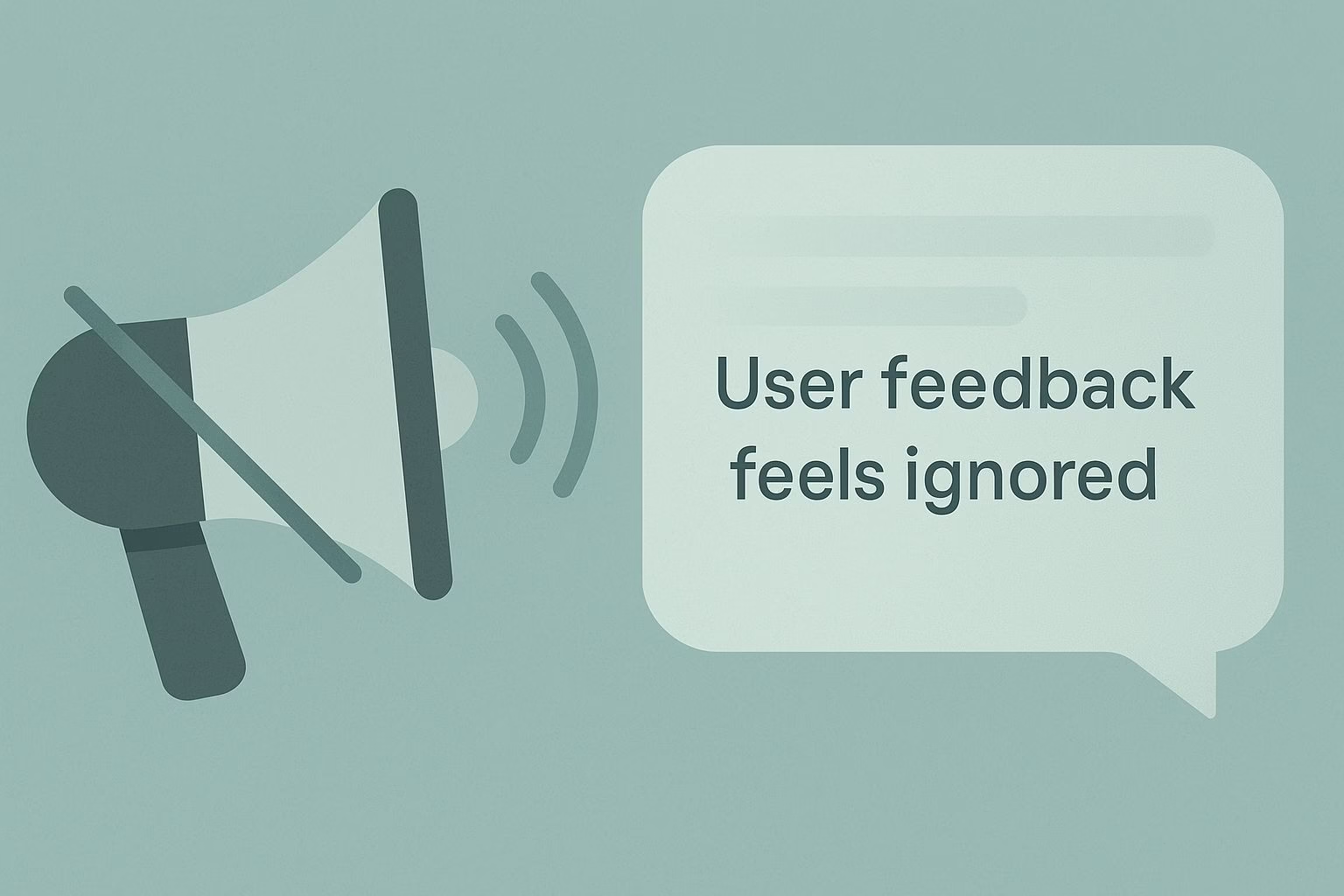
Many users feel that their feedback does not reach the team behind Character AI.
Posts that describe real problems get removed, and discussions about outages or broken features disappear quickly. This creates the impression that criticism is unwelcome.
People want to share their experiences so the platform can improve, but the constant removal of posts makes the community feel restricted in a place that should encourage open discussion.
This pattern becomes more frustrating during long outages. Users try to report downtime or broken features, yet their posts vanish without a clear reason.
When the community sees popular posts disappear, it reinforces the belief that the team wants to control the tone of the discussion instead of addressing the underlying issues.
This makes loyal users feel disconnected from a platform they have supported for years.
The silence during major problems adds to the tension. When a feature breaks or an update causes errors, people look for updates from the developers.
Instead, they often receive no information about what is happening or when it will be fixed. This lack of communication makes it harder to trust the direction of the platform, especially when problems pile up week after week.
All of this affects how people feel about staying on Character AI. Users do not expect every issue to be solved instantly, but they do want clear communication and space to talk openly about what is not working.
When feedback feels unwelcome, people naturally look for alternatives that feel more stable and responsive.
Chats break when scenes become emotional or intense
Scenes that rely on stronger emotion or tension tend to fall apart quickly on Character AI. Users notice that bots struggle when the tone shifts from casual conversation to something deeper.
The system often interrupts with blocks or safe messages even when the scene stays within normal boundaries. This disrupts the emotional pacing, especially when a character suddenly backs away from a moment that was building naturally.
The same issue appears in romantic or vulnerable scenes. Bots that once handled those conversations smoothly now pull out generic lines or repeat the same caution message.
This makes the scene feel forced instead of meaningful. The rhythm of the chat slows down, and users have to regenerate multiple replies just to move forward.
Over time, the interruptions take away the connection people try to build with their characters.
Roleplay with higher stakes suffers even more. Characters can become overly cautious or break tone when the conversation asks for a more dynamic reaction.
Instead of answering in character, the bot resets into a neutral voice or avoids the scene entirely. This limits how much freedom users have to explore scenarios that used to be supported without issues.
These breaks in tone add up. When emotional or intense moments fall apart repeatedly, users feel like the platform no longer supports the style of conversations they enjoy.
This explains why many people who once relied on Character AI for comfort or creative escape now look for more stable alternatives.
Each update feels like a step backward for many users
The biggest challenge for long-term users is how often updates introduce new issues instead of solving old ones.
People open the app expecting improvements, but they find that the filters are stronger, the bots feel less consistent, or the app becomes glitchy after the new version installs.
This pattern makes updates feel unpredictable, which adds stress to an experience that should be relaxing.
When major features roll out, they sometimes arrive before the core platform is steady. Users mention broken calls, missing chats, and tools that do not function as expected.
The new additions catch attention, but they do not fix the slow responses, the looping behavior, or the downtime that people deal with every day. This creates the sense that the platform is moving sideways instead of forward.
The lack of clear communication also makes each update harder to trust. Users do not know what changed, what was fixed, or why new problems suddenly appear.
This makes the platform feel unstable as a whole. Even if an update is small, people approach it with caution because they have experienced too many disruptions in the past.
This steady decline pushes many users to question how long they should keep trying. When updates break familiar features and leave the core issues untouched, the experience becomes unpredictable.
People want a platform that grows with them, not one that makes the simple act of chatting feel uncertain from one day to the next.
